

Winner
The bed by Felix Schwake, awarded the “Interior Innovation Award Selection 2014,” exemplifies a design approach that combines radical spatial calmness with a high degree of functional integration.
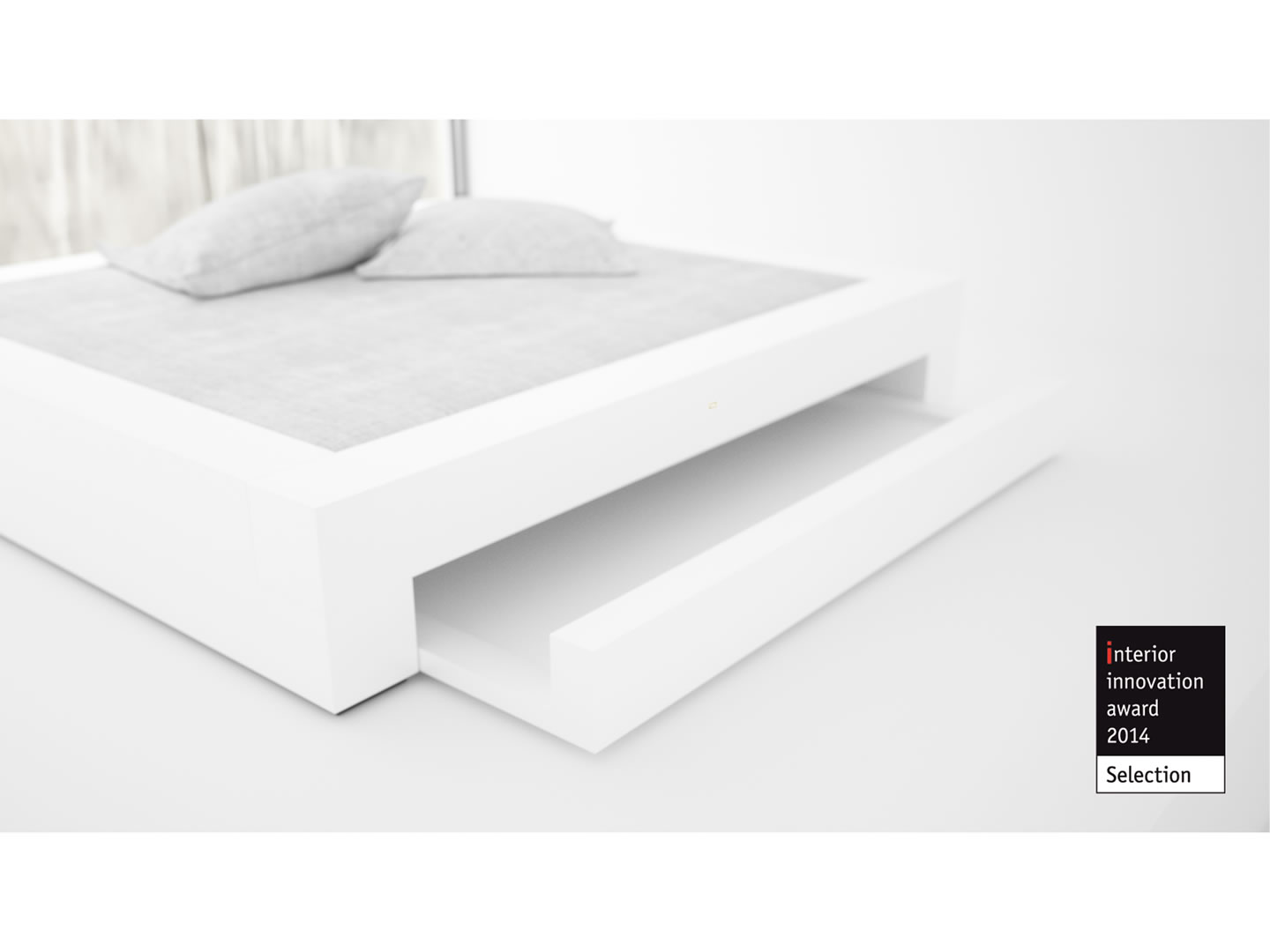
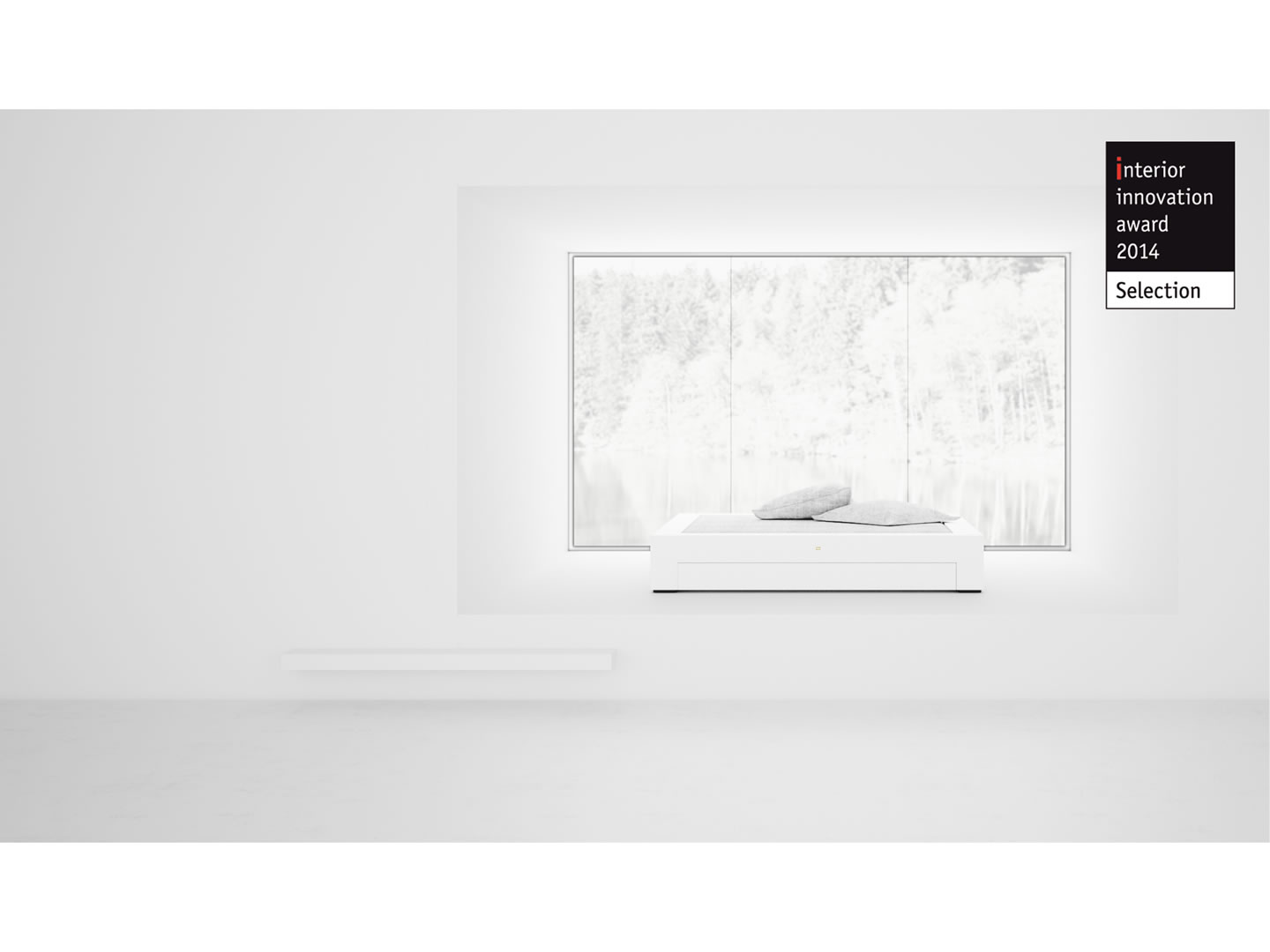
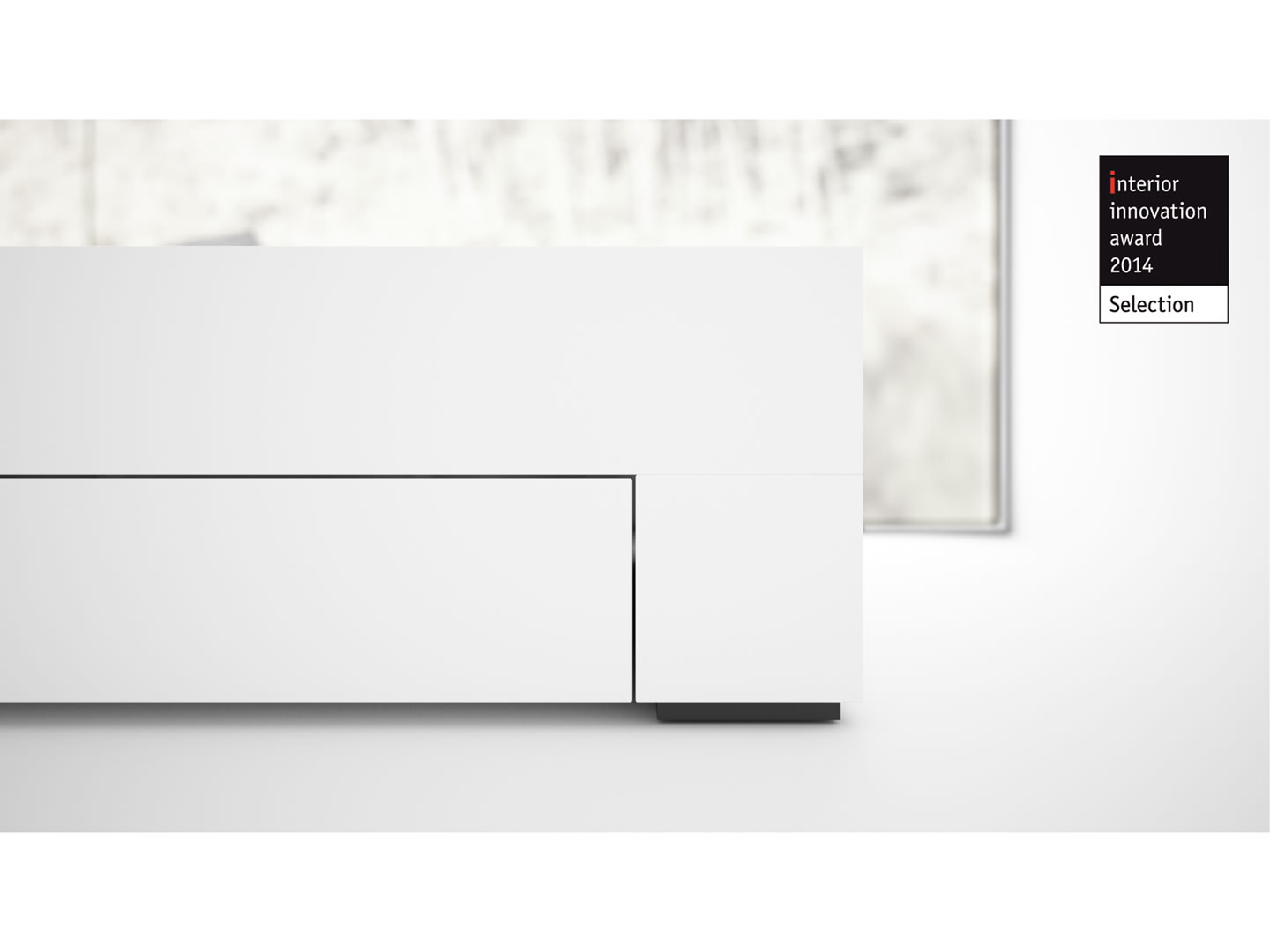
The design reduces the bed to a clear horizontal geometry. Backrests, visible technical elements, and additional furnishing components are deliberately avoided. The sleeping surface, flush with the bed frame, reinforces the calm, monolithic presence of the object and allows for flexible placement either freely within the room or against a wall.
At the center of the concept stands the idea of the “empty bedroom.” This atmosphere is achieved not through the elimination of function, but through its complete integration into the object itself, resulting in an exceptionally calm spatial environment.
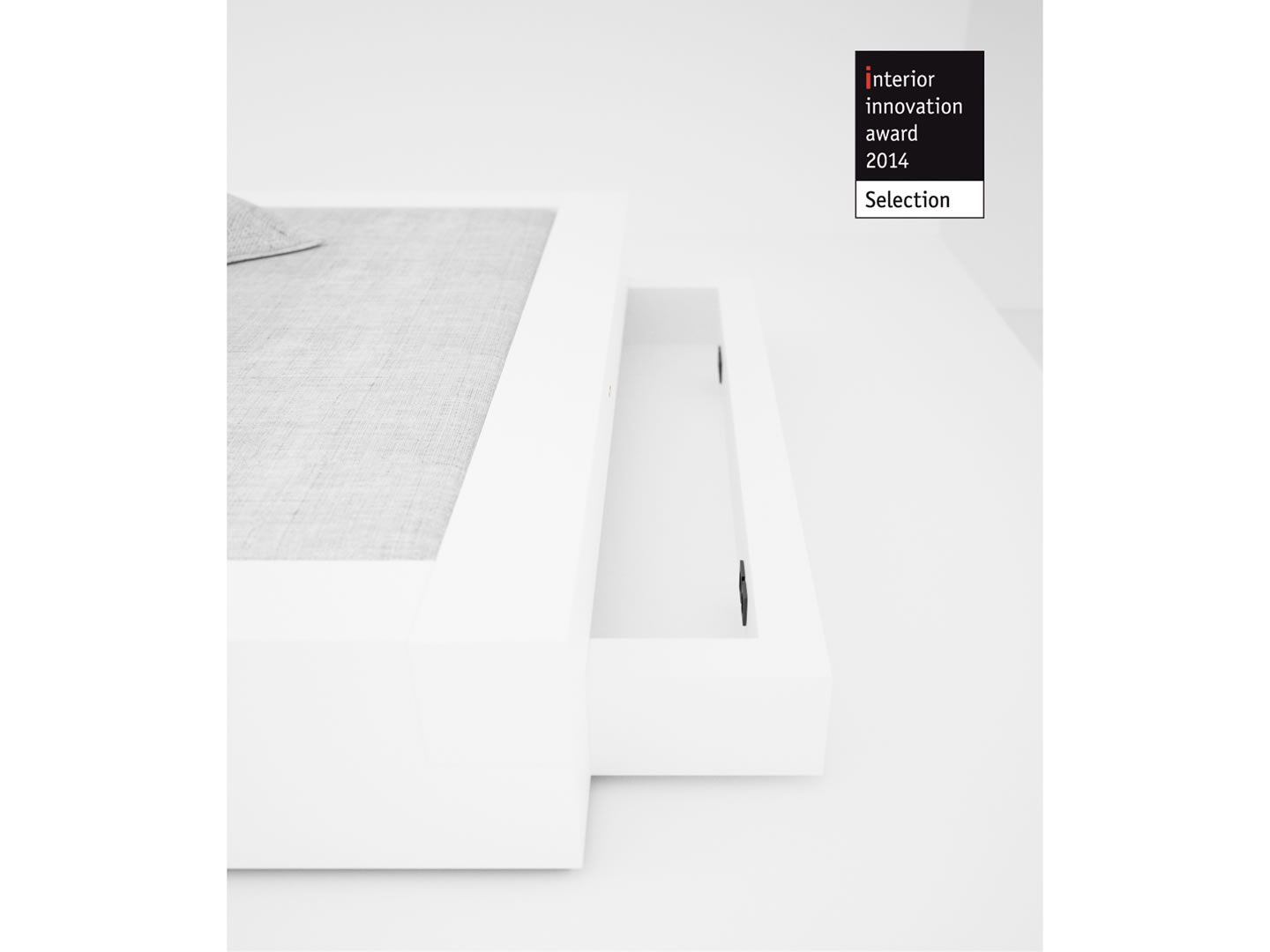
The integrated bed drawers play a central role within this concept. They provide not only storage space, but also invisibly incorporate the entire cable management system of the bedroom into the object. Smartphones, chargers, personal belongings, and technical infrastructure remain fully accessible without remaining permanently visible.
As a result, bedside tables become entirely unnecessary. The room is freed from additional functional objects and gains a distinctive spatial clarity.
It was precisely this combination of minimalist form and high technical as well as functional density that convinced the jury of the “Interior Innovation Award Selection 2014.” The project demonstrates that complex everyday requirements do not necessarily have to result in visual disorder.
The bed is not conceived as a decorative individual object, but as part of an overall architectural atmosphere. Light, proportion, and materiality become more perceptible than technical devices or organizational functions.
The reduced formal language does not serve a decorative minimal aesthetic, but rather a conscious concentration on spatial effect and use. Architecture, interior design, and functional art interrelate directly.
The work of Felix Schwake fundamentally follows the idea that design should not draw attention to itself, but instead create spatial conditions that enable calmness, concentration, and atmospheric clarity.