

Interior Design and Furnishing of the Historic Villa Rosenlund in Denmark
With the interior design and furnishing of the historic Villa Rosenlund in Denmark, Felix Schwake developed a project that deliberately engages with the tension between historical ornamentation and contemporary reduction.
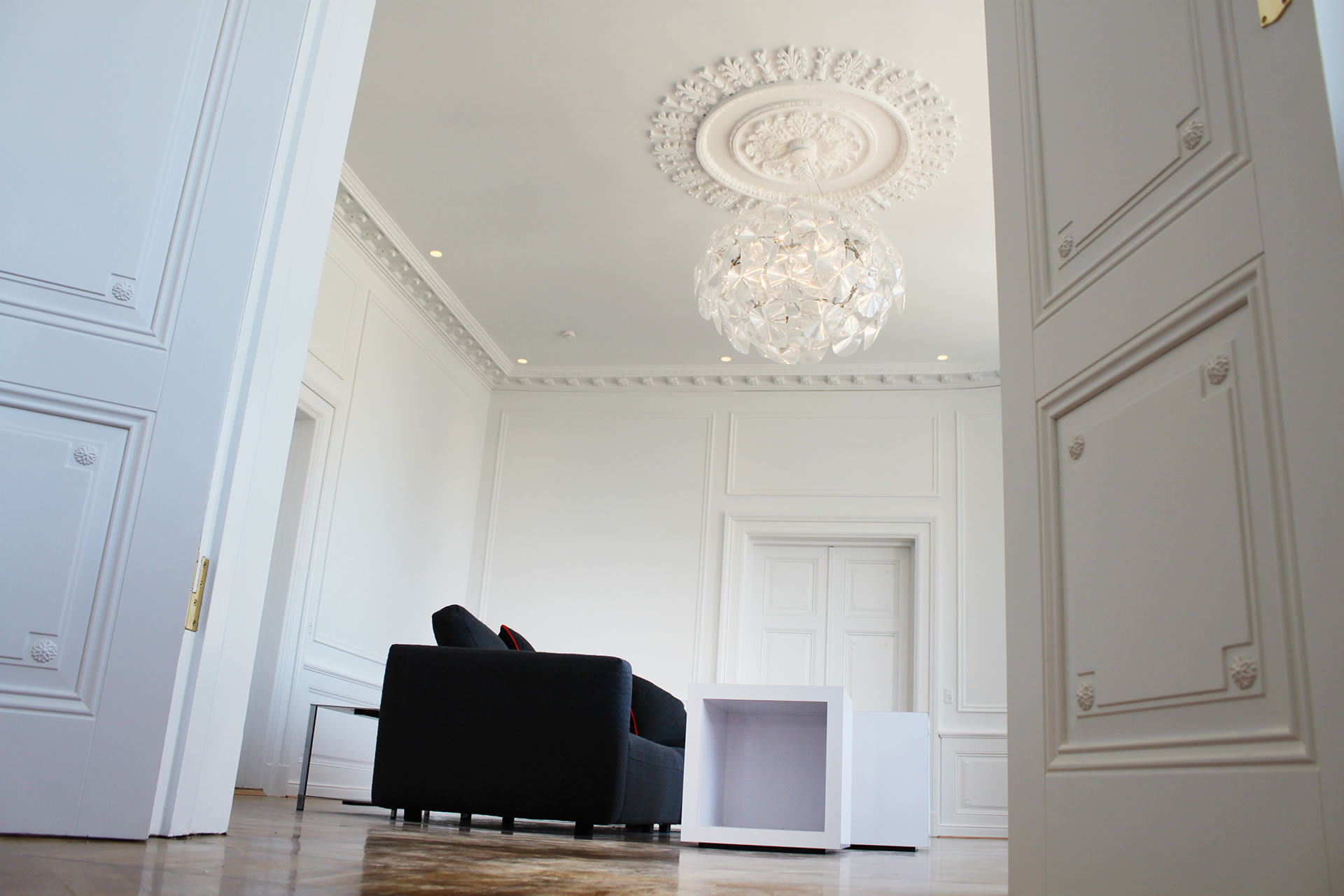
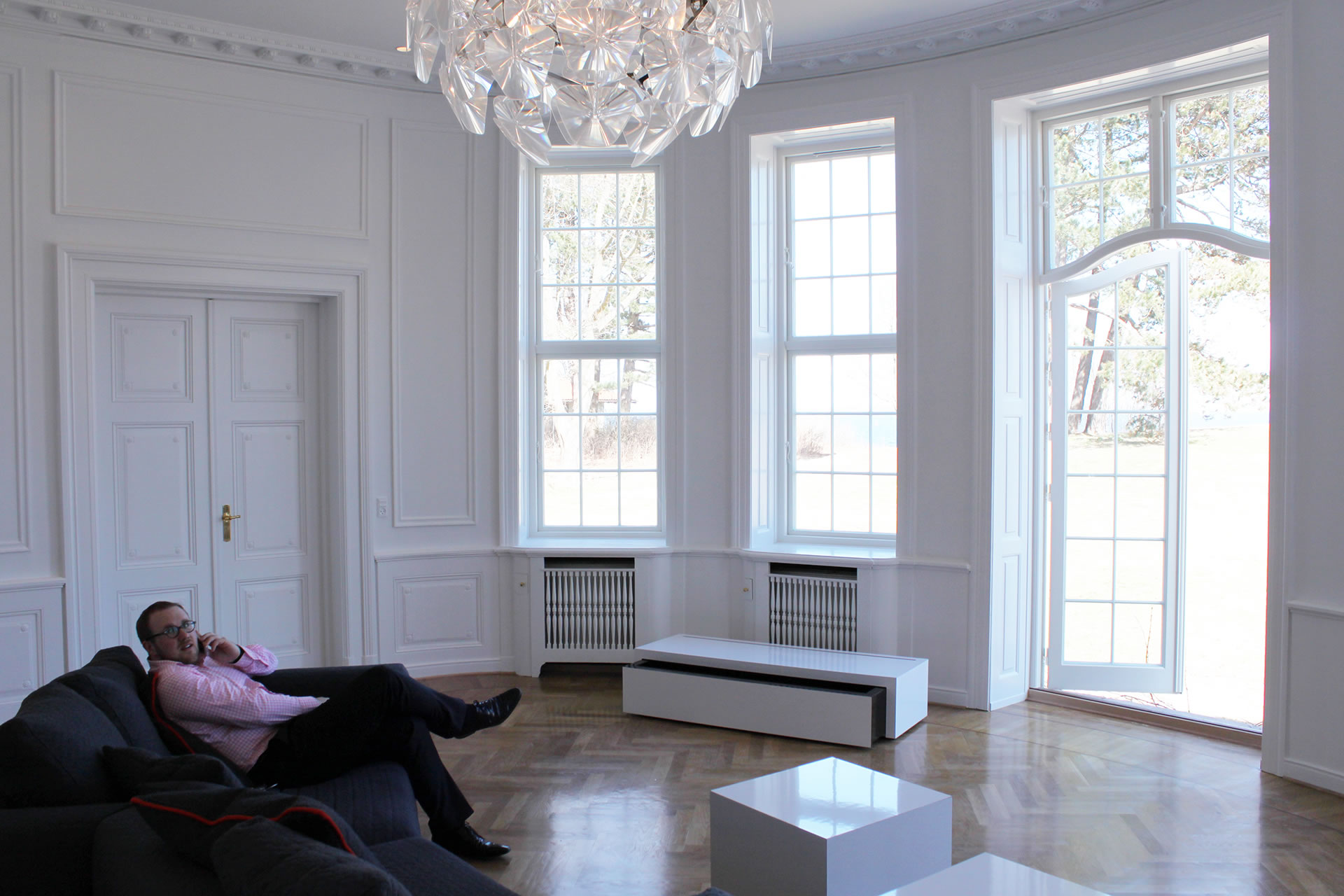
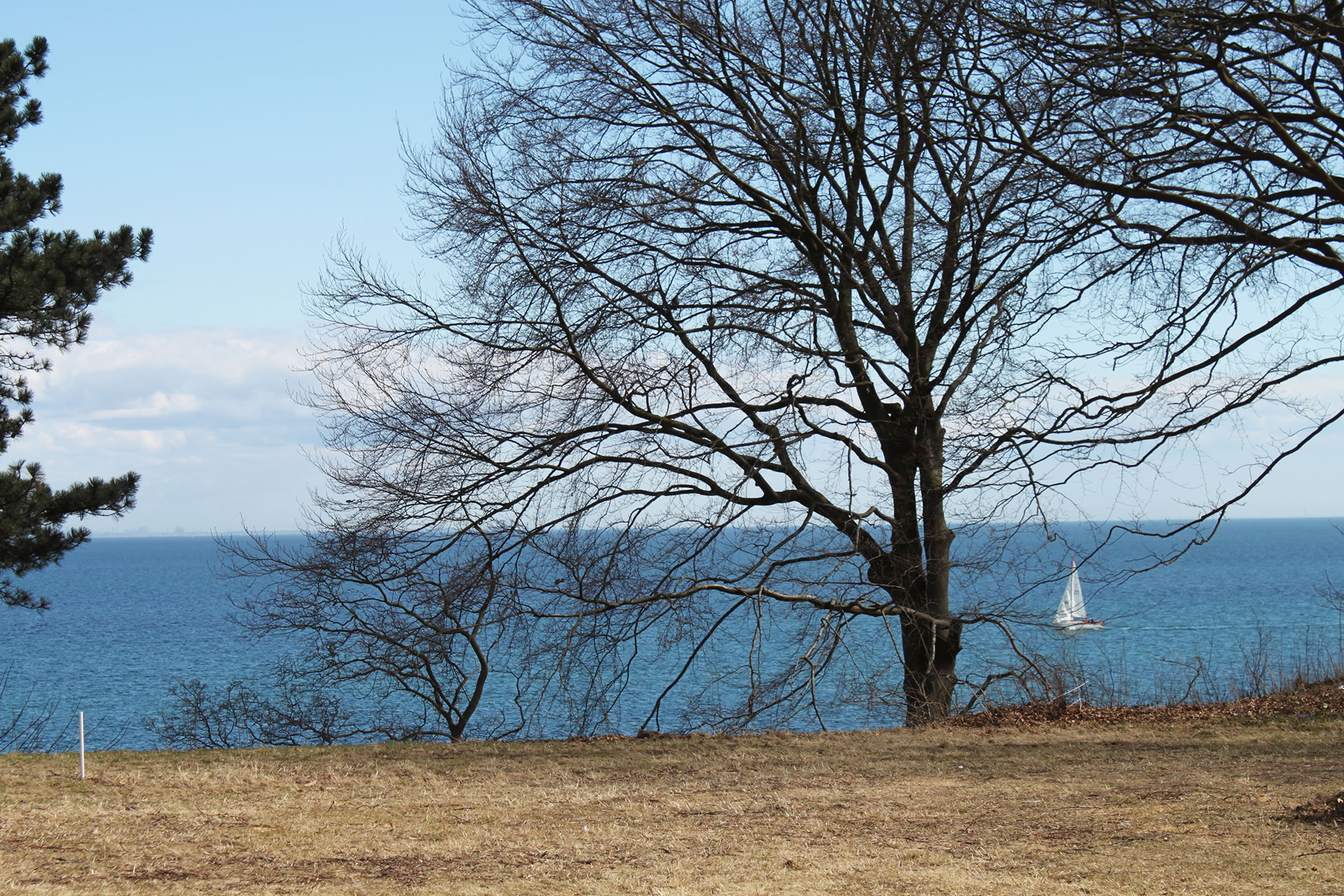
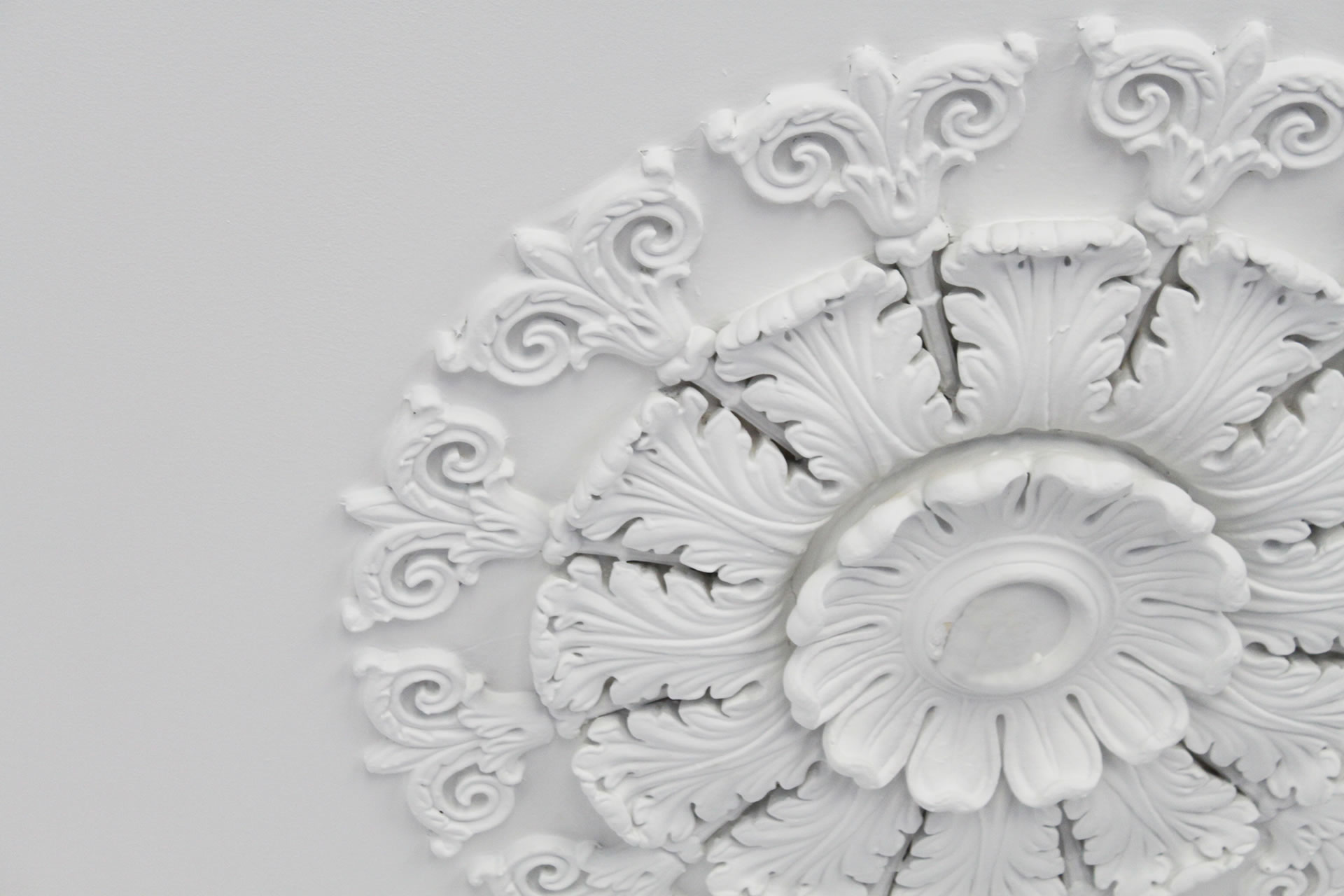
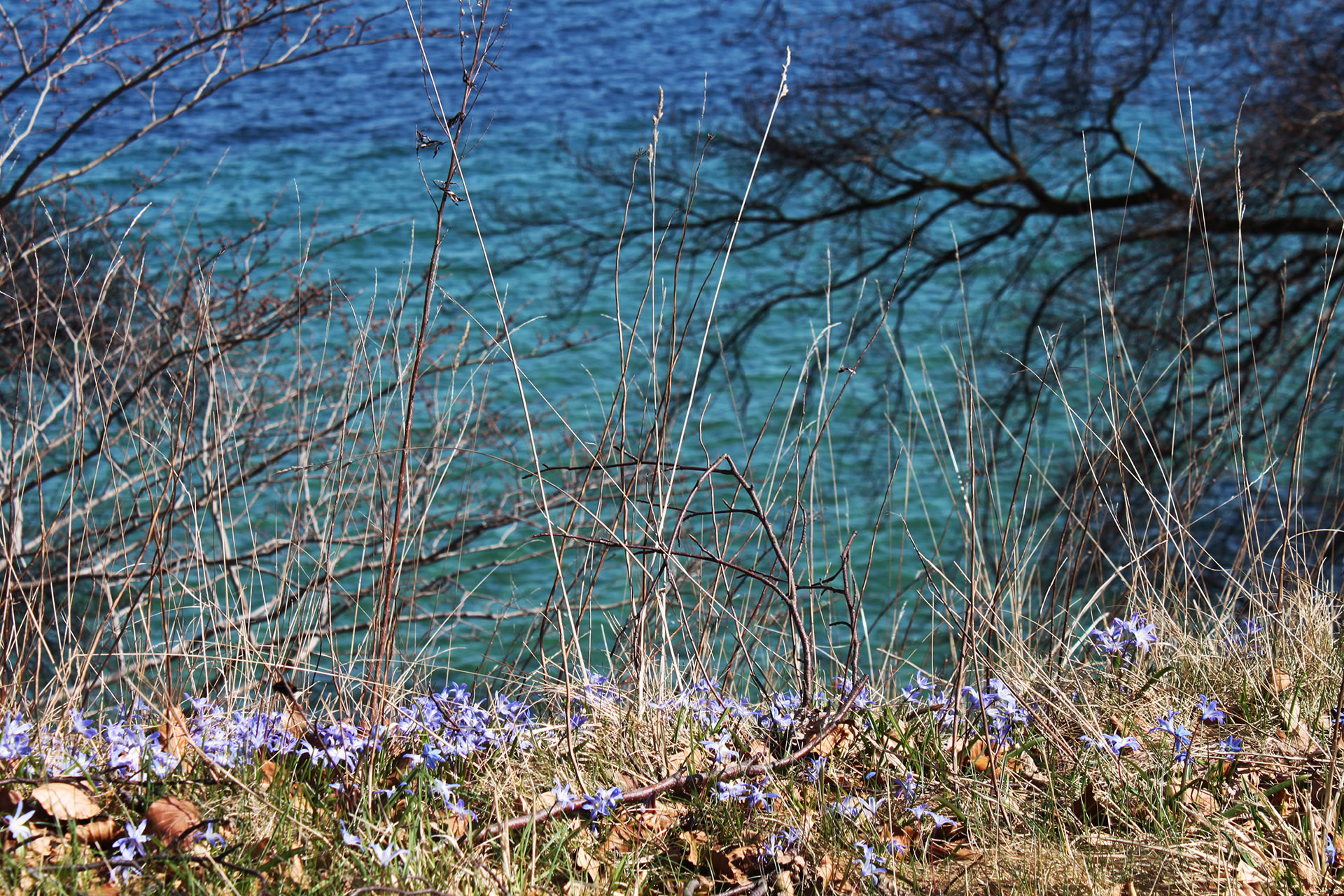
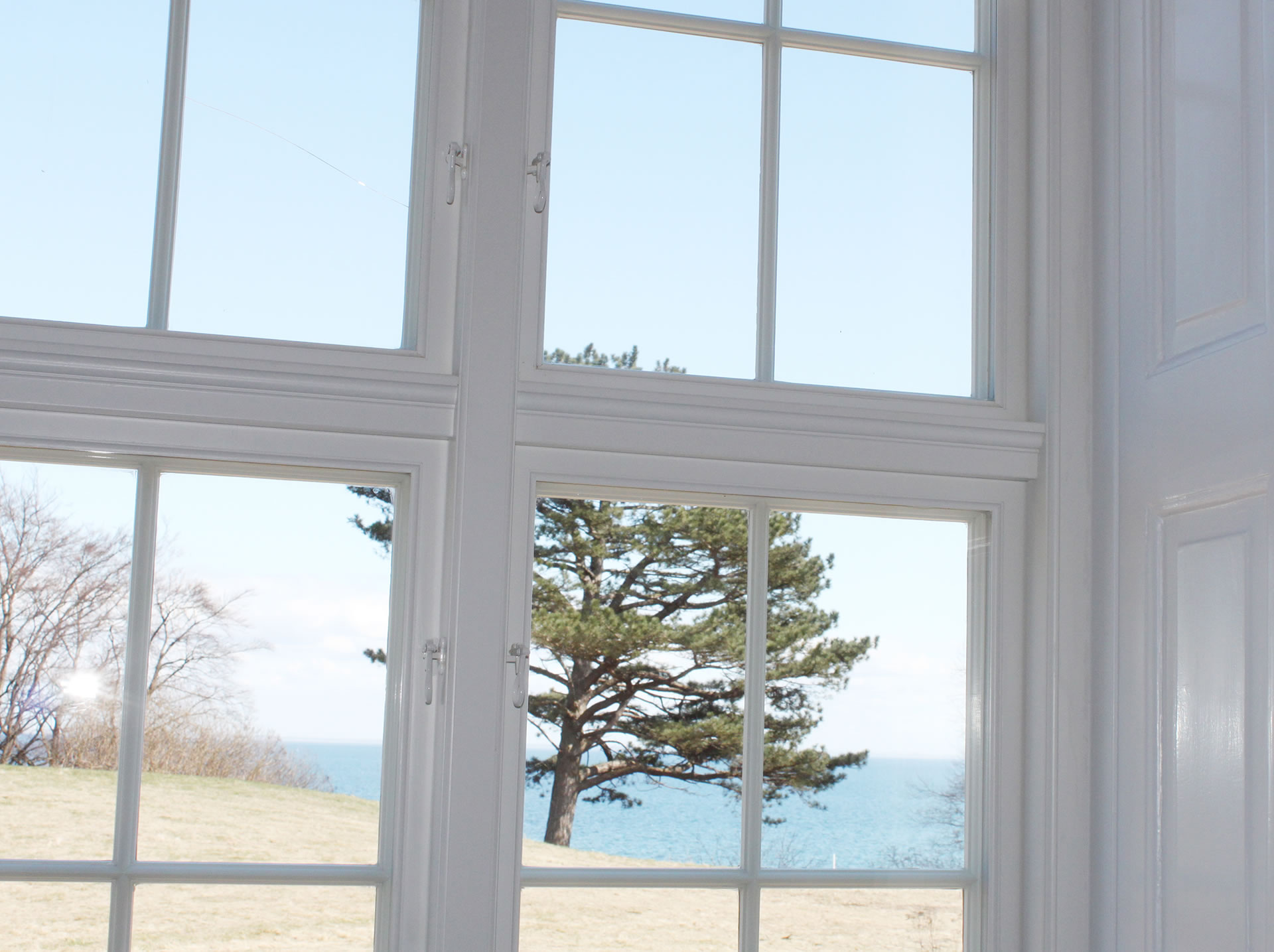
Located directly by the sea with expansive views across the water, the villa possesses a strongly atmospheric architectural identity shaped by historical materials, classical proportions, and ornamental details of the existing building. Rather than formally imitating this language, Felix Schwake chose a consciously contrasting design approach.
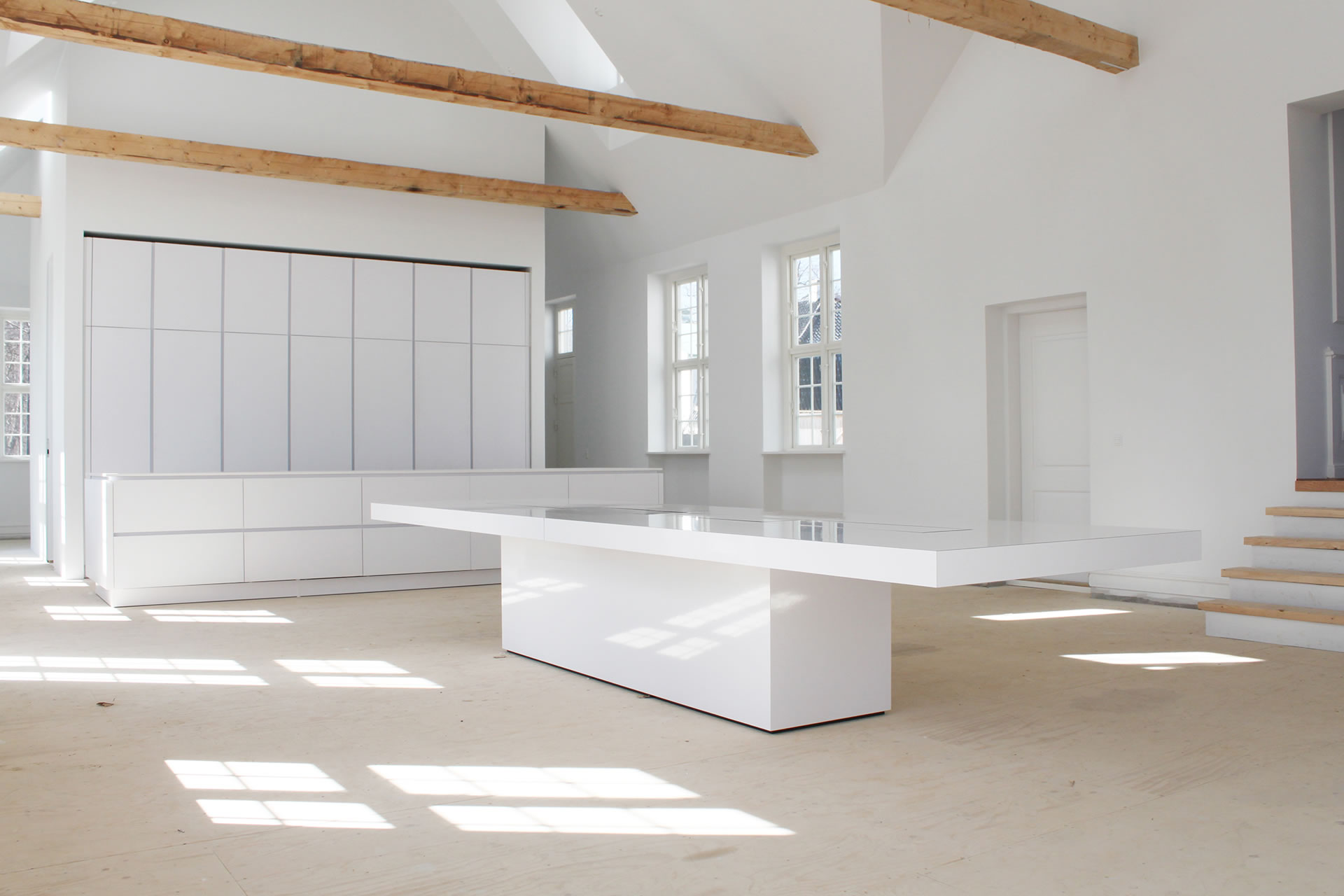
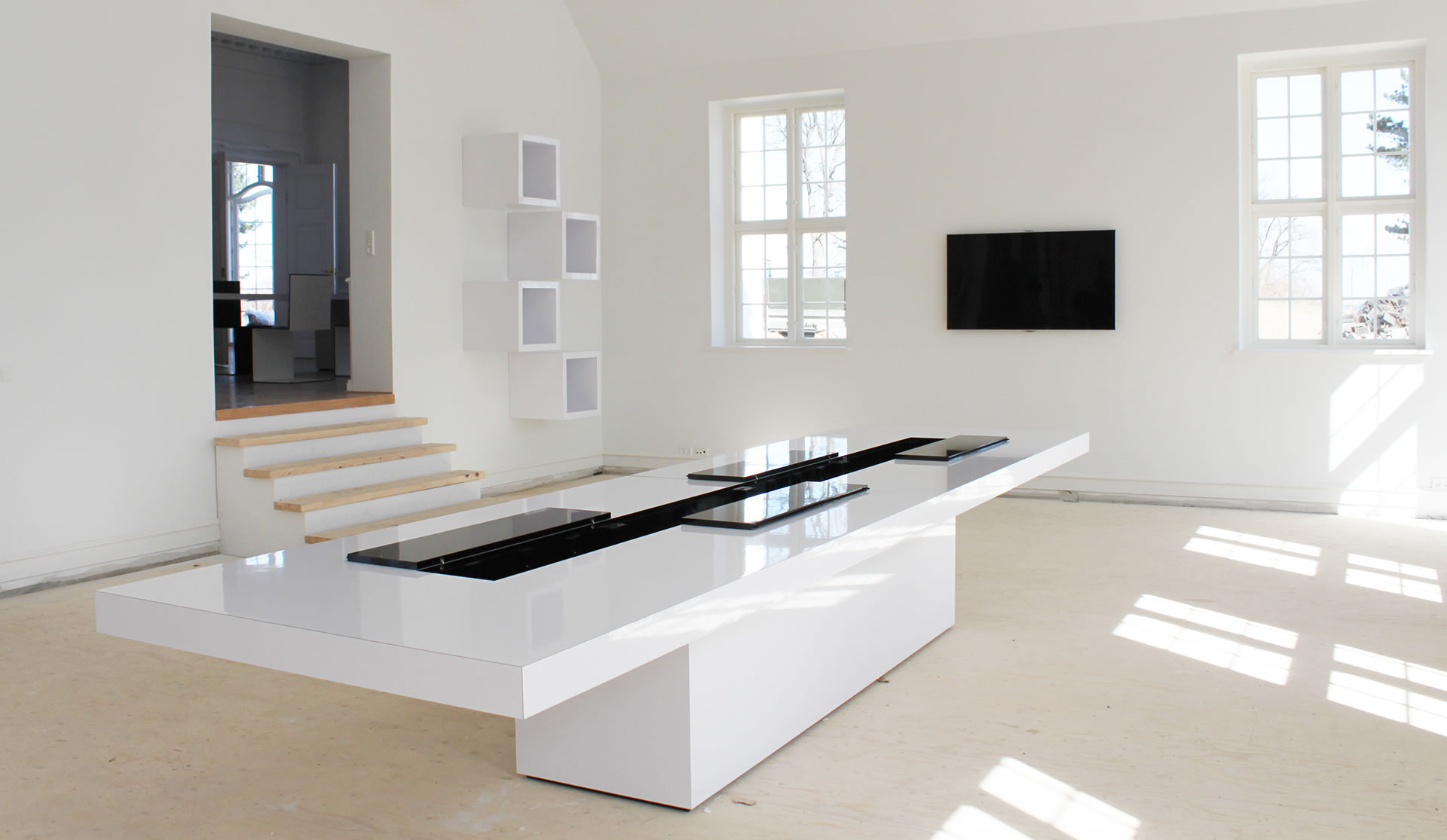
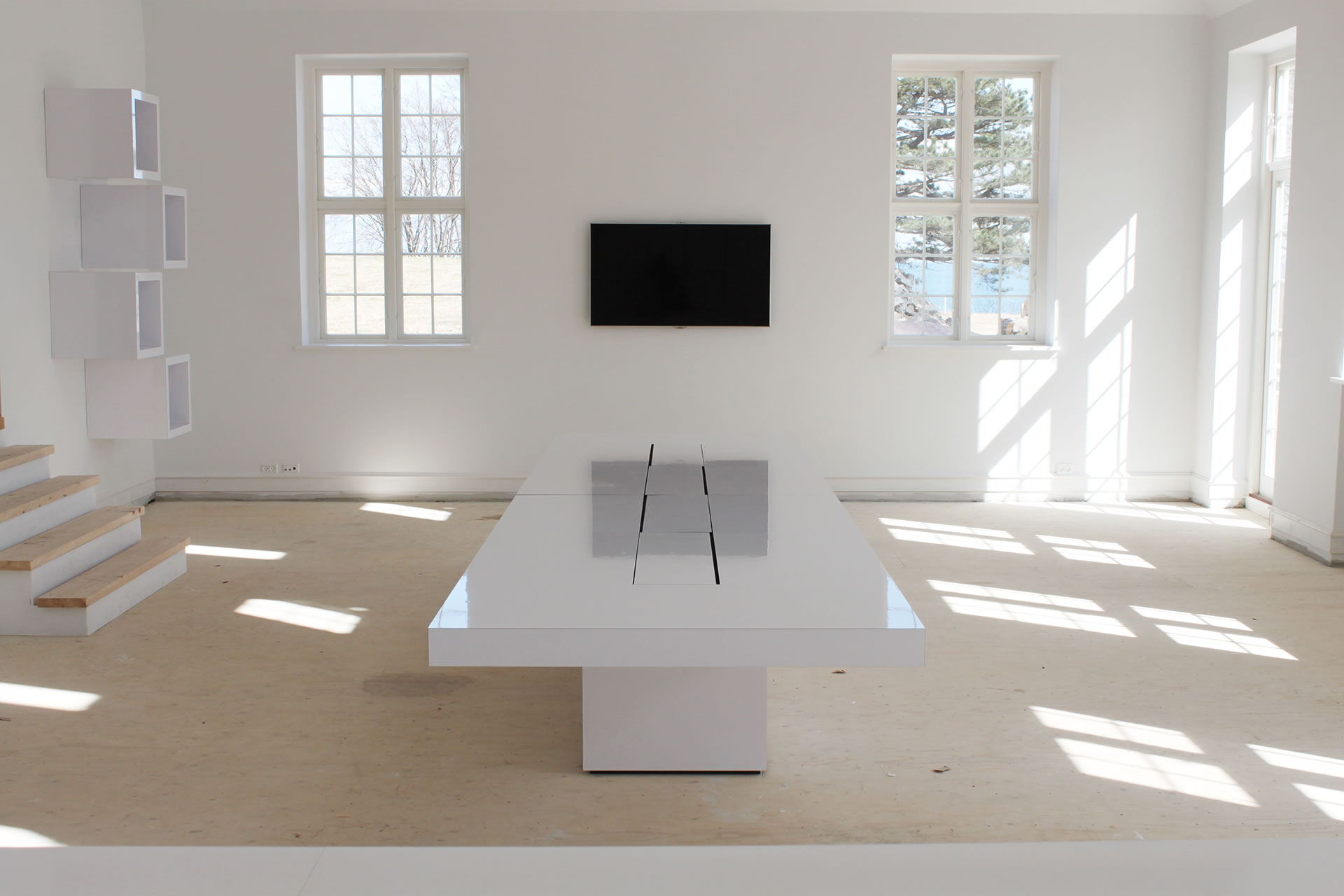
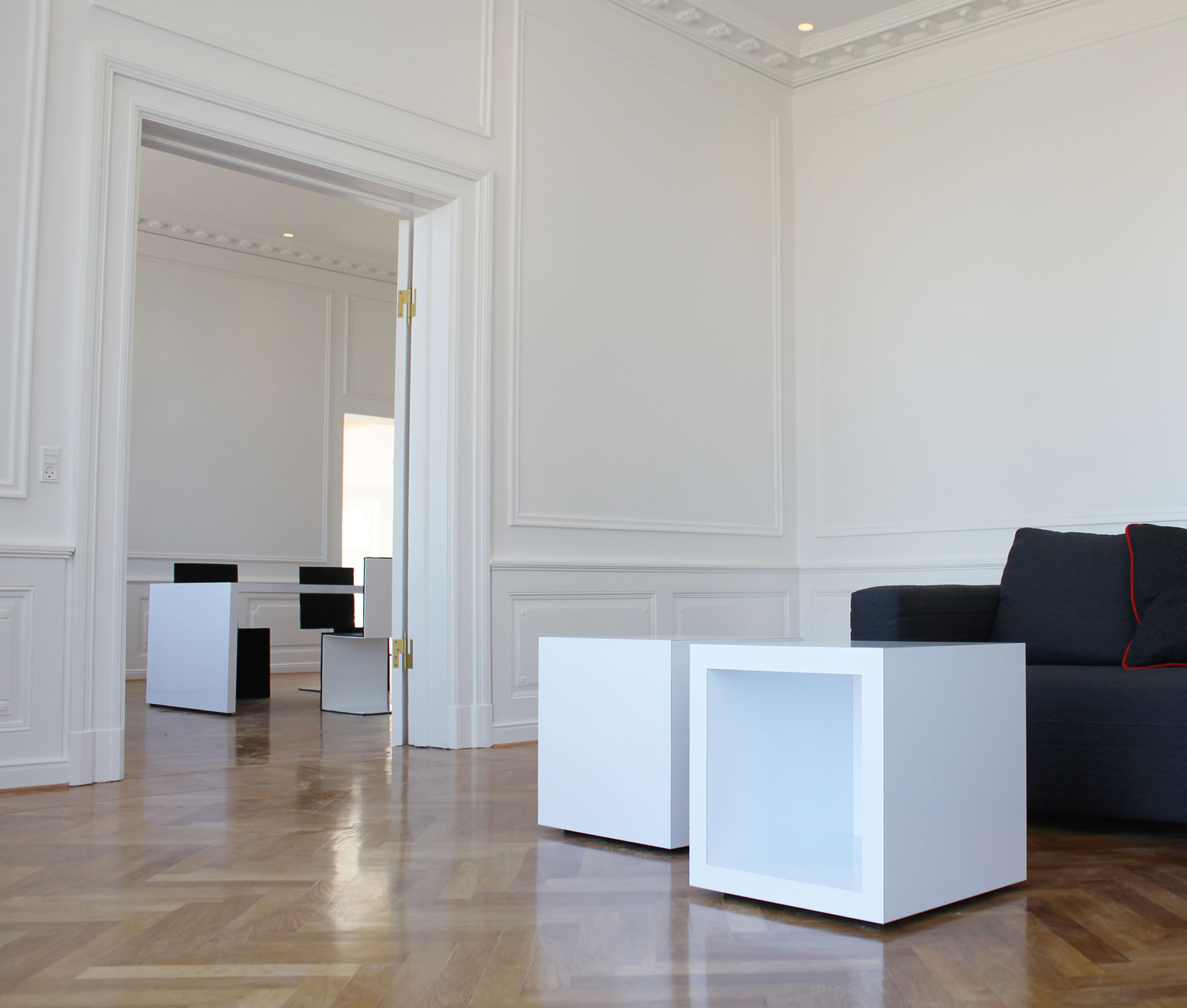
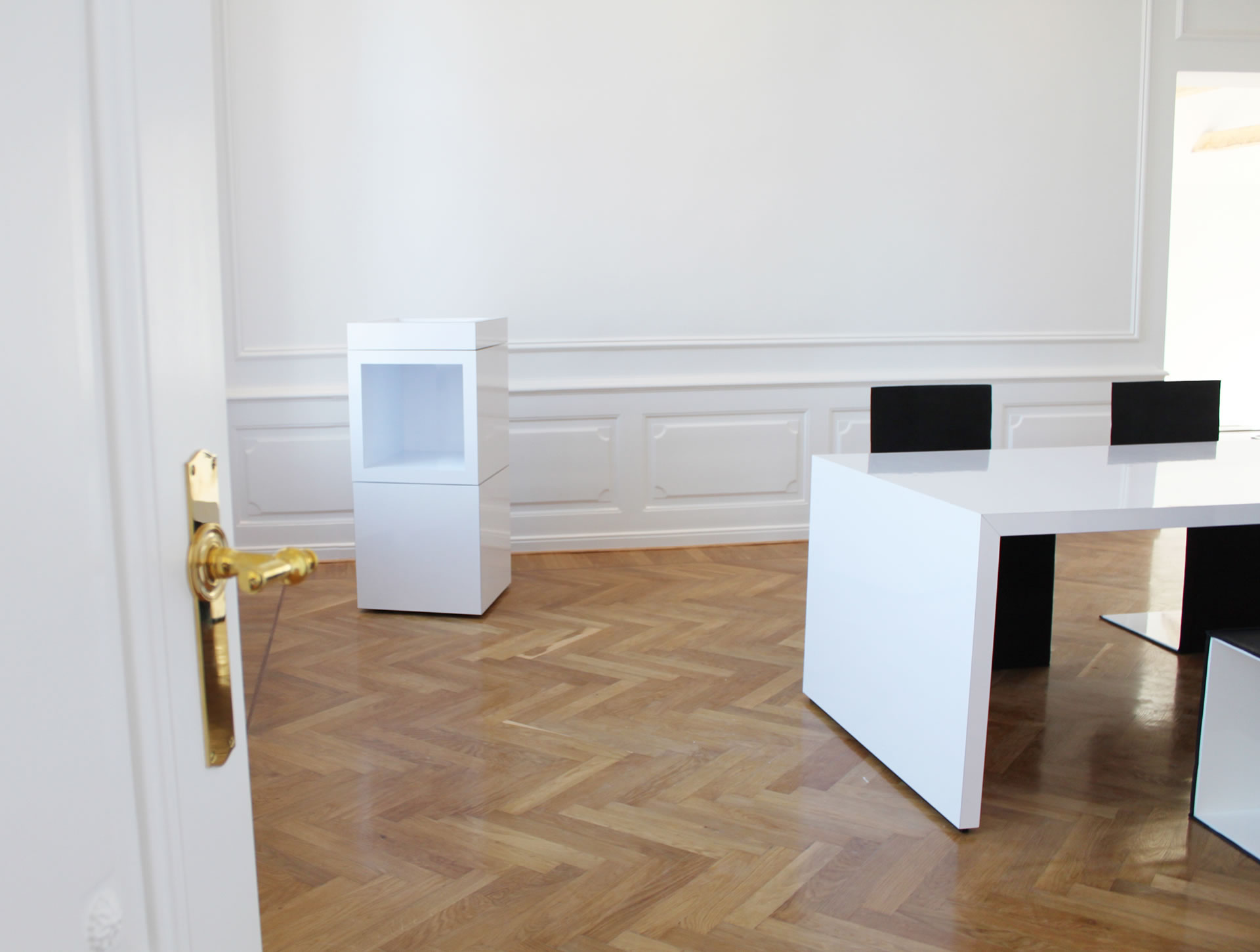
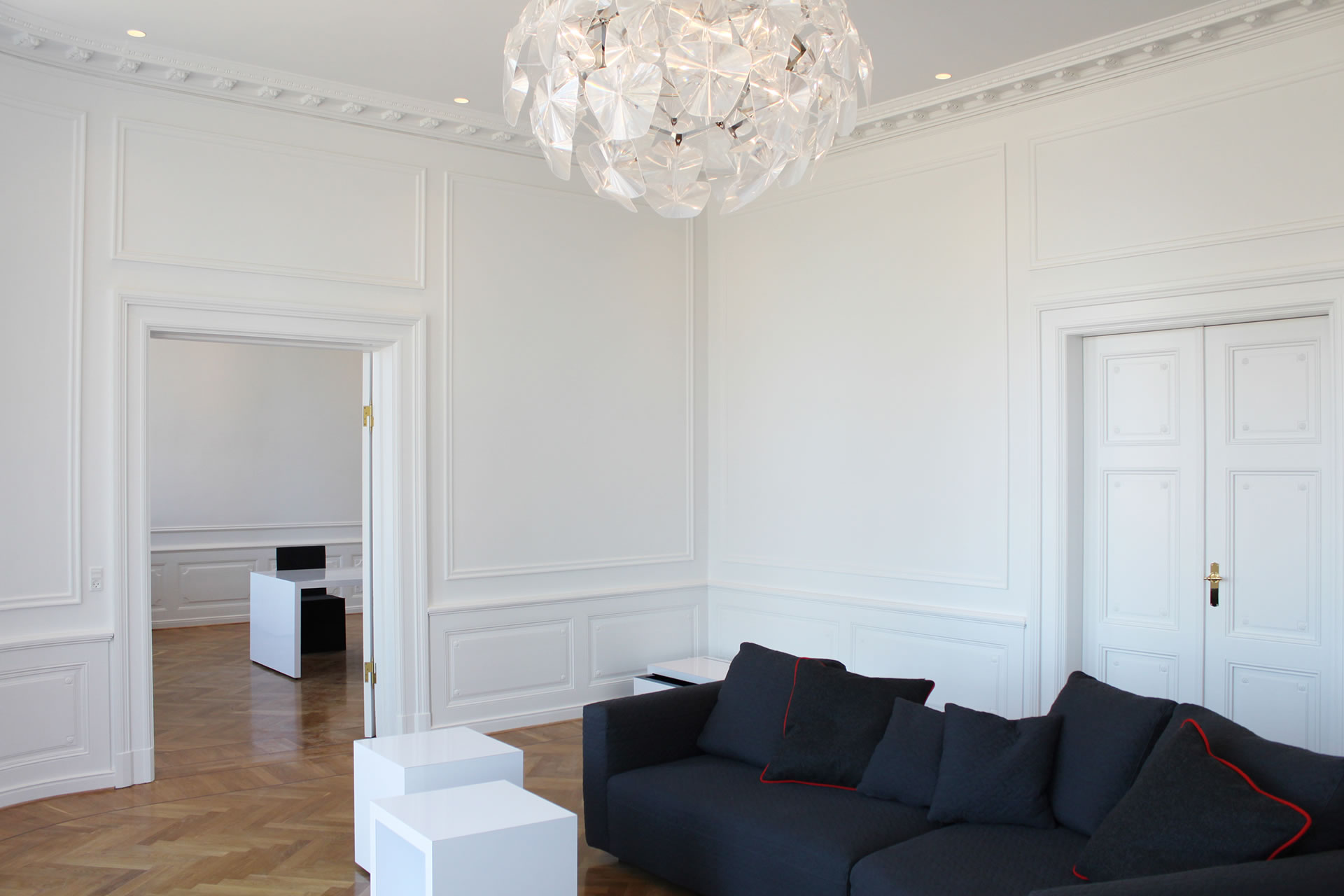
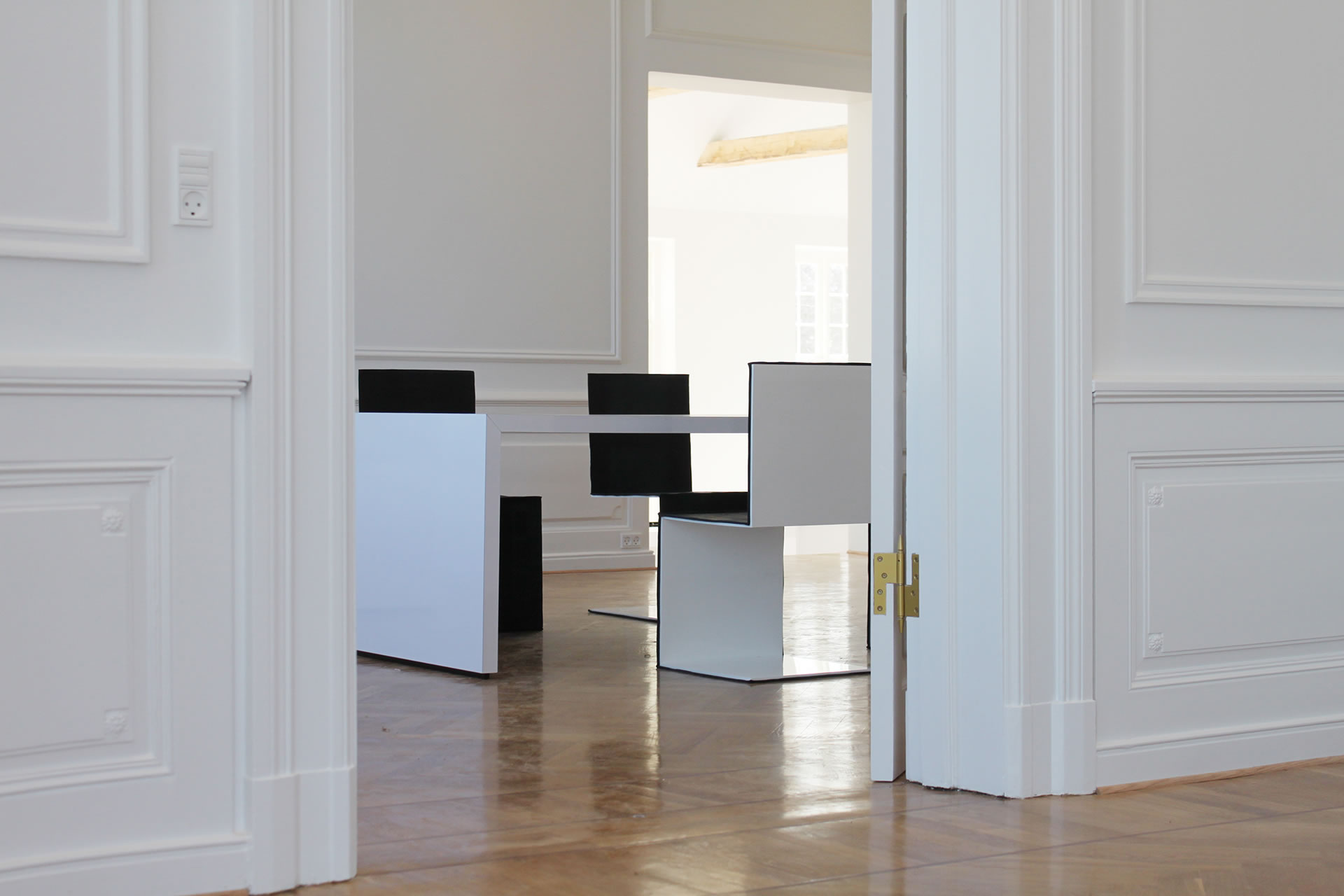
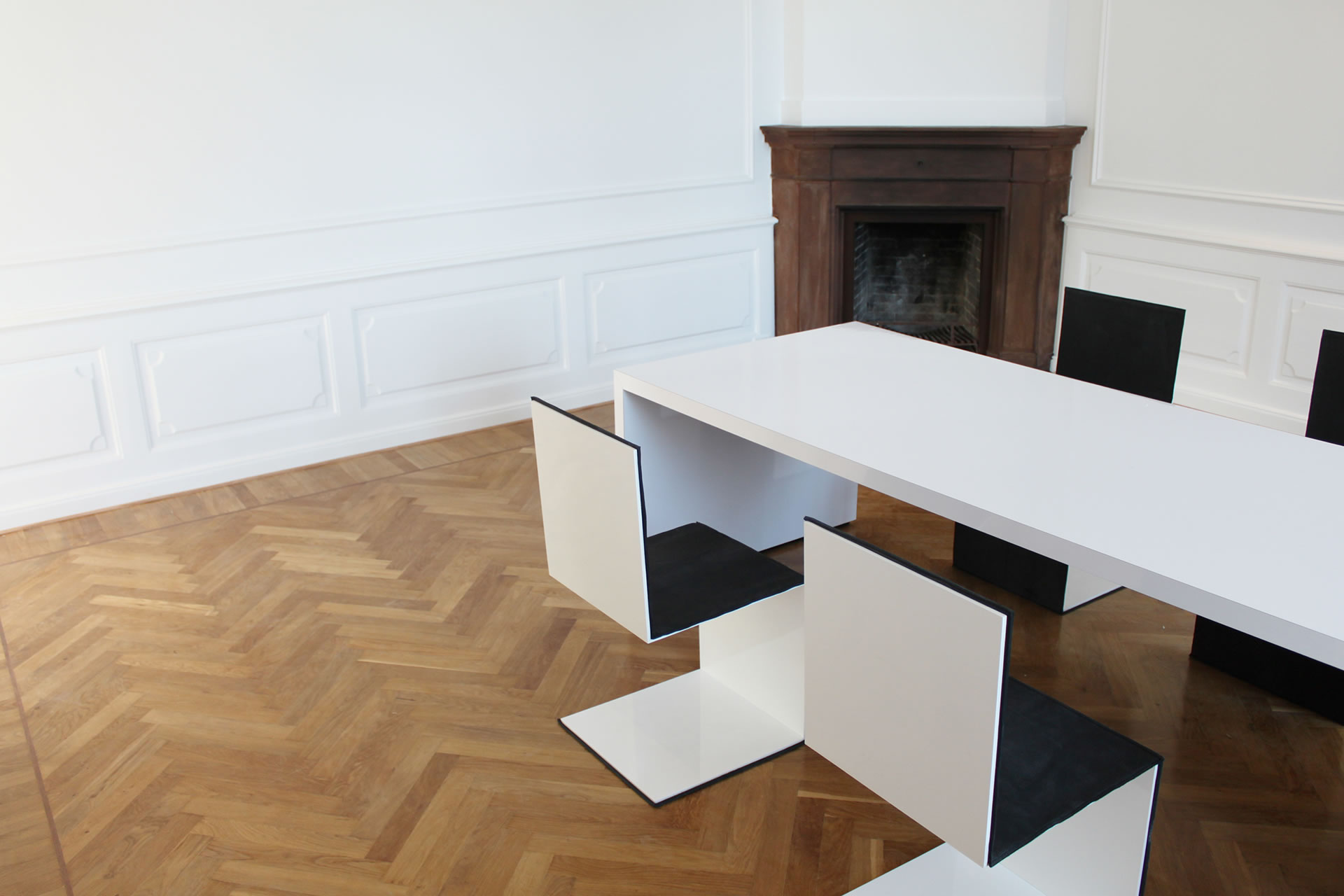
The furniture and built-in elements developed for the project follow a clear and reduced geometry. Wall-mounted cubes, conference and meeting tables, sideboards, side tables, cantilever chairs, and a lectern establish a calm architectural order within the historic spaces.
The design does not position itself in competition with the historical architecture, but rather as a deliberate counterpoint. The purist formal language creates distance from the ornamentation of the existing structure and thereby enables a renewed perception of the historical substance itself.
The furniture does not appear as decorative objects, but rather as precisely positioned spatial interventions. Their geometric clarity generates calmness within the richly detailed historical environment and directs attention toward spatial proportions, light atmospheres, and materiality.
Particularly in dialogue with the open landscape and the view across the sea, an atmosphere of controlled restraint emerges. The reduced design intensifies the presence of the place itself rather than visually overpowering it.
Characteristic of the work of Felix Schwake, the project also fully integrates functional requirements into the geometry of the objects. Technology, storage, and use are precisely organized without disturbing the spatial calmness.
The Villa Rosenlund project exemplifies a central principle within the work of Felix Schwake: architecture and interior design should not permanently demand attention, but instead create an atmospheric background that supports perception, concentration, and presence.
It is precisely through the deliberate contrast between historical ornamentation and contemporary minimalism that an independent spatial tension emerges — one that allows past and present to remain simultaneously visible.