






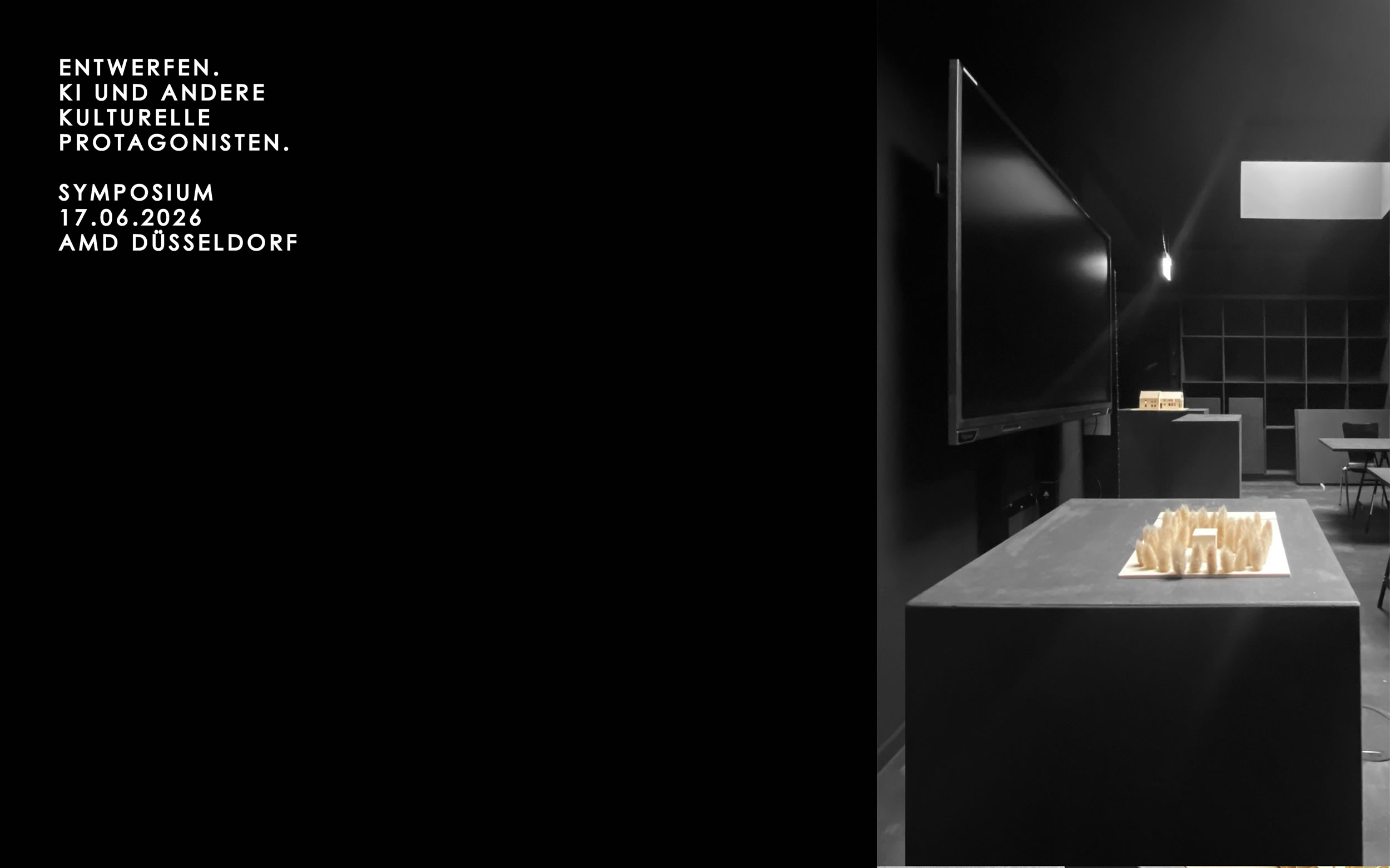




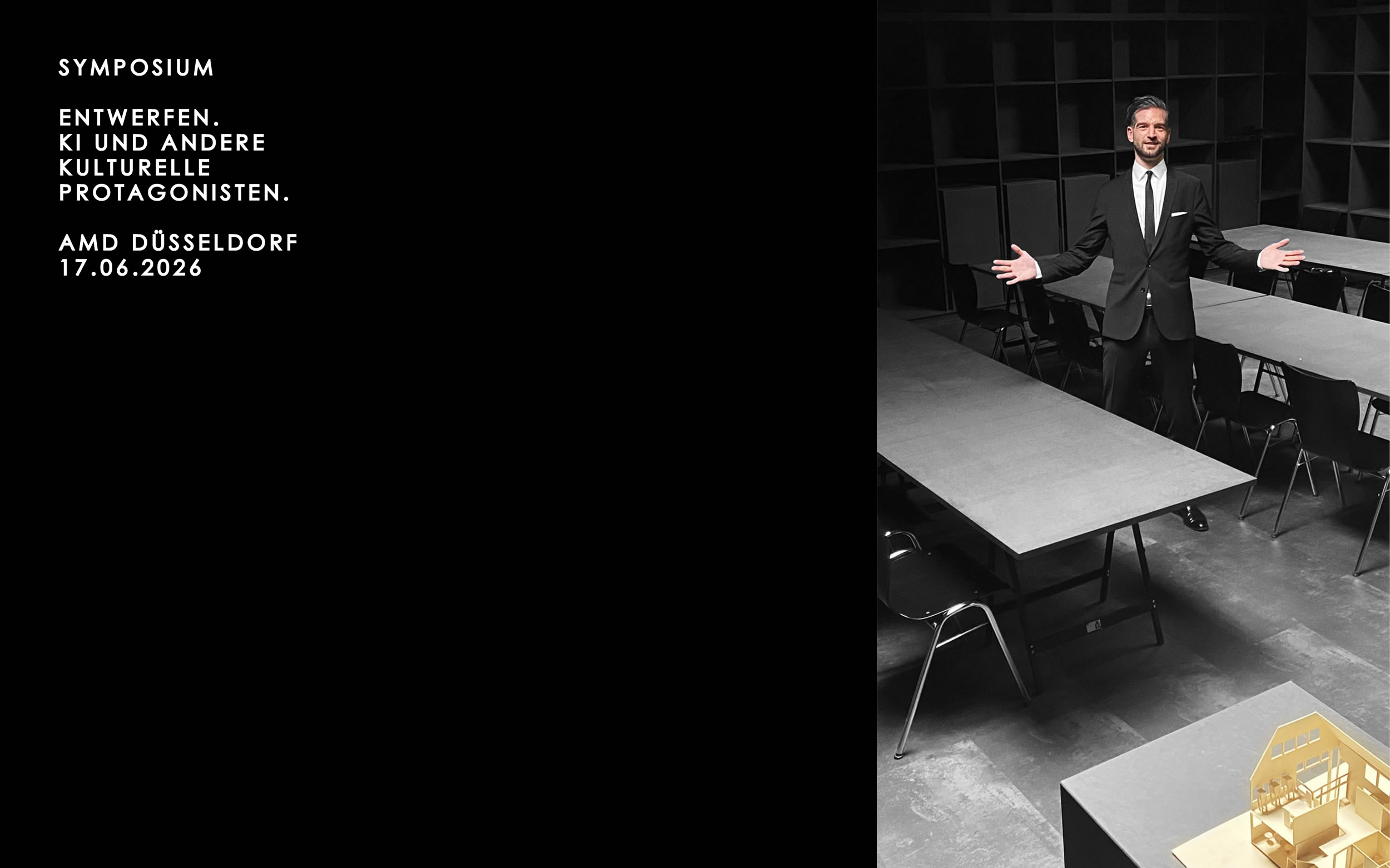
Designing. AI and Other Cultural Protagonists.
Symposium at AMD Düsseldorf – 17 June 2026
Artificial intelligence is currently transforming the tools, processes and images of design at great speed. Hardly any field of architecture, design or spatial practice remains untouched by these developments. At the same time, the question increasingly arises as to what role human beings will occupy within future design processes.
The symposium “Designing. AI and Other Cultural Protagonists.” understands this development not merely as a technological shift, but as a cultural and spatial challenge. At its centre are questions of judgment, responsibility, experience, authorship and atmosphere — as well as the decision-making processes through which spaces, places and spatial conditions emerge.
AI is capable of processing information, generating variations and accelerating workflows. Yet it neither assumes responsibility nor possesses the capacity to evaluate spatial, social and cultural consequences. Precisely for this reason, the question of designing becomes newly relevant today.
Architecture is responsibility — because it endures.
The symposium is grounded in a position that understands architecture not as image production, but as a responsible process of spatial decision-making. Designing means weighing possibilities against one another, recognising consequences and creating spatial situations that shape human experience over long periods of time. Spaces do not emerge neutrally. They influence perception, behaviour, memory and atmosphere. Places carry cultural, social and emotional significance. Designing therefore always involves responsibility toward future forms of coexistence and collective life. Quality does not arise solely through speed or technological capability, but through judgment. The event explicitly does not position itself as a technology fair or AI promotion platform. Its aim is a disciplinary discourse on the conditions of designing within the tensions between human and machine, experience and generation, responsibility and delegation, as well as analogue perception and digital acceleration. At the same time, the symposium addresses how spatial experience can be mediated, understood and evaluated under conditions of algorithmic image and form production. For there remains a fundamental distinction between a generated image and a built place: architecture is experienced bodily. It is not only seen, but inhabited, traversed, heard, touched and atmospherically perceived.
The symposium brings together positions from architectural theory, design research, design pedagogy, architectural practice, product design and contemporary media and technology discourse.
Contributors include:
- Prof. Dr. Susanne Hauser (UdK Berlin)
- Prof. Dr. Vera Bühlmann (TU Wien)
- Prof. Dr. Martin Gessmann (HfG Offenbach)
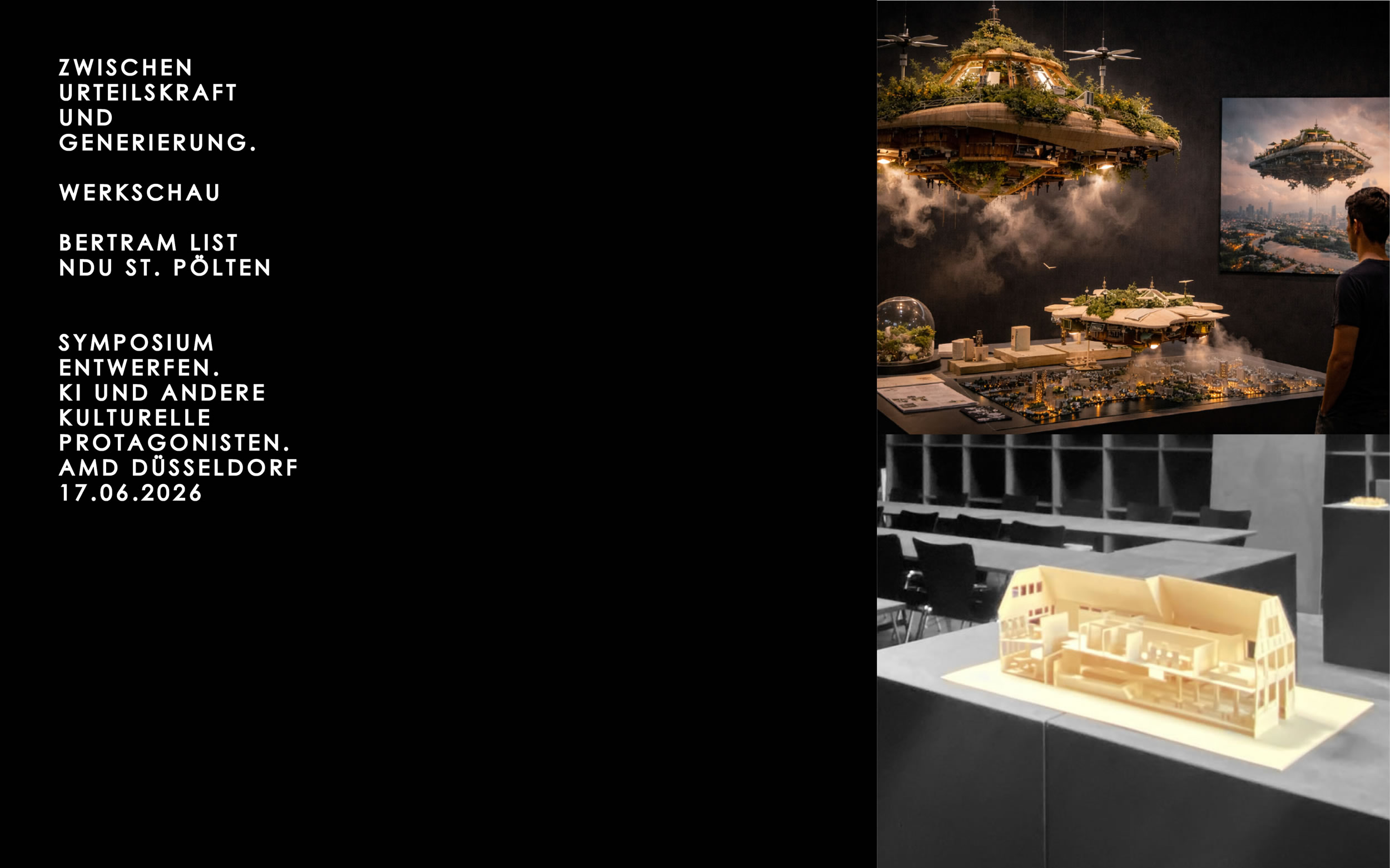
- Bertram List (NDU St. Pölten, AMD Düsseldorf)
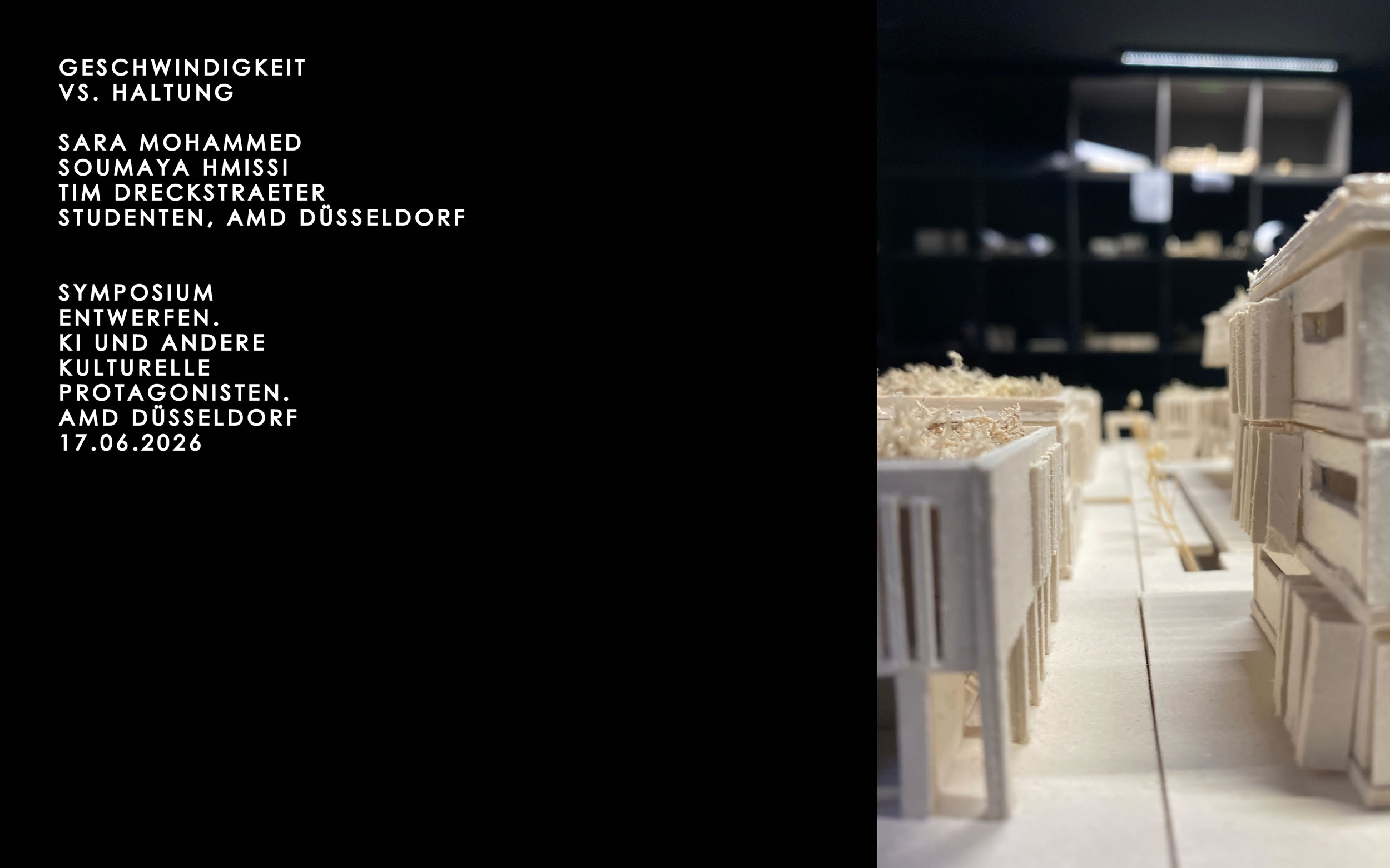
- Sara Mohammed, Soumaya Hmissi, Tim Dreckstraeter (Students, AMD Düsseldorf)
- Dr. Kim Lauenroth (FH Dortmund)
- Prof. Jan R. Krause (HS Bochum)
- Prof. Dr. Urs Hirschberg (TU Graz)
- Moritz Waldemeyer (Studio Waldemeyer)
- Prof. Sven Bersch / Björn Bersch (AMD Hamburg)
- Prof. Oliver Schneller (RSH Düsseldorf)
The Chamber of Architects of North Rhine-Westphalia accompanies the event with a welcoming address by its president, Katja Domschky.
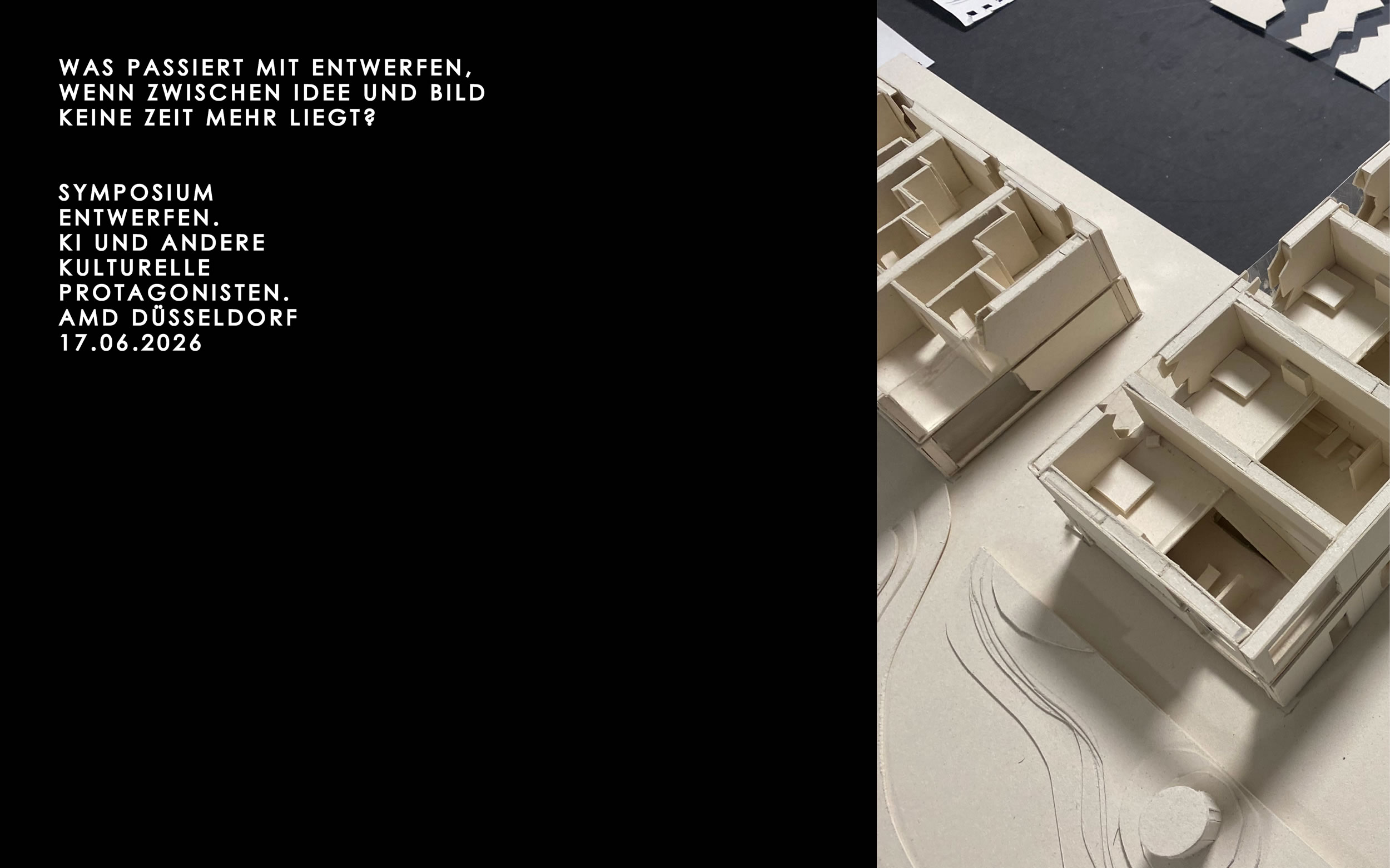
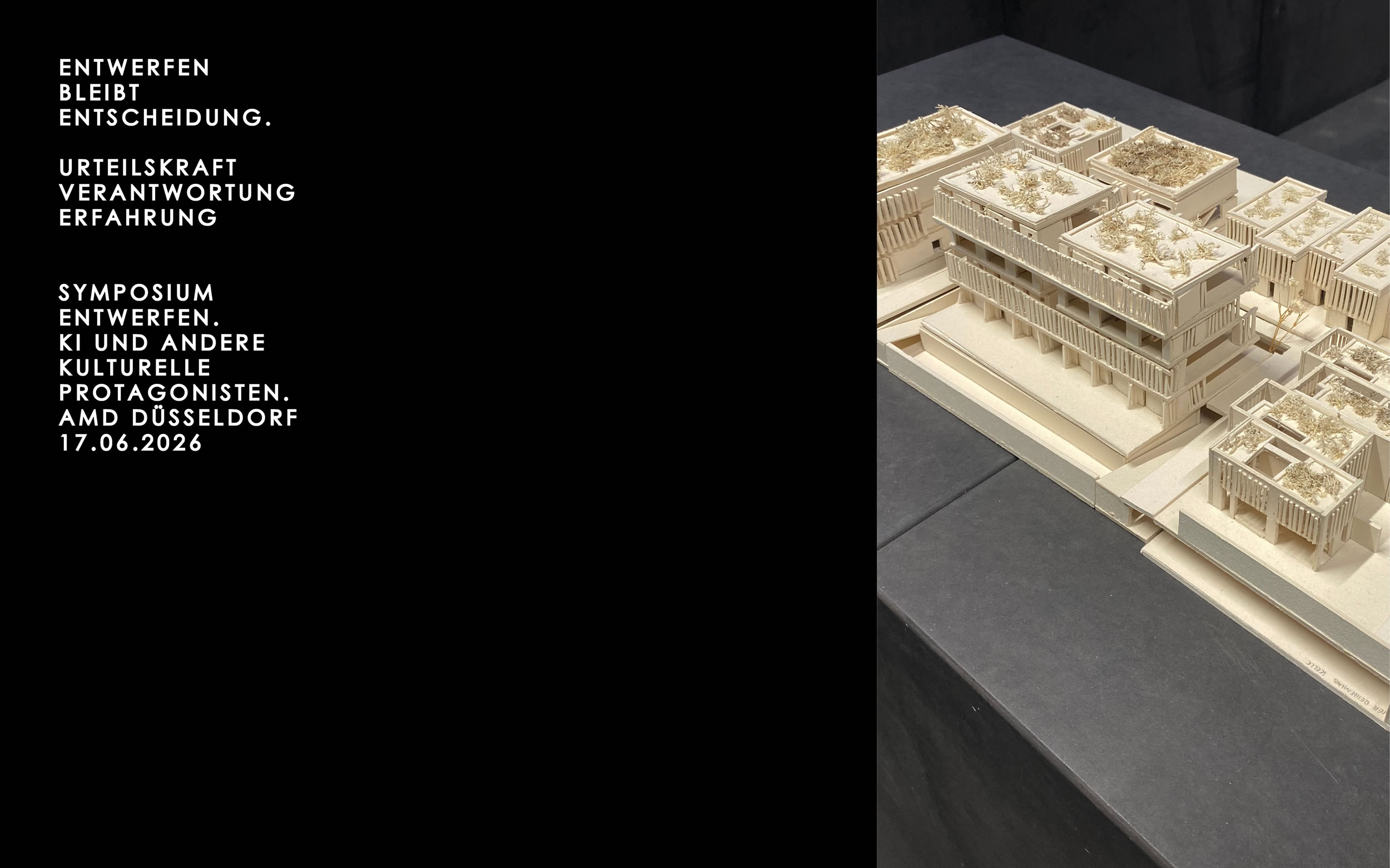
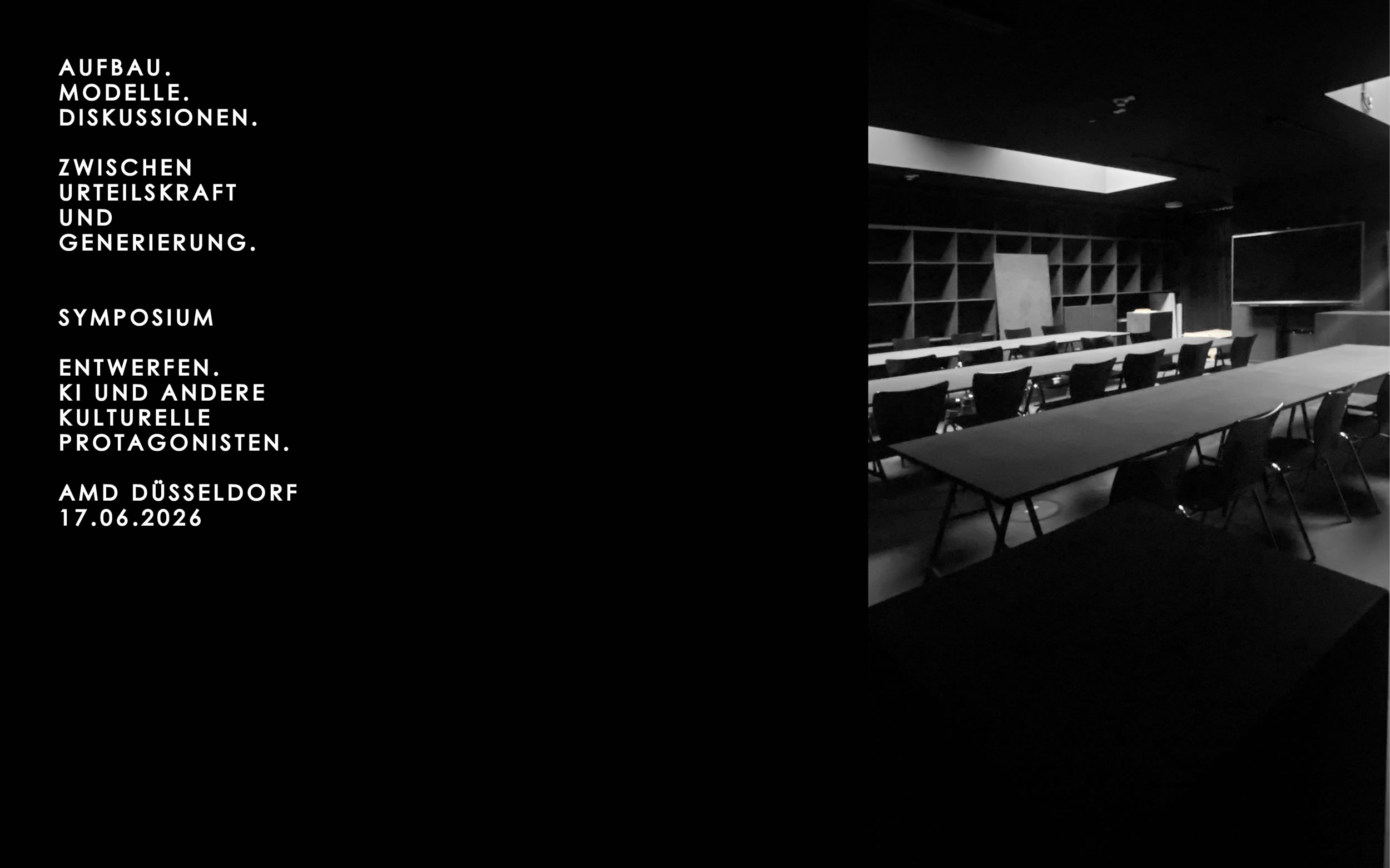
Alongside lectures and discussions, the symposium presents an exhibition of student work. The exhibition focuses on different modes of designing: analogue drawing, model-making, digital processes, AI-generated content and experimental design methodologies. Rather than staging a simple opposition between “analogue” and “AI,” the exhibition investigates different conditions of authorship, process, perception, decision-making and design. It demonstrates that designing extends far beyond the production of images. Spaces possess scale, materiality, atmosphere and duration. They emerge from decisions whose consequences are technical, cultural and societal.
An image can be generated in seconds. Judgment cannot.
The event is situated within a pedagogical framework that does not understand design merely as the transmission of knowledge. Atmosphere cannot be measured — it can only be experienced. Judgment does not emerge through the passive accumulation of information, but through experience: through drawing, material, space, observation, critique and reflection. Design education therefore does not begin with the screen, but with the conscious perception of place, body, proportion, light and material. Space is not understood here as abstract geometry, but as a culturally and atmospherically effective condition. Places possess identity, memory and context. Designing therefore also means reading, interpreting and responsibly transforming existing spatial conditions. For this reason, design education begins analogue: with charcoal, graphite, ink, models and spatial perception — before digital tools and AI are introduced.
Who draws, sees.
Who sees, understands.
Who understands, decides.
The symposium understands itself as an open discourse platform between academia, practice, research, culture, media and the public. Its aim is not to provide rapid answers to technological developments, but to reflect collectively on how designing changes under the conditions of digital tools — and which foundations must remain. At its core lies the question of how architecture may continue to create places capable of producing orientation, identity, atmosphere and social meaning in the future. Technological tools may transform processes — yet responsibility for built space remains with human beings.
Symposium – Designing. AI and Other Cultural Protagonists.
Wednesday, 17 June 2026, 10:00–20:00
AMD Düsseldorf
Franklinstraße 41
40479 Düsseldorf
Concept and Organisation in collaboration with
students: Soumaya Hmissi, Liliana Schmidt, Alex-San Dursun, Sara Mohammed, Tim Dreckstraeter,
speakers and participating academic partners.
Prof. Dipl.-Ing. Felix Schwake
Professor of Design Methodology
Dean of Studies, Interior Design (B.A.)
Dean of Studies, Product Design (B.A.)
AMD Düsseldorf
University of Applied Sciences