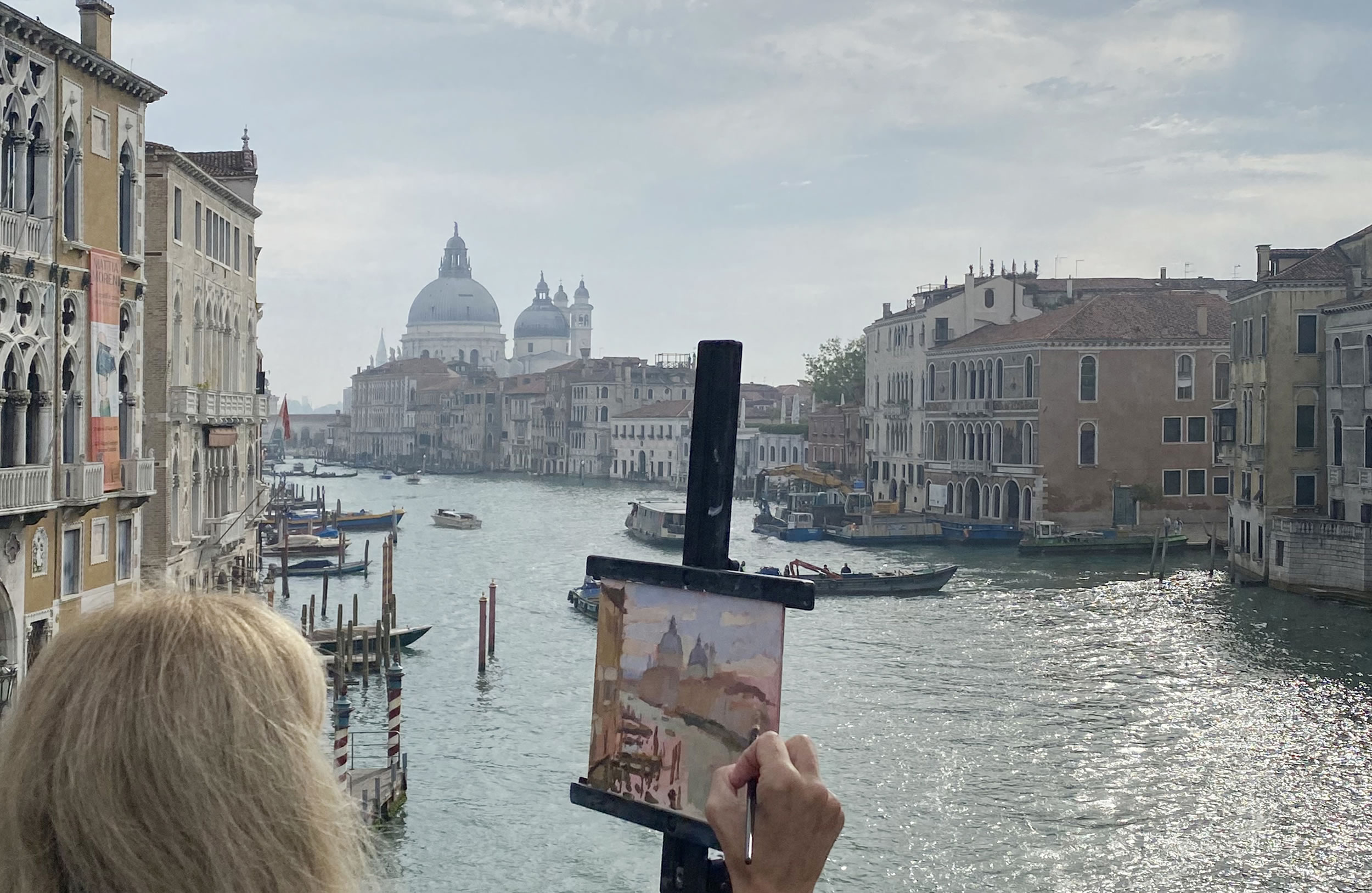
Those who draw, see. Those who see, understand. Those who understand, decide.
The development of design judgement is central. Teaching aims to enable students to explain the reasoning behind their decisions clearly and take responsibility for their consequences. The starting point is personal perception and the direct experience of space, light and material.
Drawing helps students look more closely and investigate spatial relationships. In the dialogue between space, people, models, drawings and critique, intentions become visible, decisions are discussed and designs developed further.
A sequence of assignments developed by Felix Schwake begins with a special moment from each student’s life. First, they describe this moment in poetry or prose: Which sensory impressions and spatial qualities shape the experience? This is followed by a work of visual art. Only then are the insights from both stages translated into an architectural design. Language, art and architecture thus form a connected exploration of spatial experience.
The teaching sequence begins with analogue tools such as charcoal, graphite and ink, and later incorporates CAD, 3D and AI. The benchmark is the ability to develop an intention, test it through design and take responsibility for the decisions made.
