

Designing Means Deciding
Artificial Intelligence, Judgment and Responsibility in the Architectural Design Process
On 17 June 2026, the symposium “Designing. AI and Other Cultural Protagonists” took place at AMD Düsseldorf, Hochschule Fresenius. The event was recognized by the North Rhine-Westphalia Chamber of Architects as a continuing education event and awarded 9 continuing education credits. The day was opened, among others, with a welcome address by Katja Domschky, President of the Chamber of Architects of North Rhine-Westphalia.
The symposium was initiated by Prof. Felix Schwake, Professor of Design Methodology and Dean of Studies for Interior Design and Product Design at AMD Düsseldorf. Its aim was not to present new AI tools or to provide a mere overview of technological possibilities. At the center was a more fundamental question: What does artificial intelligence change about designing itself?
This question directly concerns architecture, interior design and product design. If images, texts, variants, atmospheres and design proposals can be generated at high speed, then not only individual work steps are affected. The conditions under which design is developed, taught, evaluated and decided upon also shift. This was the point of departure for the symposium.
The title “Designing. AI and Other Cultural Protagonists” was chosen deliberately. Artificial intelligence was not understood merely as a technical aid, but neither was it treated as an autonomous designing subject. It was considered as a cultural, technical and creative actor: something that orders perception, accelerates processes, produces images, prepares decisions and changes expectations.
The central question was therefore not whether AI may be used. Nor was the aim to offer a general judgment in favor of or against it. The crucial question was what role AI assumes within design processes and how it changes concepts such as authorship, judgment, responsibility, perception and teaching.
The central thesis of the day was: AI can generate possibilities. It can calculate variants, produce images, formulate texts and accelerate processes. But it assumes neither judgment nor responsibility.
Architecture does not emerge from image production alone. It is built, used, perceived, alters places and remains in the world. For this reason, responsibility for architectural decisions cannot be delegated to a generative system.
The theoretical section was opened by Prof. Dr. Susanne Hauser from the Berlin University of the Arts with the question of agency in the architectural design process. This perspective was fundamental for the further course of the symposium. If digital media and AI systems are no longer merely passive tools, but actively produce proposals, orders, images and variants, then the question of who acts in the design process shifts.
Who initiates a design? Who structures the field of possibilities? Who selects? Who decides? And who bears responsibility?
The strength of this question lies in its refusal of simple answers. AI can no longer be described only as a neutral tool if it structurally shapes design processes. At the same time, it cannot be assigned human responsibility. In this intermediate situation, the role of the designer requires more precise definition. The architect, designer or teacher does not stand outside technical processes, but is not relieved by them either. Rather, he must decide more precisely what role generated possibilities play within the design process.
This set a conceptual framework at the beginning of the symposium that remained relevant for many of the later contributions. The question of agency was connected throughout the day with questions of teaching, collaboration, research and responsibility.
Prof. Dr. Vera Bühlmann from TU Wien expanded the discussion to questions of authorship, relation to the world, orientation and orders of knowledge. Her contribution led the debate beyond a purely instrumental view of AI. The issue was not only what technical systems execute, but how they participate in shaping legibility, attention, orientation and the preparation of decisions.
This perspective is particularly relevant for architecture. Architecture does not merely organize use. It structures perception, movement, proximity, distance, transitions, publicity and privacy. It establishes relations and makes the world experienceable. If technical systems increasingly participate in organizing perception and information, this affects not only the design process, but also the relation between design and world.
In this perspective, designing appears not as the mere production of form, but as work on the conditions of experience, understanding and inhabitability. Especially in a technological present in which complexity is either smoothed out or made incomprehensible, architecture remains a discipline that must enable orientation without losing depth.
Prof. Dr. Martin Gessmann from the Hochschule für Gestaltung Offenbach connected the debate on AI with the Bauhaus and modern design. This opened an important historical horizon. The current uncertainty caused by AI is not entirely new. Modern design, too, had to clarify how technology, material, industry, design and responsibility could be brought together.
The Bauhaus was not only a school of new forms. It was also a place where the relation between design and technological modernity was redefined. The question then, as now, was: How can technology expand design without transferring judgment, quality and responsibility to technology?
AI sharpens this question. But it does not create it out of nothing. This was one of the important insights of the symposium: artificial intelligence is not only a topic of the future. It forces us to reread the history of design. Many questions that arise today in connection with AI touch upon older fundamental questions of modern design: the relation between concept and execution, technology and material, freedom and method, process and responsibility.
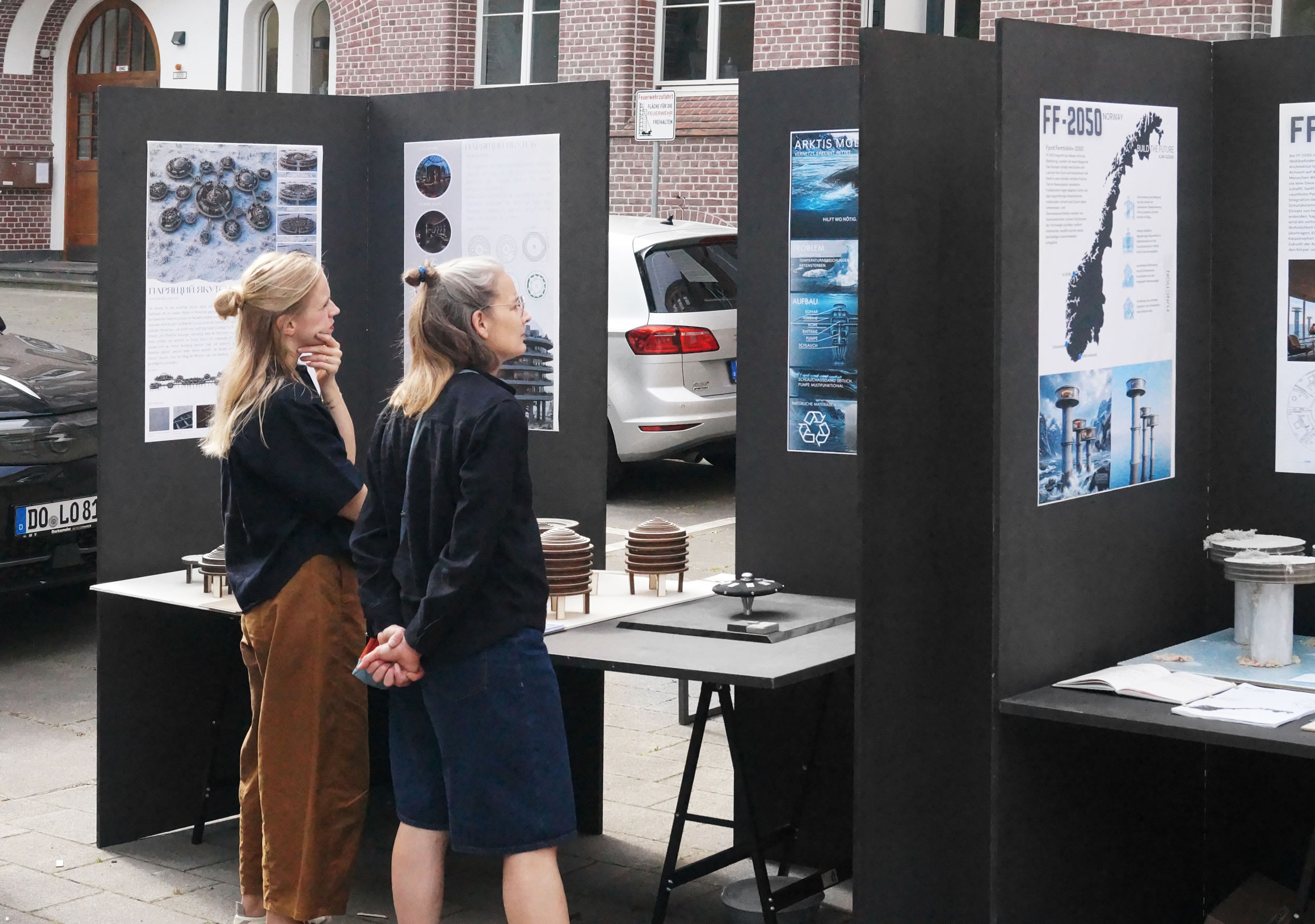
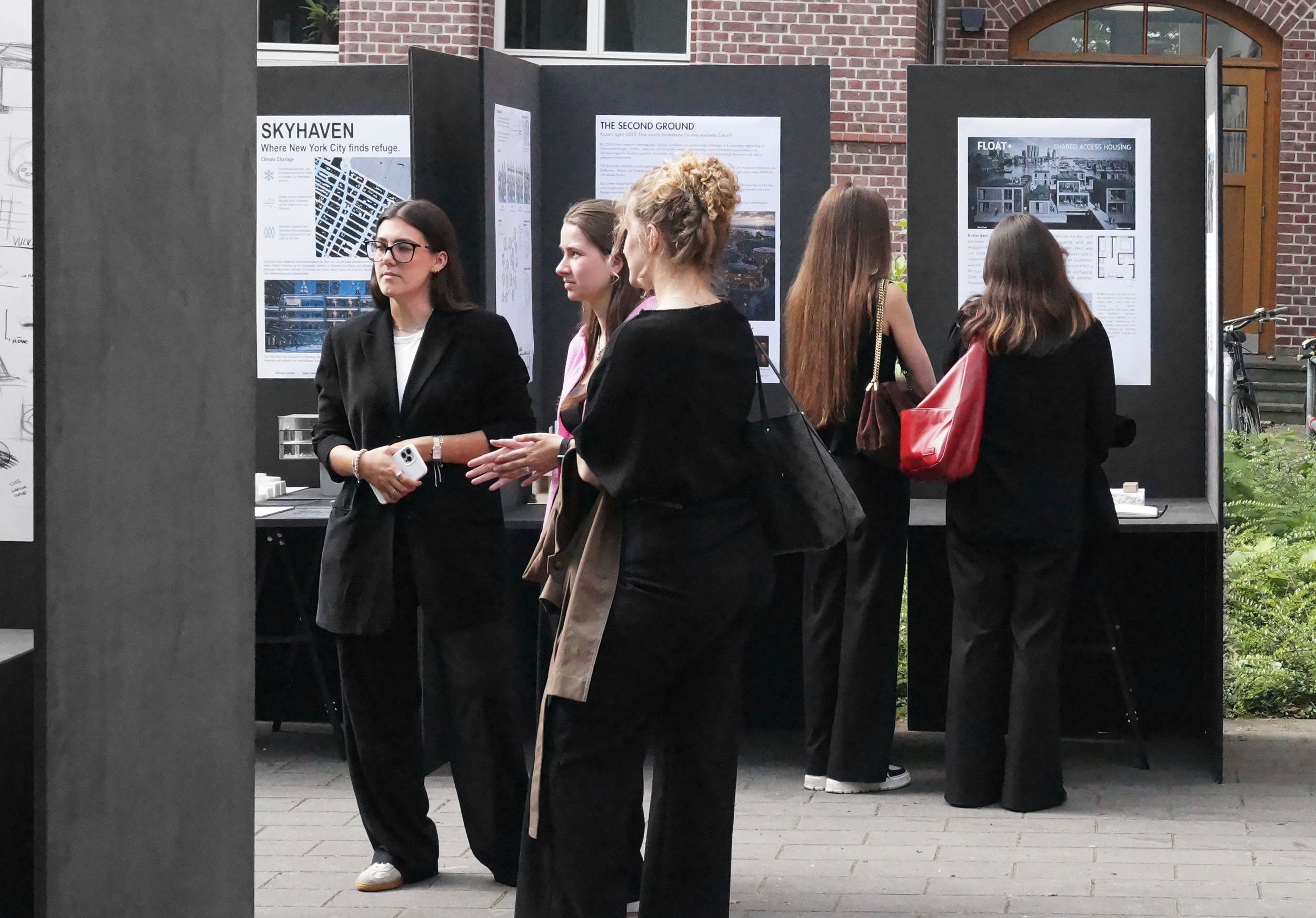
After the theoretical morning, Bertram List brought the discussion into concrete design education with the exhibition “Designification & AI.” Works from the fourth semester showed how AI can be used not merely as a means of rapid image production, but as an object of critical inquiry.
The central question thus shifted to the level of education: How do students learn to work with generative systems without being determined by their results? Which images of the future do AI systems produce? Which cultural patterns do they reproduce? Where do clichés emerge? Where do productive irritations arise? And how can generated images become the starting point for a reflective design process?
In the context of study, it becomes particularly clear that AI does not only require technical operating skills. What matters is whether students learn to read images, question results, recognize assumptions and justify design decisions. In this context, AI can be an accelerator. But it can also become a test of whether criteria, attitude and judgment are already present.
The student contribution by Sara Mohammed, Soumaya Hmissi and Tim Dreckstraeter continued at precisely this point. Under the title “Speed versus Attitude,” they asked the audience: “Do you think a good design needs time?”
This question touched on a central point of the event. AI can accelerate design processes. It can generate results within seconds that initially appear plausible, atmospheric or even convincing. Yet this does not eliminate the necessity of design. It shifts it.
Time is then no longer located only in the technical production of an image. It lies in the formation of criteria, in critical seeing, in reflecting on effect, in discarding, refining and justifying. Speed does not replace attitude. It makes the absence of attitude visible more quickly.
This was the significance of the student contribution. The discussion about AI was not conducted only on a professorial or theoretical level, but was brought back to the concrete experience of studying. What does it mean for students when generative systems deliver results very quickly? How does an individual position emerge under these conditions? And how can teaching prevent speed from being mistaken for quality?
Dr. Kim Lauenroth from FH Dortmund further developed this question in his lecture “From Tool to Partner. A Design Education for the Digital in the Age of AI.” Here, AI was not described merely as a replacement for individual work steps, but as a possible partner in the design process.
This shift is demanding. A partner is not simply an instrument. At the same time, AI is not a responsible subject. This creates a new didactic task: it must be clarified what can be delegated, what must be checked, which criteria apply and where human judgment remains indispensable.
For design education, this means that it cannot limit itself to integrating new tools into existing workflows. It must more strongly teach how to think with generated results, how to criticize them, how to develop them further and where to contradict them. AI can extend the design process. It does not, however, release us from responsibility for the result.
Prof. Jan R. Krause from Bochum University of Applied Sciences continued this line of thought with the concept of collaborative intelligence. AI then appears not as an isolated program, but as part of work processes, forms of communication and organizational structures.
Collaboration with AI requires guidance. It requires selection, onboarding, control and correction. If AI enters processes like a new employee, it must not only be used, but also evaluated. It must fit the task, the mode of working and the culture of a team. AI thus becomes a question of organization and communication.
This perspective is relevant for architectural practice. In offices, universities and design processes, AI will not only take over individual tasks. It will change ways of working. It will accelerate workflows, influence communication and create new expectations of results. Precisely for this reason, clear criteria are needed. It is not the machine that decides whether a result is good. What remains decisive is whether people develop, apply and take responsibility for criteria.
In his own contribution “Judgment, Embodied Experience and Responsibility,” Prof. Felix Schwake formulated the architectural core question of the symposium. AI changes the tools of design, but not its fundamental problem. Designing remains a process of justifiable decision-making.
Architecture is not merely an image. It is built, used, perceived, alters places and remains in the world. It follows that architectural responsibility cannot be delegated to a generative system. AI can generate options, calculate variants and produce images. But it assumes neither judgment nor responsibility.
This question leads to the embodied experience of space. AI can depict atmospheres, but it does not experience space. It can simulate spatial effects, but it has no bodily orientation, no material perception, no experience of use and no social context of its own.
For architectural design, it therefore remains decisive how perception is translated into judgment and how judgment is translated into responsible decision-making. The designer must not only see what an image shows. He must judge what a space means, how it is used, what effect it produces, what responsibility it carries and whether the decision can be justified.
With Prof. Oliver Schneller from the Robert Schumann Hochschule Düsseldorf, the debate was extended beyond the visual. From the perspective of composition, sound, perception and time, it became clear that AI does not only concern image production. It changes medial forms of experience as a whole.
For architecture and spatial design, this extension is essential. Spaces are not only seen. They are heard, traversed, remembered, bodily experienced and lived through in time. A debate on AI that concentrates solely on images therefore misses a substantial part of spatial experience.
The perspective of music and composition made clear that designing also has to do with rhythm, duration, repetition, expectation, atmosphere and structures of perception. This created an important counterpoint to an image-heavy AI debate. When architecture is at stake, the question of visual effect is not enough. Experience must also be addressed.
The final lecture was given by Prof. Dr. Urs Hirschberg from TU Graz. His contribution on AI and architectural research showed that architecture need not be merely a user of digital tools. It can bring its own questions, methods and research approaches into the debate on AI.
At the intersection of digital media, fabrication, spatial thinking and architectural research, a field emerges in which AI is not only an aid, but also an object of scientific investigation. Architecture can question AI from within its own concerns: What does AI mean for space? For material? For perception? For design education? For responsibility? For research? For the cultural role of architecture?
This made clear that architecture should not merely adopt the AI debate. It must help shape it with its own criteria and questions.
The symposium did not formulate a simple answer. This was precisely its strength. AI was neither rejected outright nor welcomed uncritically. Rather, a field of tension emerged between theory, teaching, research, practice and student experience.
The contributions showed different perspectives that cannot be reduced to a single formula. From architectural theory, philosophy, Bauhaus discourse, design education, design practice, communication, sound, research and student practice, a shared horizon of questions emerged: How does AI change designing without assuming responsibility for design?
The intellectual progress of the day therefore lay not in a final answer, but in the sharpening of the questions.
- What does agency mean in design when AI systems generate proposals?
- How can authorship still be described when technical processes help shape outcomes?
- How is judgment developed when results appear faster than their justification?
- How does AI change design education?
- How does space remain more than image?
- How can embodied experience be maintained within an increasingly generated image culture?
- What role can architecture itself play in AI research?
Insights from the Symposium
Several insights ran through the day:
The faster technical systems generate results, the more important judgment becomes.
- Where images emerge in seconds, their justification must become more precise.
- Where variants are almost unlimited, selection becomes the actual design achievement.
- Where AI makes proposals, responsibility remains with human beings.
- Where design processes are accelerated, teaching must become more precise in judgment.
- Where AI can depict atmospheres, the embodied experience of space remains indispensable.
- Where technical systems open possibilities, criteria are needed to order these possibilities.
For education, this means that design teaching does not become secondary, but more central. It must increasingly teach how to ask questions, form criteria, examine results and justify decisions. AI can be a tool, a counterpart, an accelerator or a disturbance. But it does not replace the necessity of understanding design as a cultural, spatial and responsible practice.
The question of whether AI can design quickly leads to an unproductive competition between human and machine. It is too simply posed. The more precise question would be: How can people design responsibly under the conditions of AI?
For design does not begin with the image. It begins with a question, a perception, a problem, an intention, a judgment. AI can generate possibilities. It can show variants. It can accelerate images. It can change processes. But it does not decide responsibly.
Architecture requires more than effect. It requires justification.
Designing in the age of AI therefore does not mean deciding less. It means deciding more precisely.
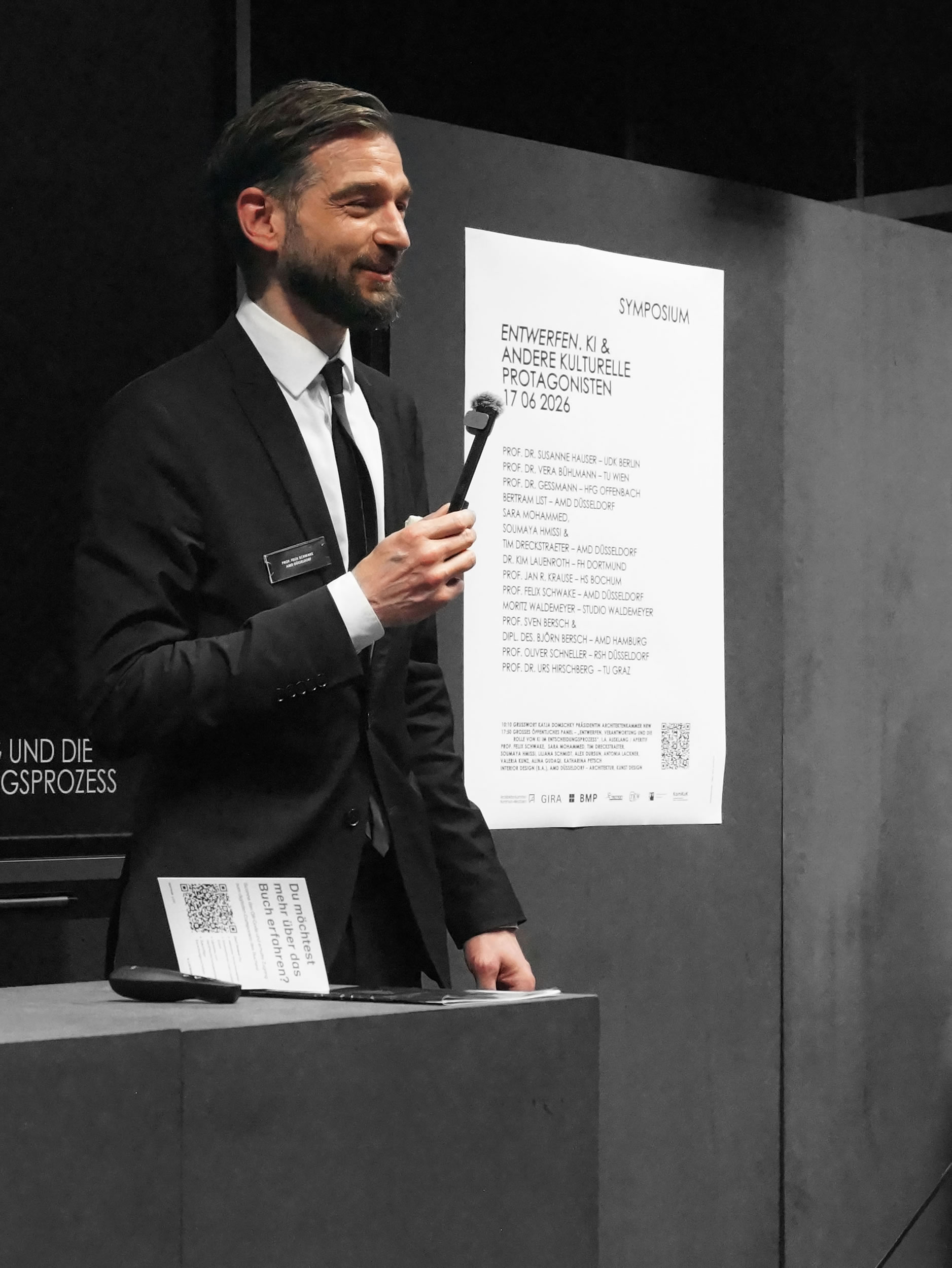
Prof. Felix Schwake
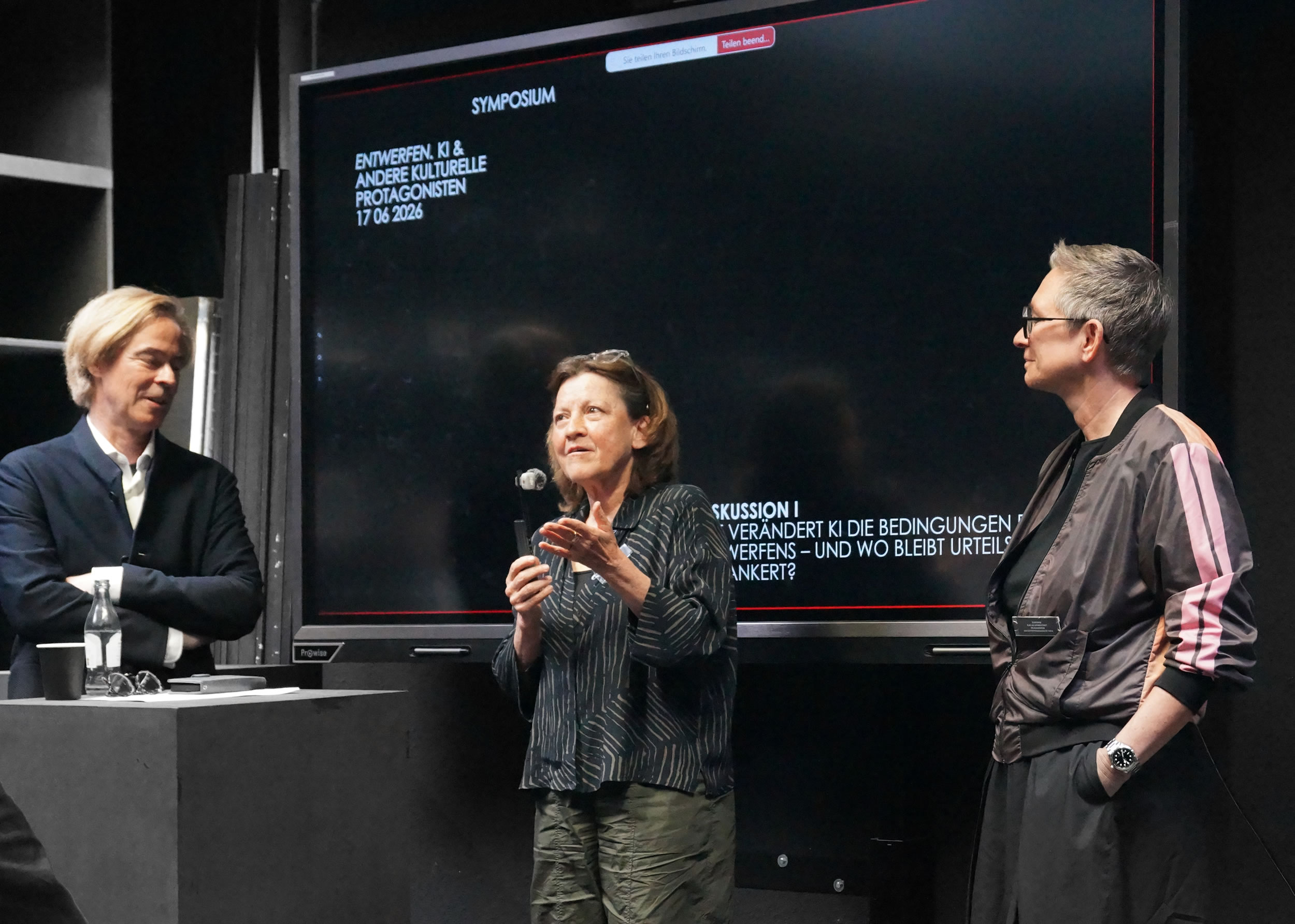
Prof. Dr. Gessmann (HfG Offenbach), Prof. Dr. Susanne Hauser (UDK Berlin)
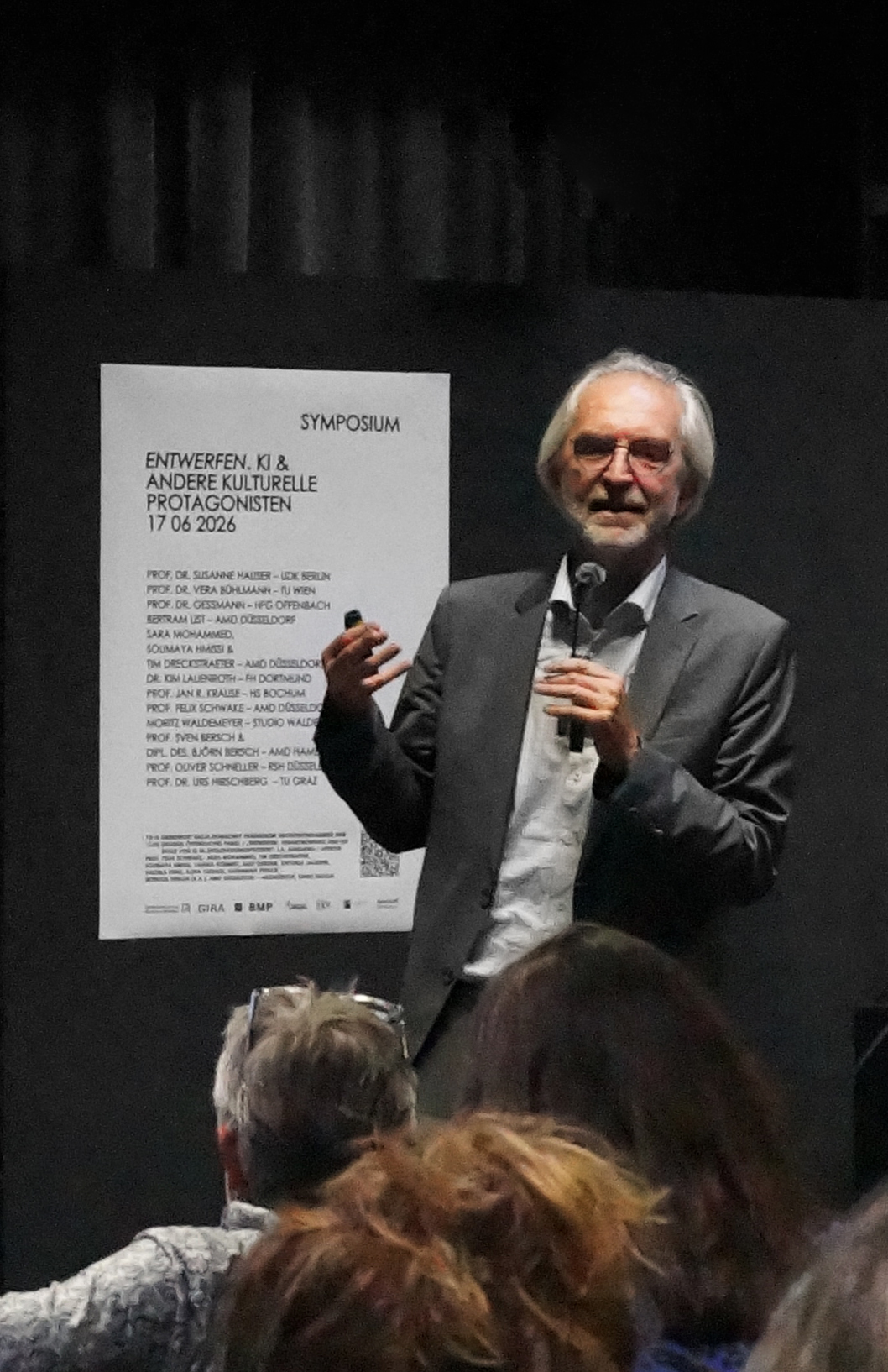
Prof. Dr. Hirschberg (TU Graz)
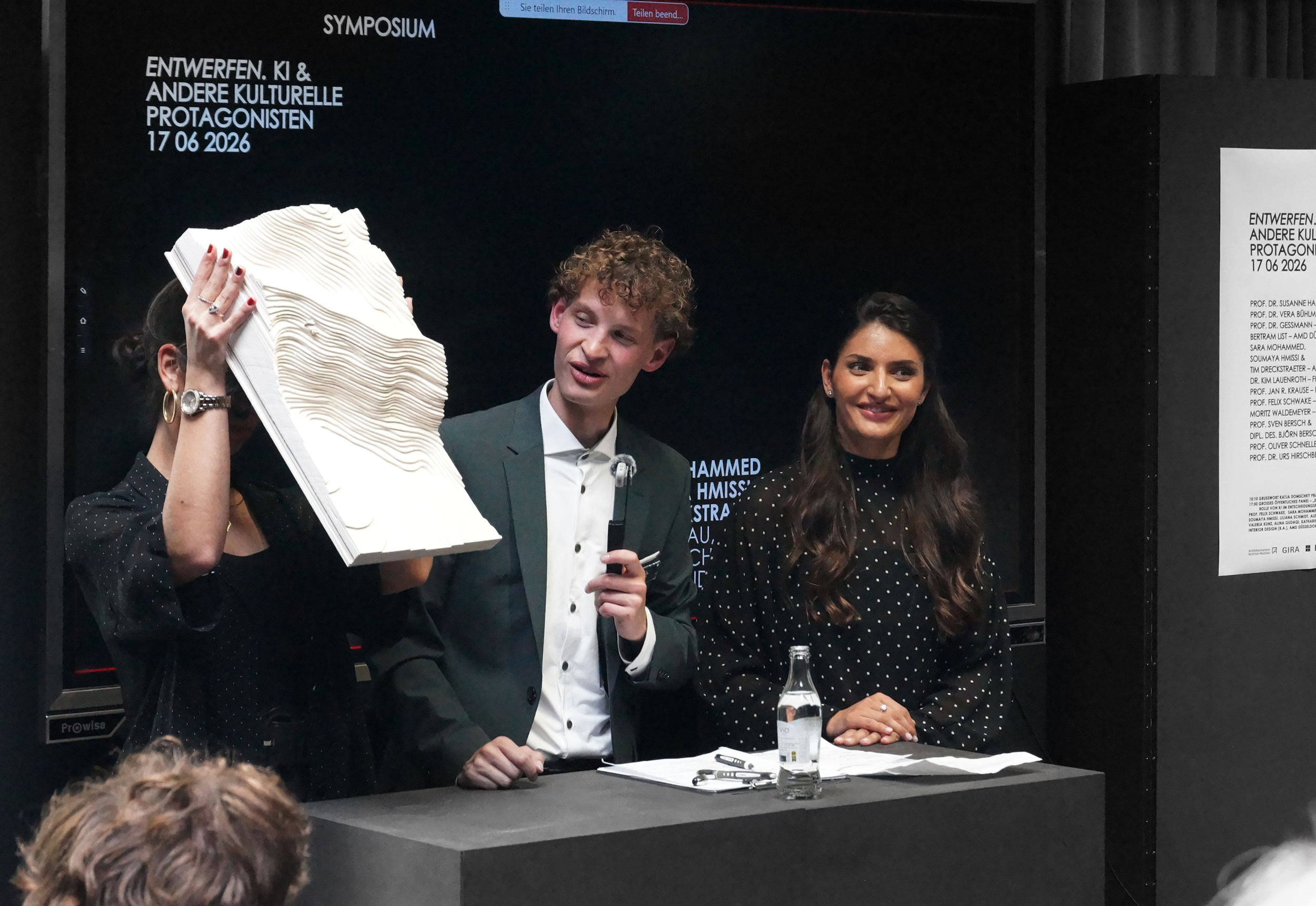
Soumaya Hmissi, Tim Dreckstraeter, Sara Mohammed (Studenten AMD Düsseldorf)
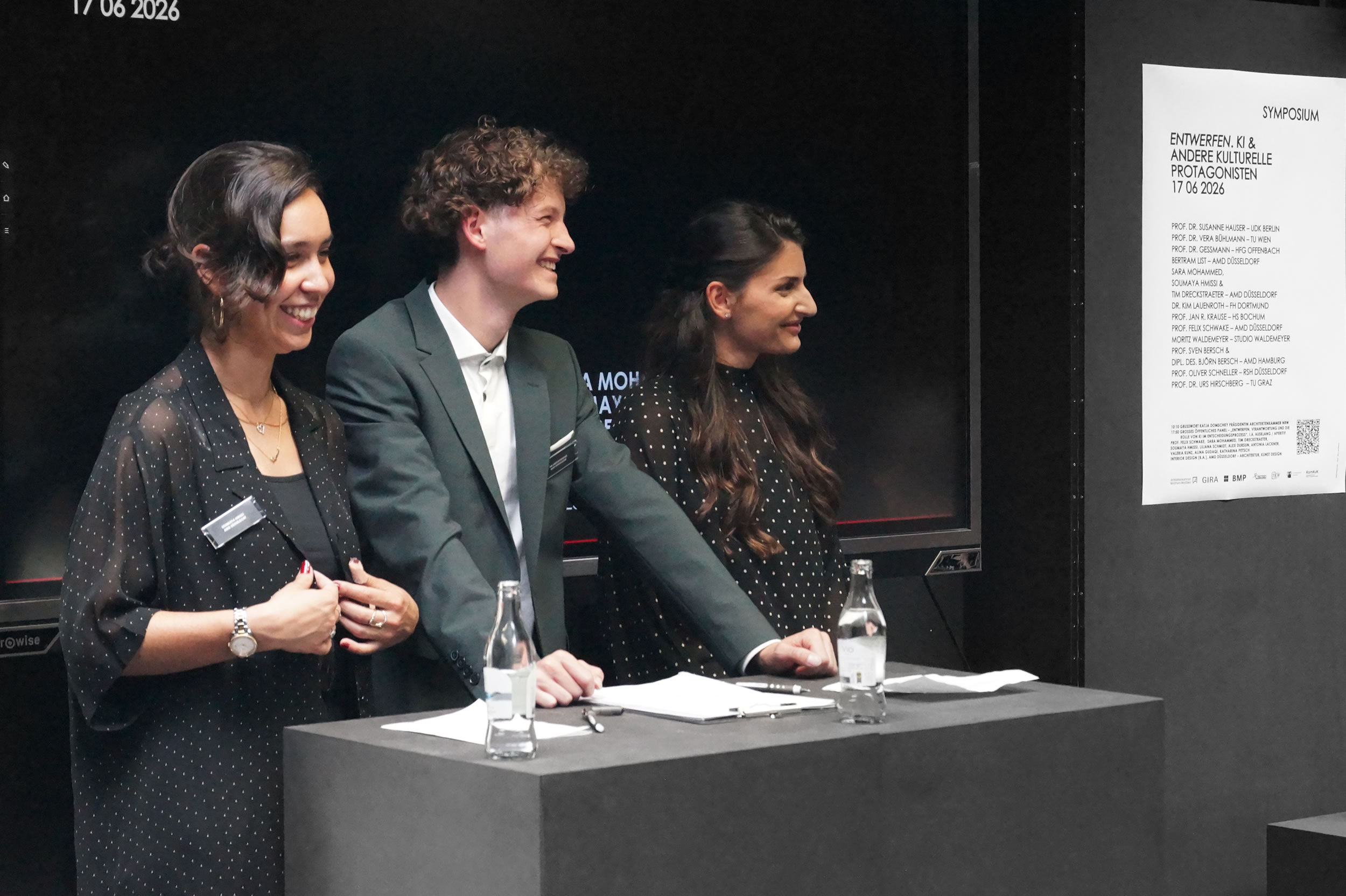
Soumaya Hmissi, Tim Dreckstraeter, Sara Mohammed (Studenten AMD Düsseldorf)
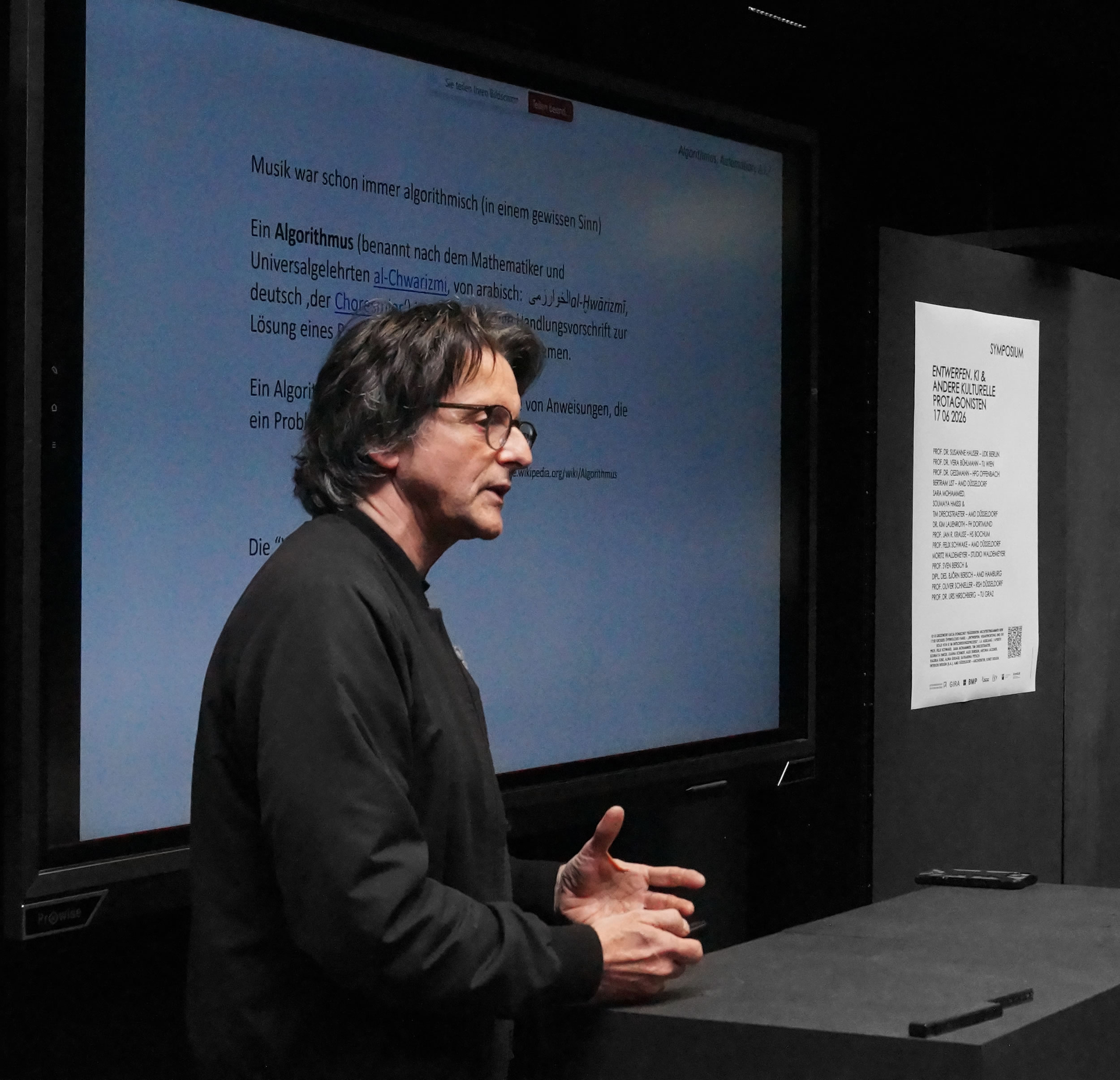
Prof. Oliver Schneller (RSH Düsseldorf)
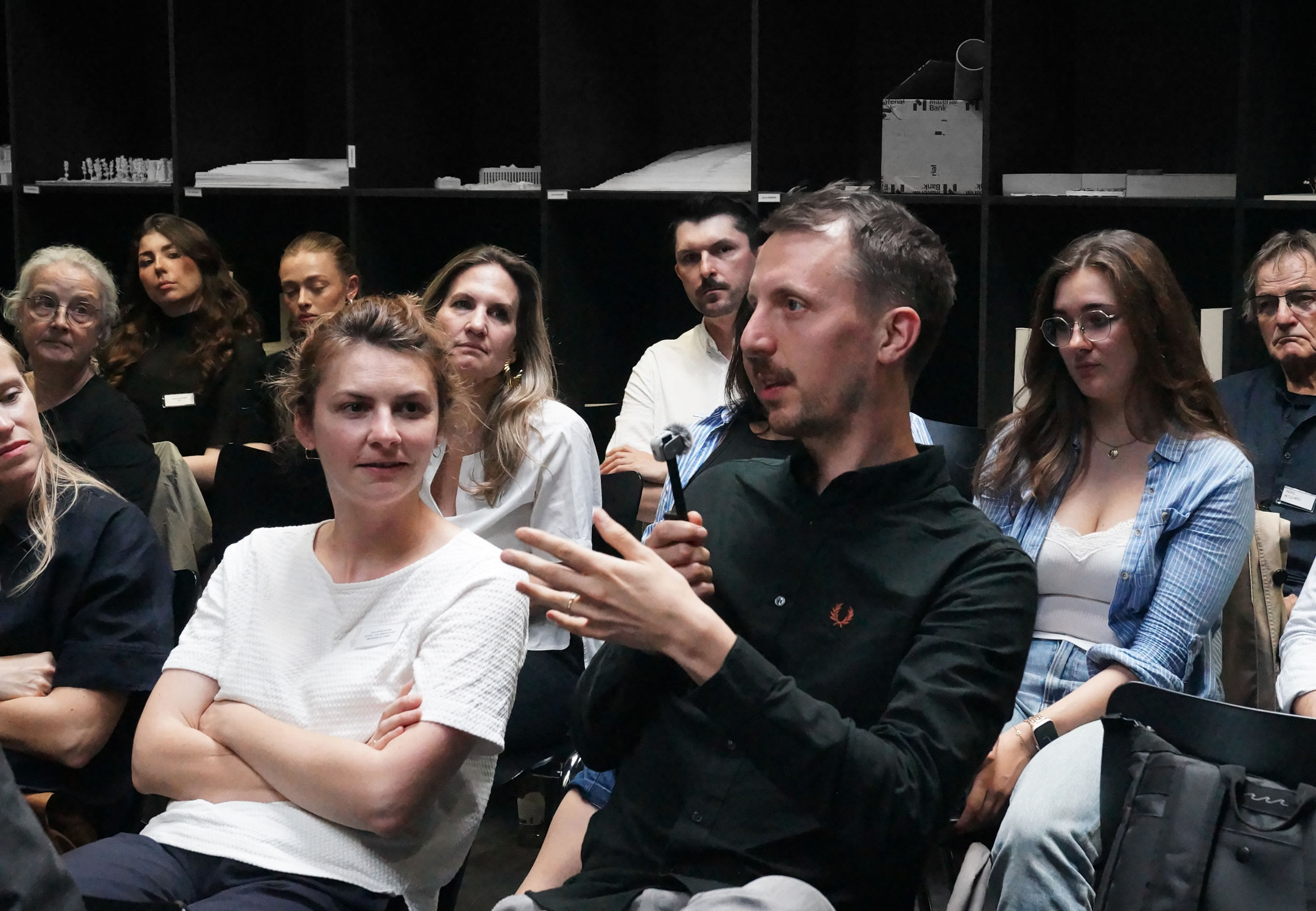
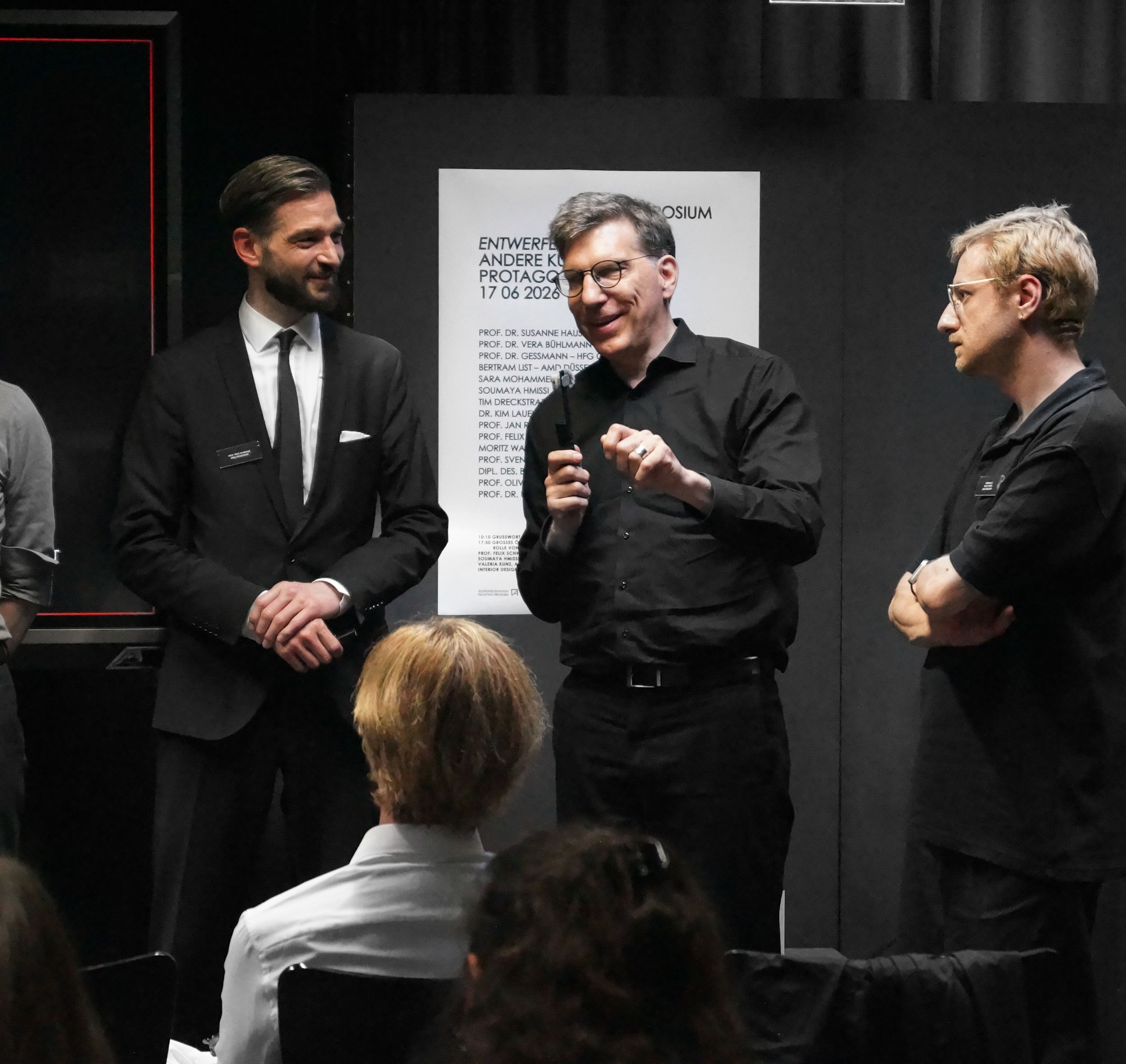
Prof. Felix Schwake, Prof. Dr. Jan Krause (HS Bochum)
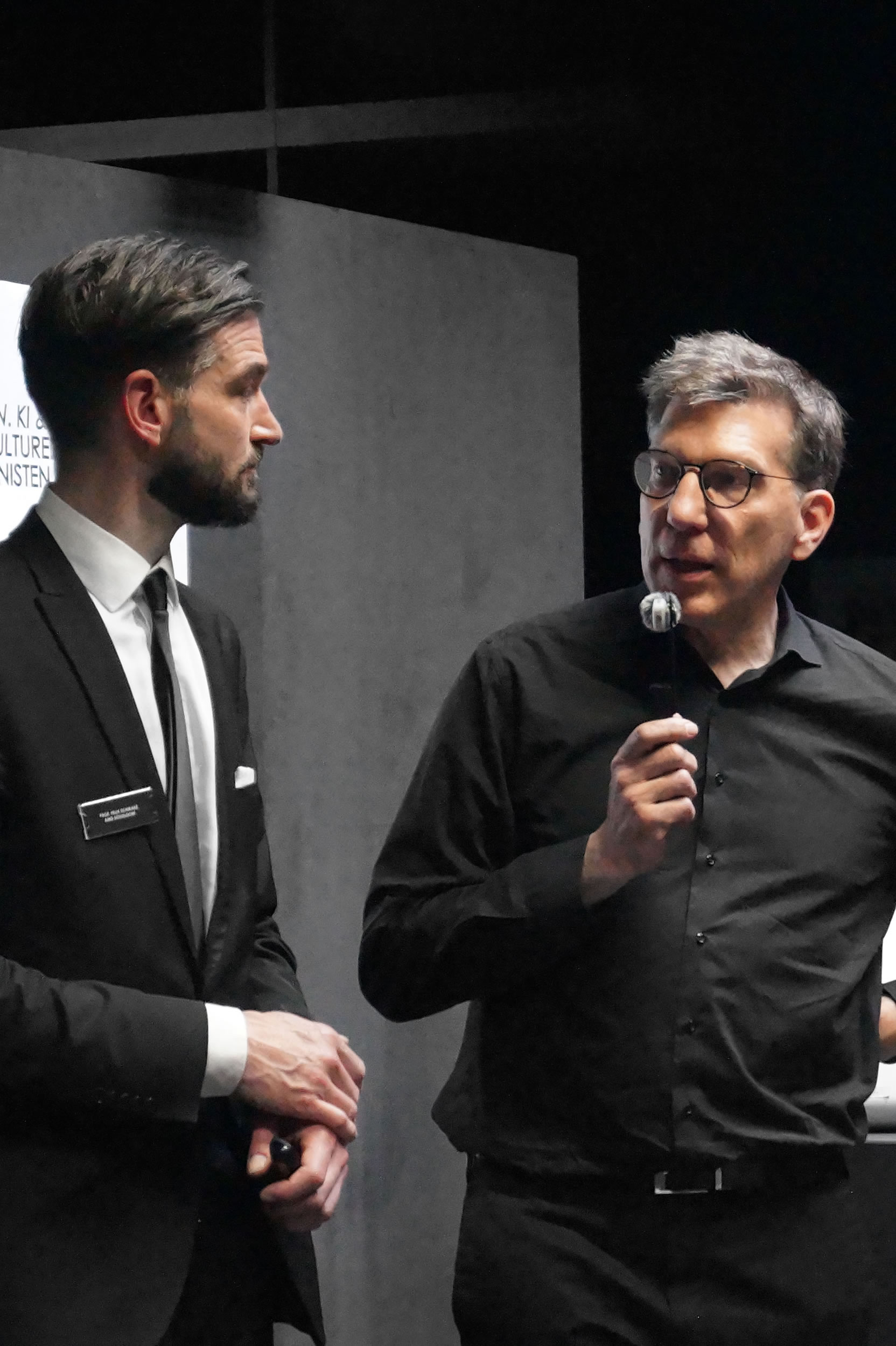
Prof. Felix Schwake, Prof. Dr. Jan Krause (HS Bochum)
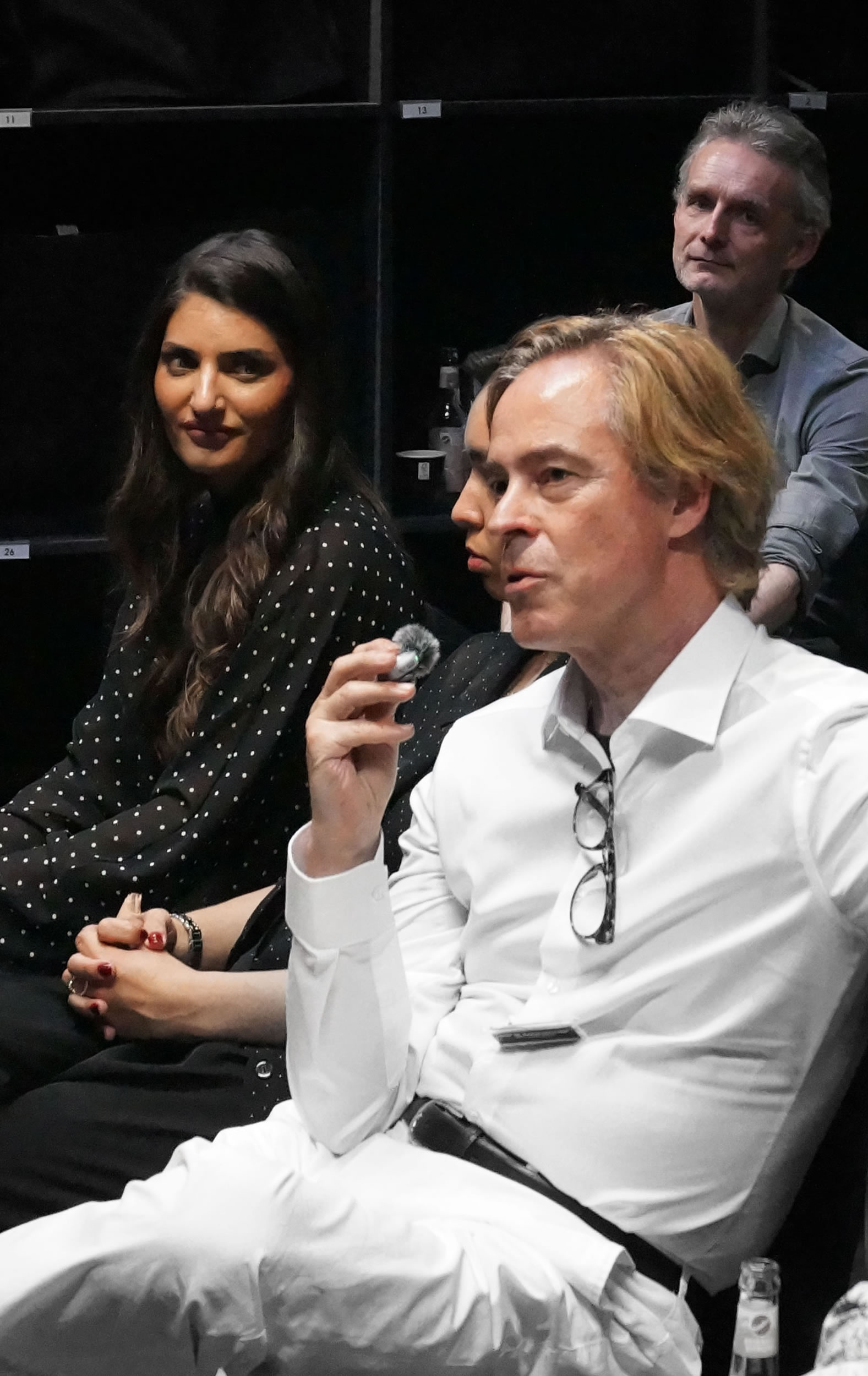
Prof. Dr. Gessmann (HfG Offenbach)
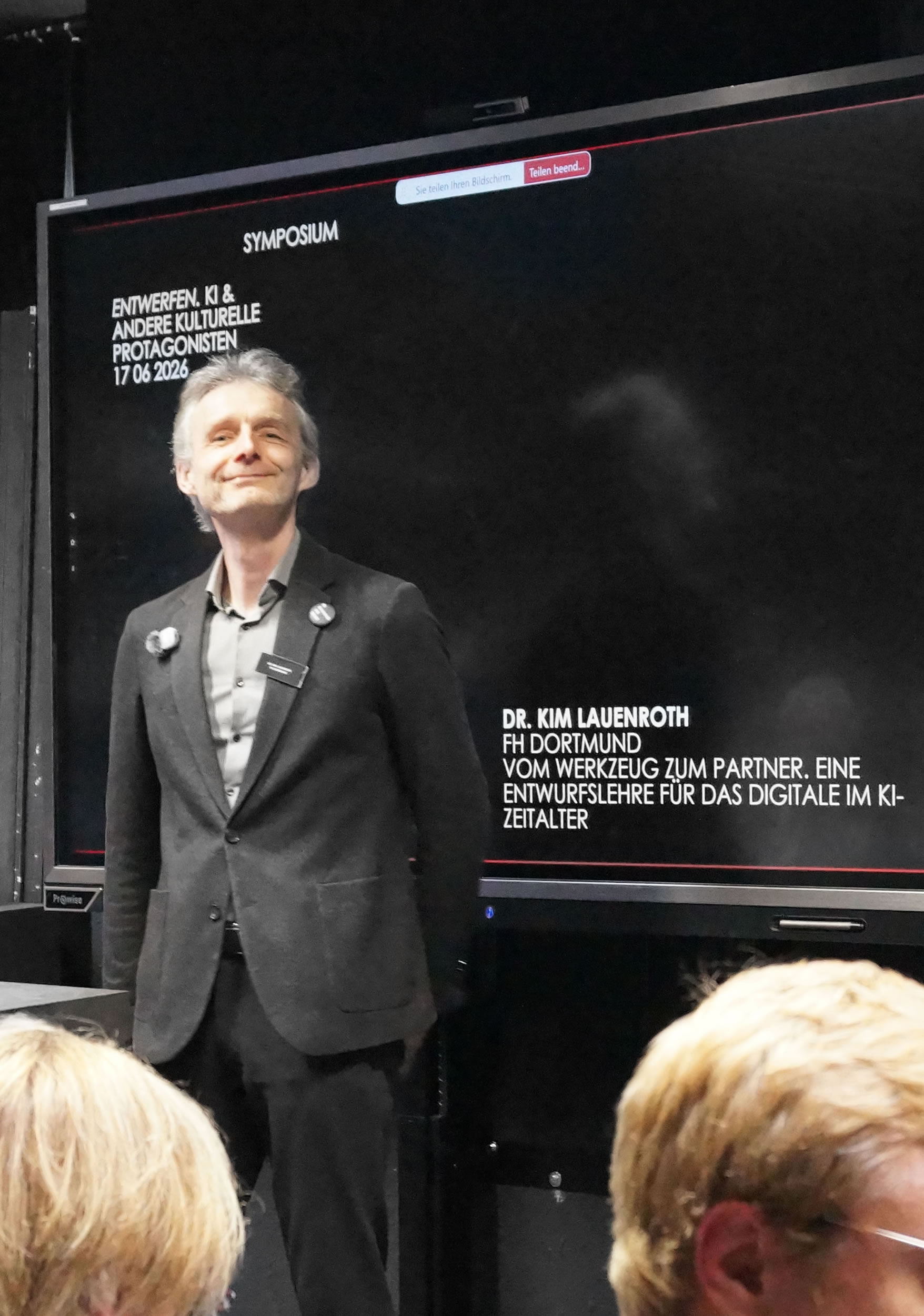
Dr. Kim Lauenroth (FH Dortmund)
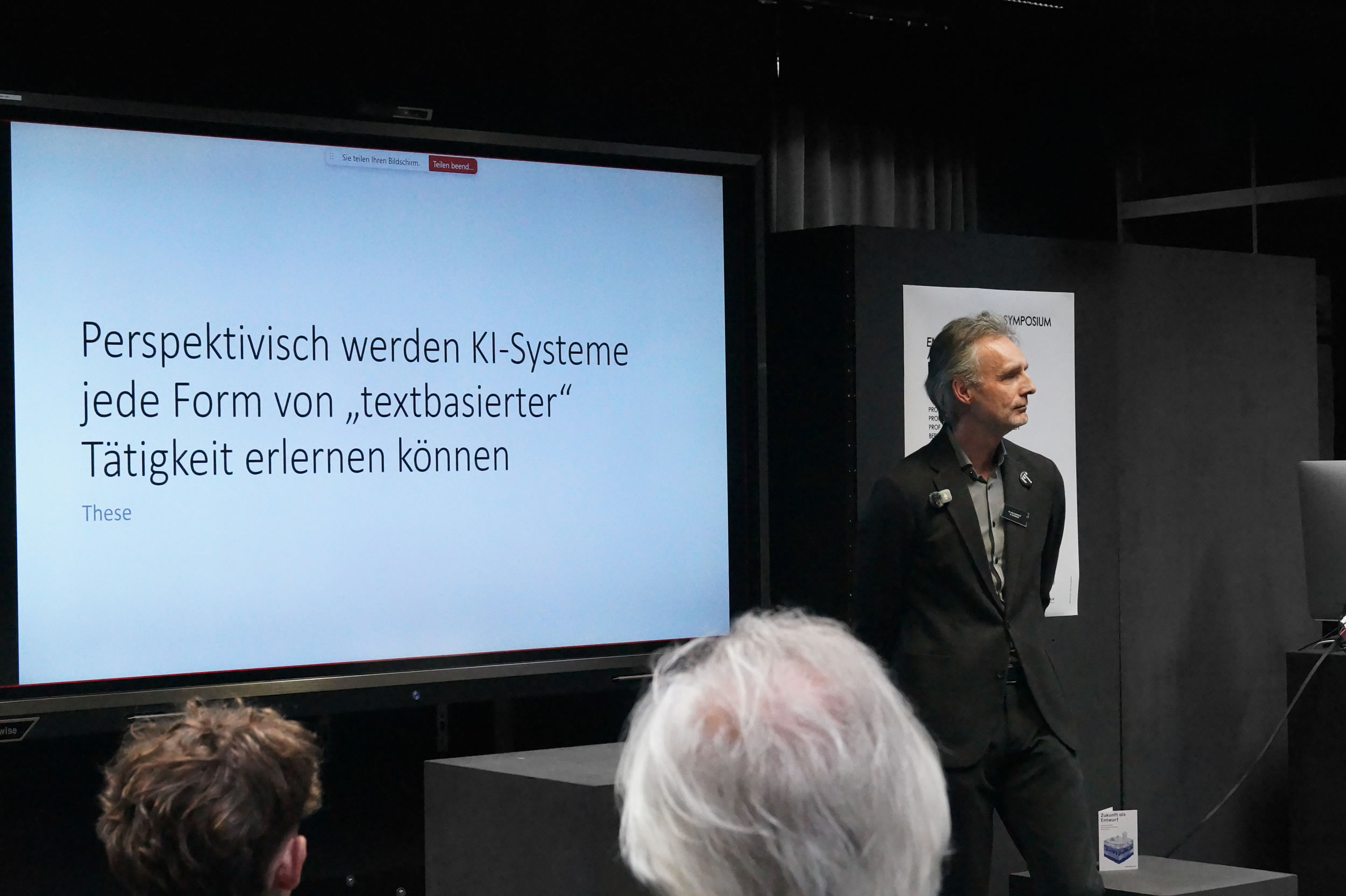
Dr. Kim Lauenroth (FH Dortmund)
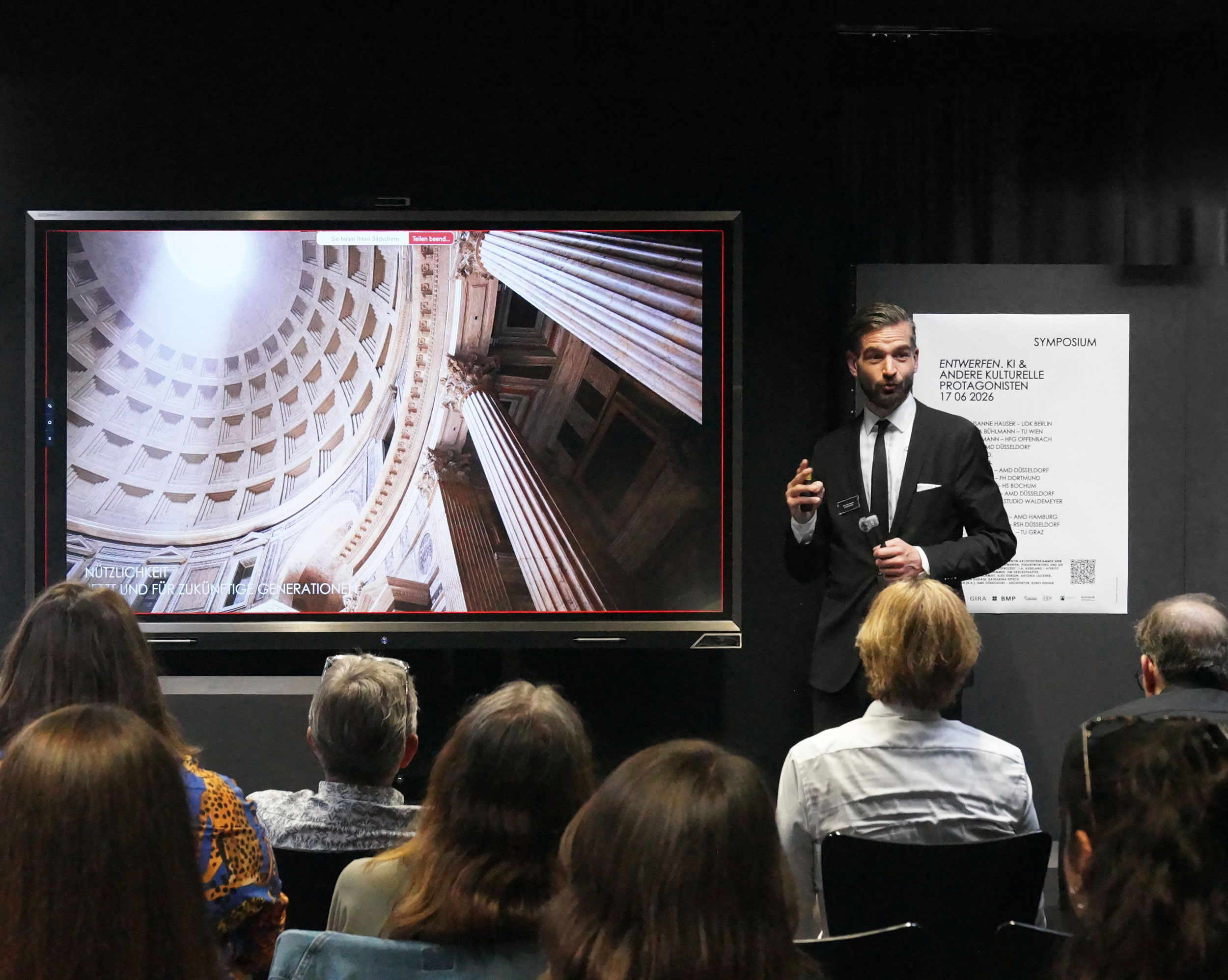
Prof. Felix Schwake (AMD Düseldorf)
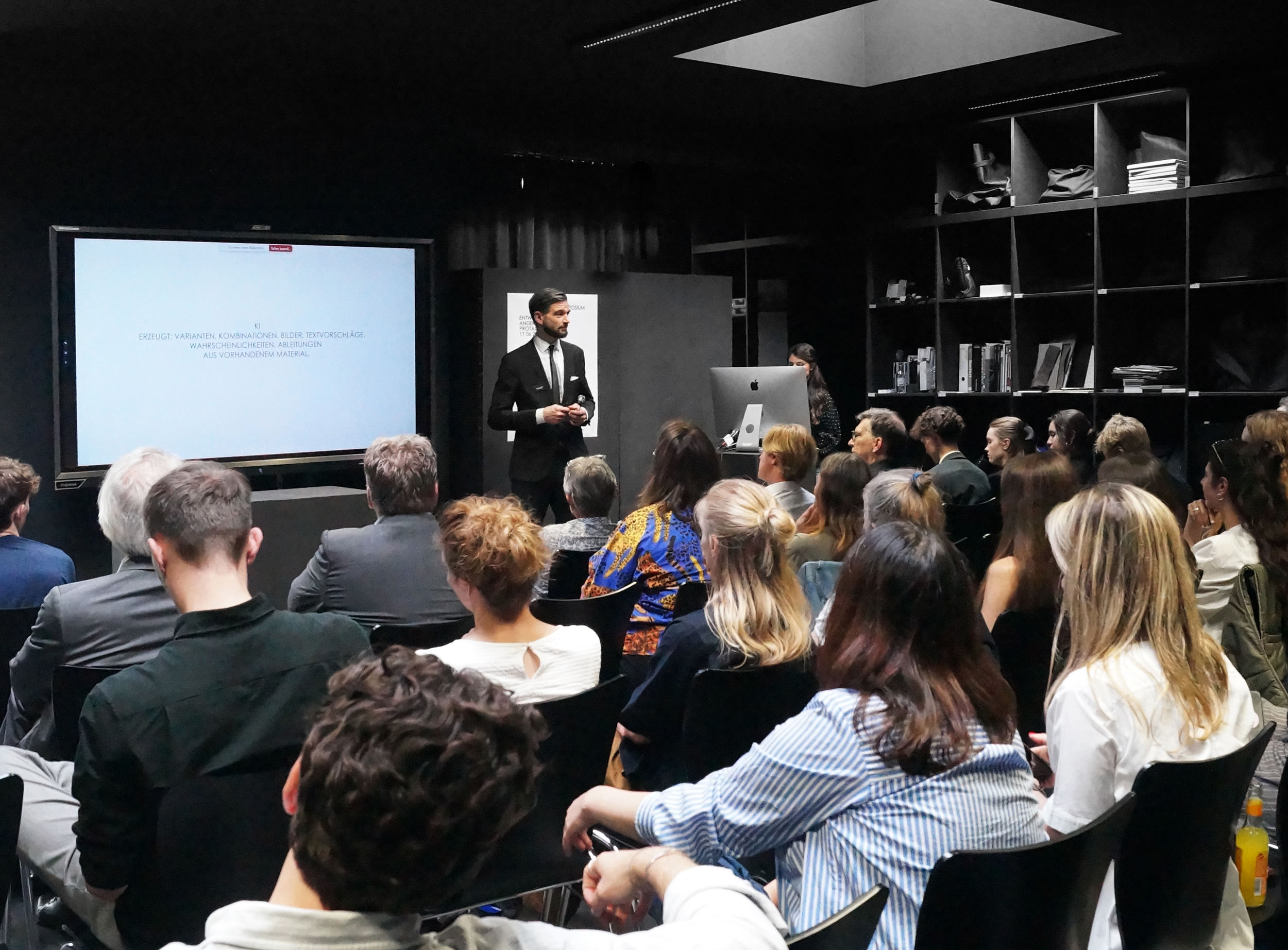
Prof. Felix Schwake (AMD Düseldorf)
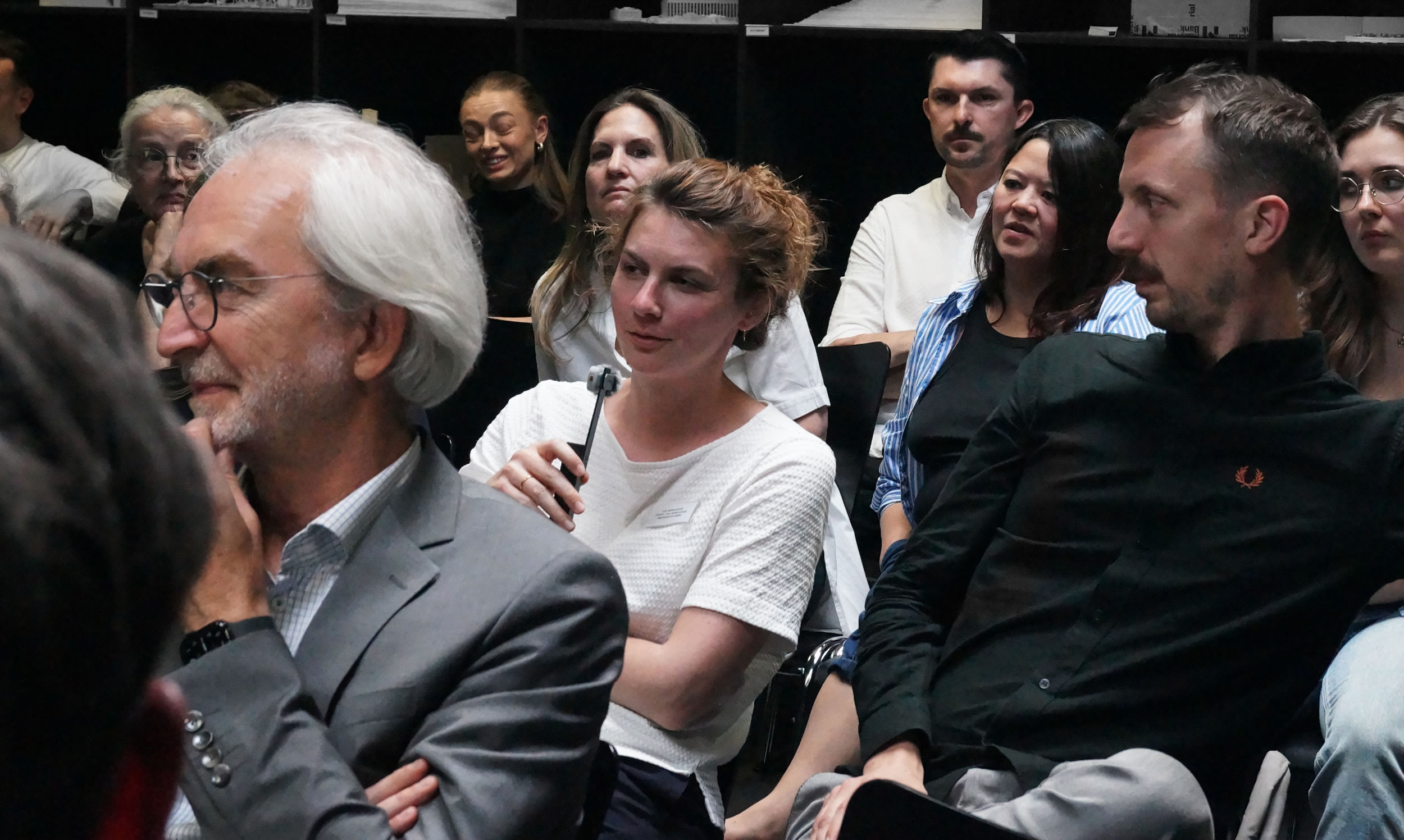
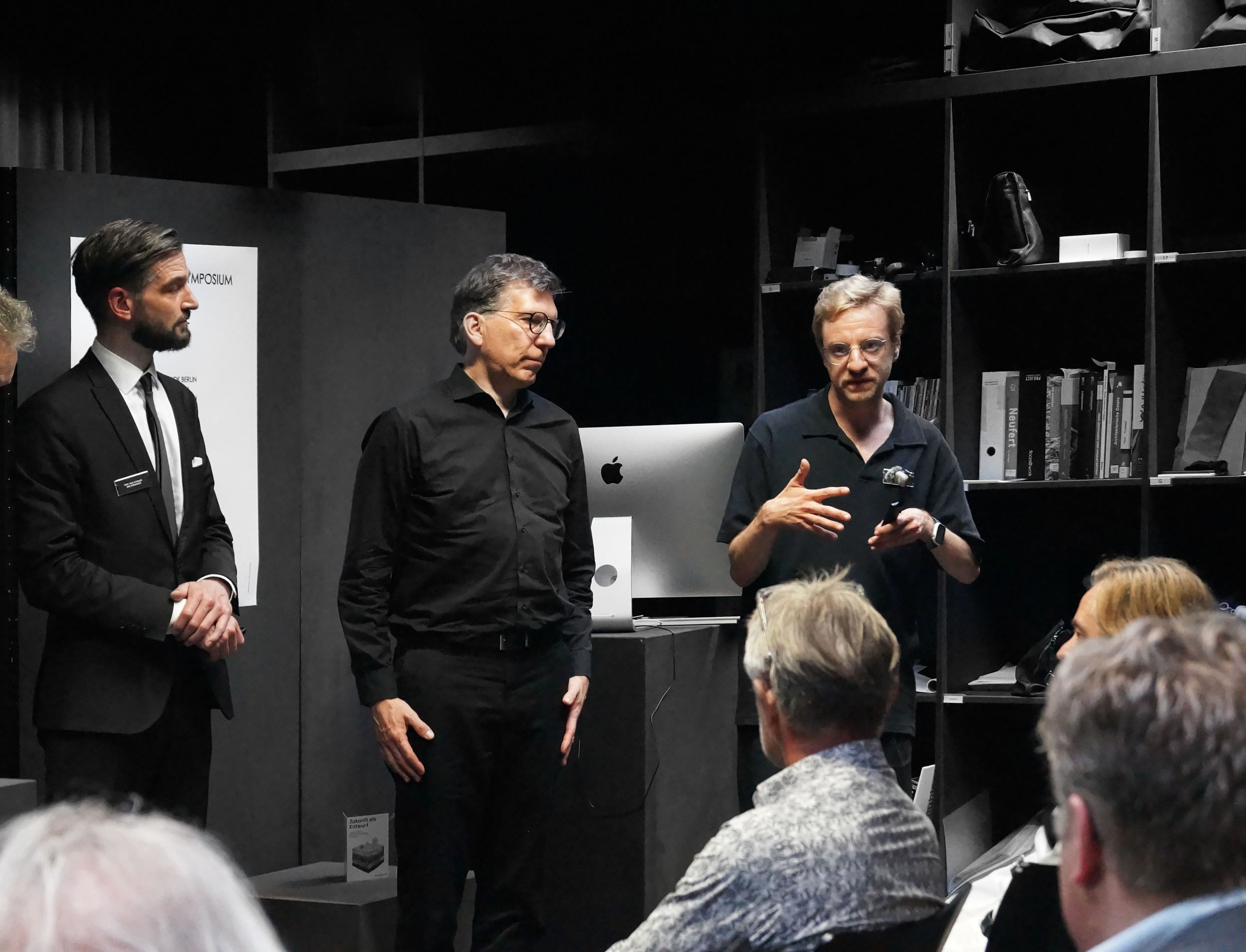
Prof. Felix Schwake (AMD Düseldorf), Prof. Jan R Krause (HS Bochum), Bertram List (NDU St. Pölten/ AMD Düsseldorf)
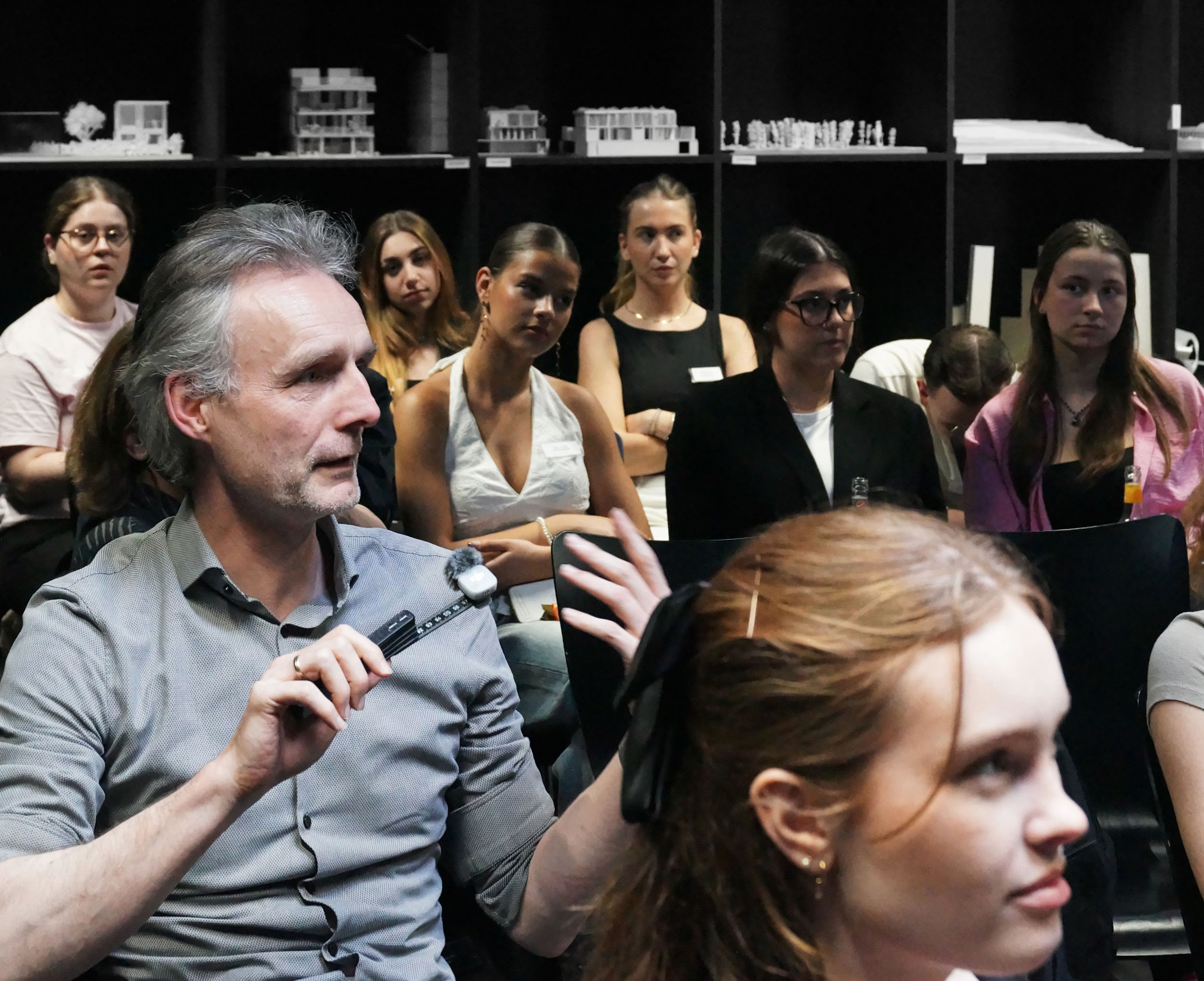
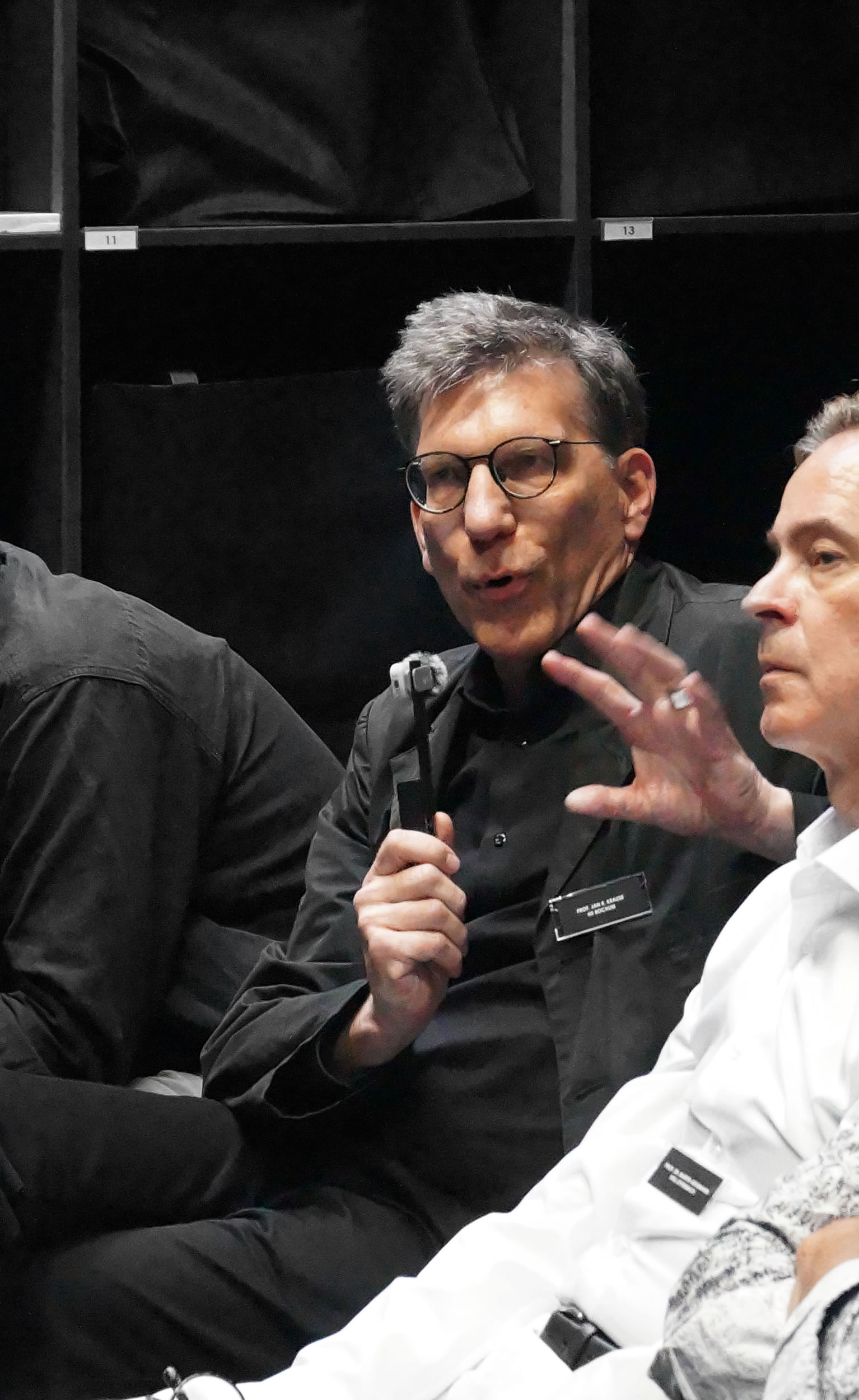
Prof. Jan R Krause (HS Bochum)
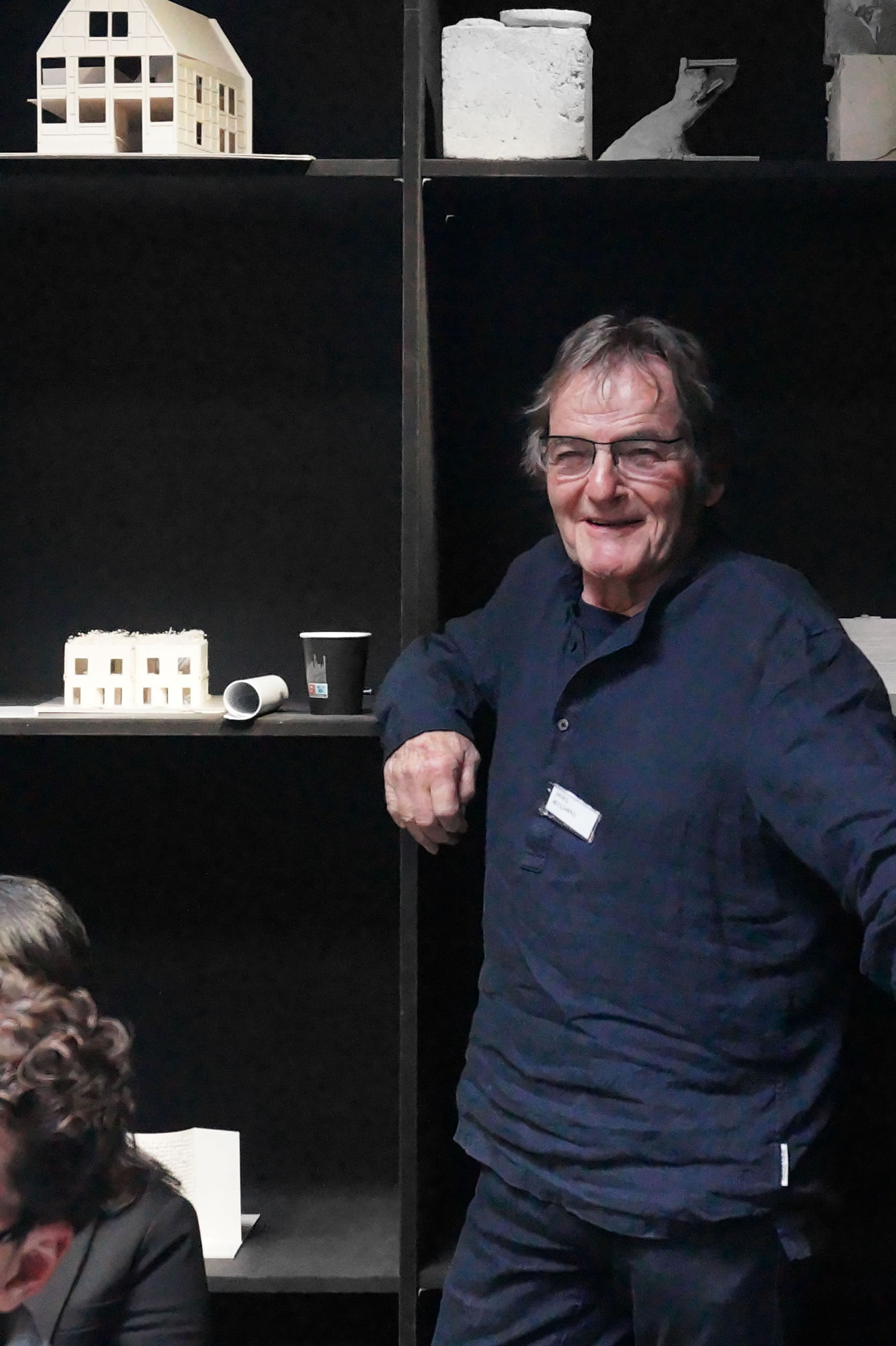
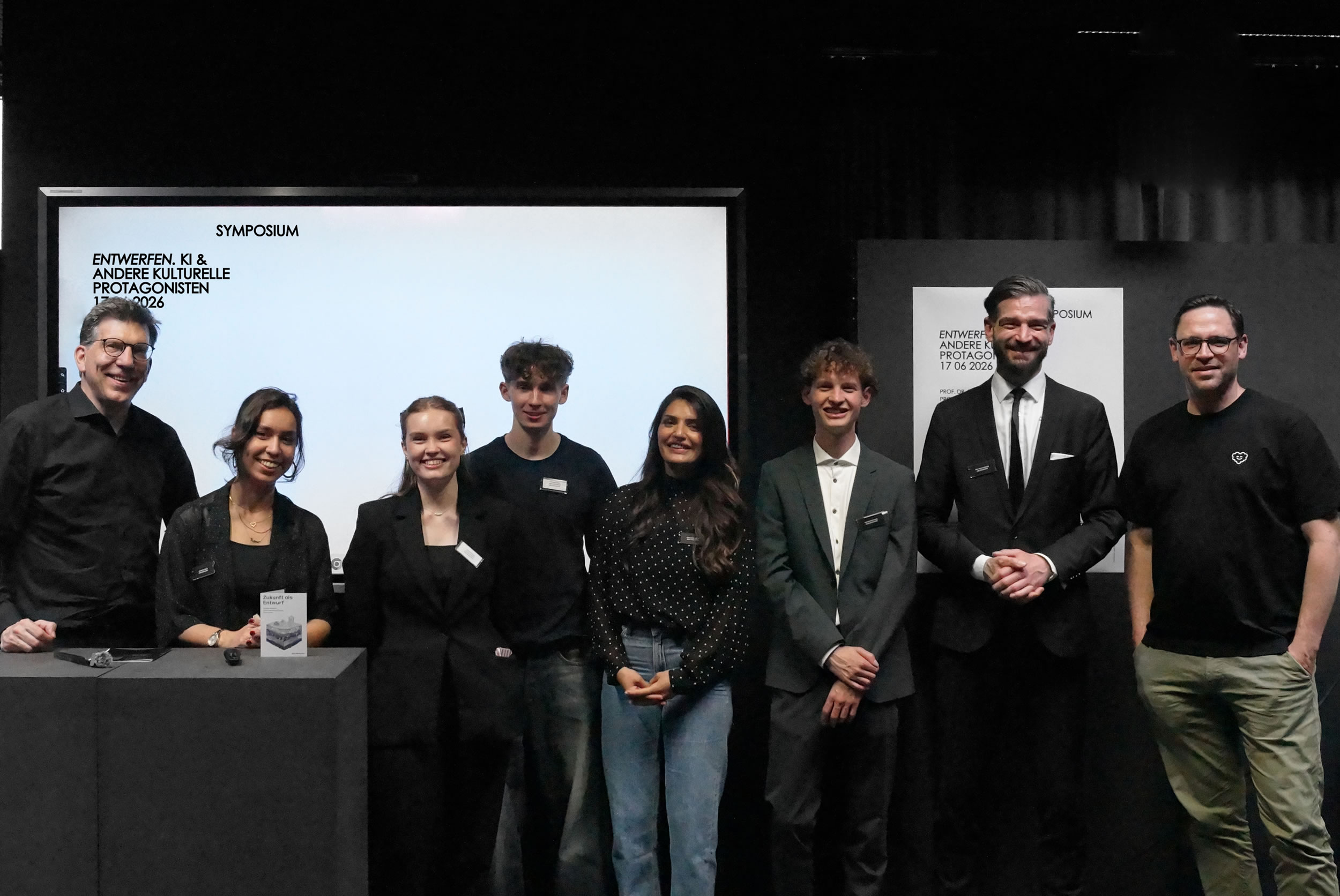
Referent Prof. Jan R Krause (HS Bochum), Organisatoren: Soumaya Hmissi, Liliana Schmidt, Alex-San Dursun, Sara Mohammed, Tim Dreckstraeter, Prof. Felix Schwake (AMD Düsseldorf) Lars Terlinden (KomKuk, Landeshauptstadt Düsseldorf)
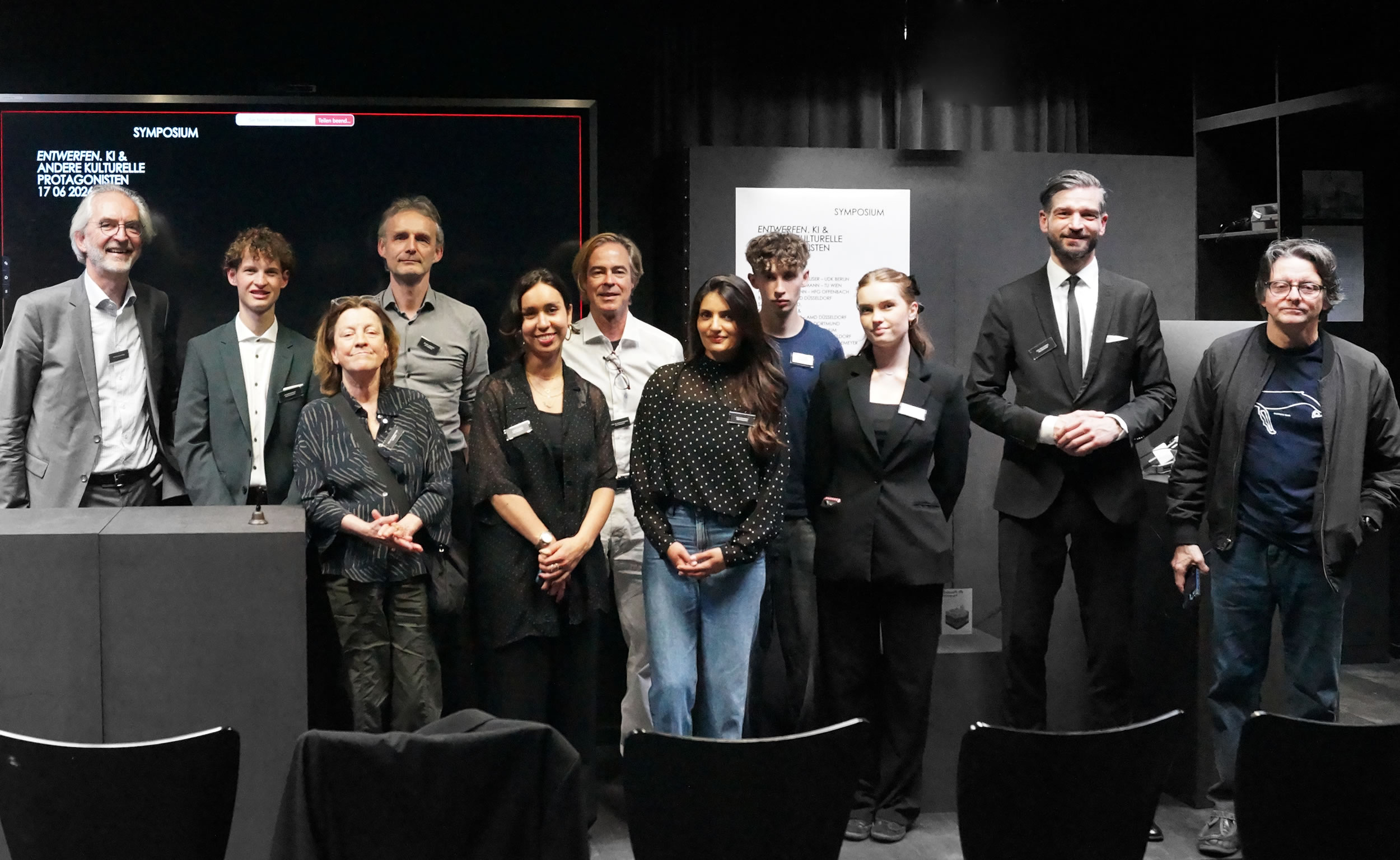
Referent Prof. Dr. Hirschberg (TU Graz), Tim Dreckstraeter, Prof. Dr. Susanne Hauser (UDK Berlin), Dr. Kim Lauenroth, Soumaya Hmissi, Prof. Dr. Gessmann (HfG Offenbach), Sara Mohammed, Alex-San Dursun, Liliana Schmidt, Prof. Felix Schwake (AMD Düsseldorf), Prof. Oliver Schneller (RSH Düsseldorf)
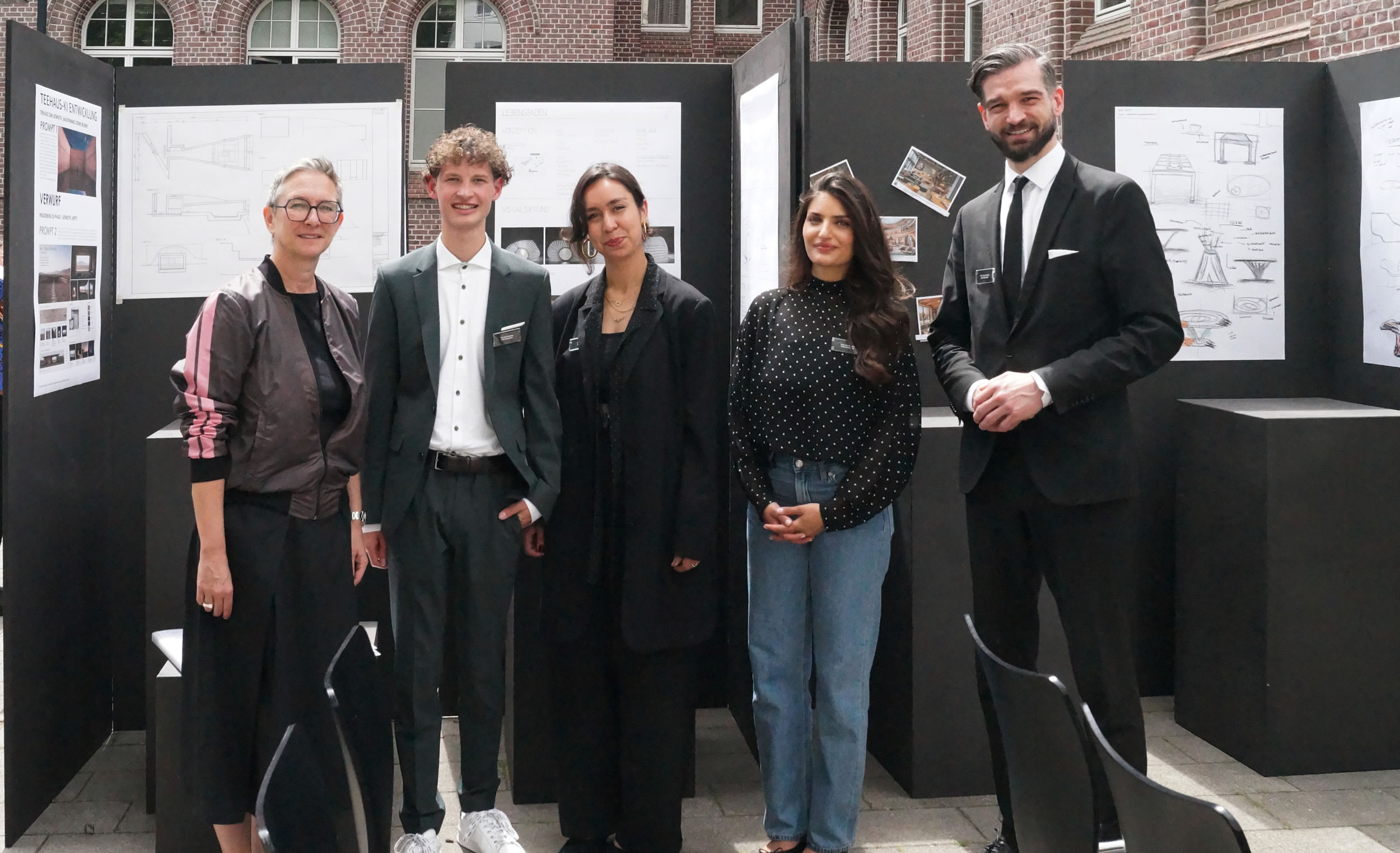
Katja Domschky (Präsidentin Architektenkammer NRW), Tim Dreckstraeter, Soumaya Hmissi, Sara Mohammed, Prof. Felix Schwake (AMD Düsseldorf)
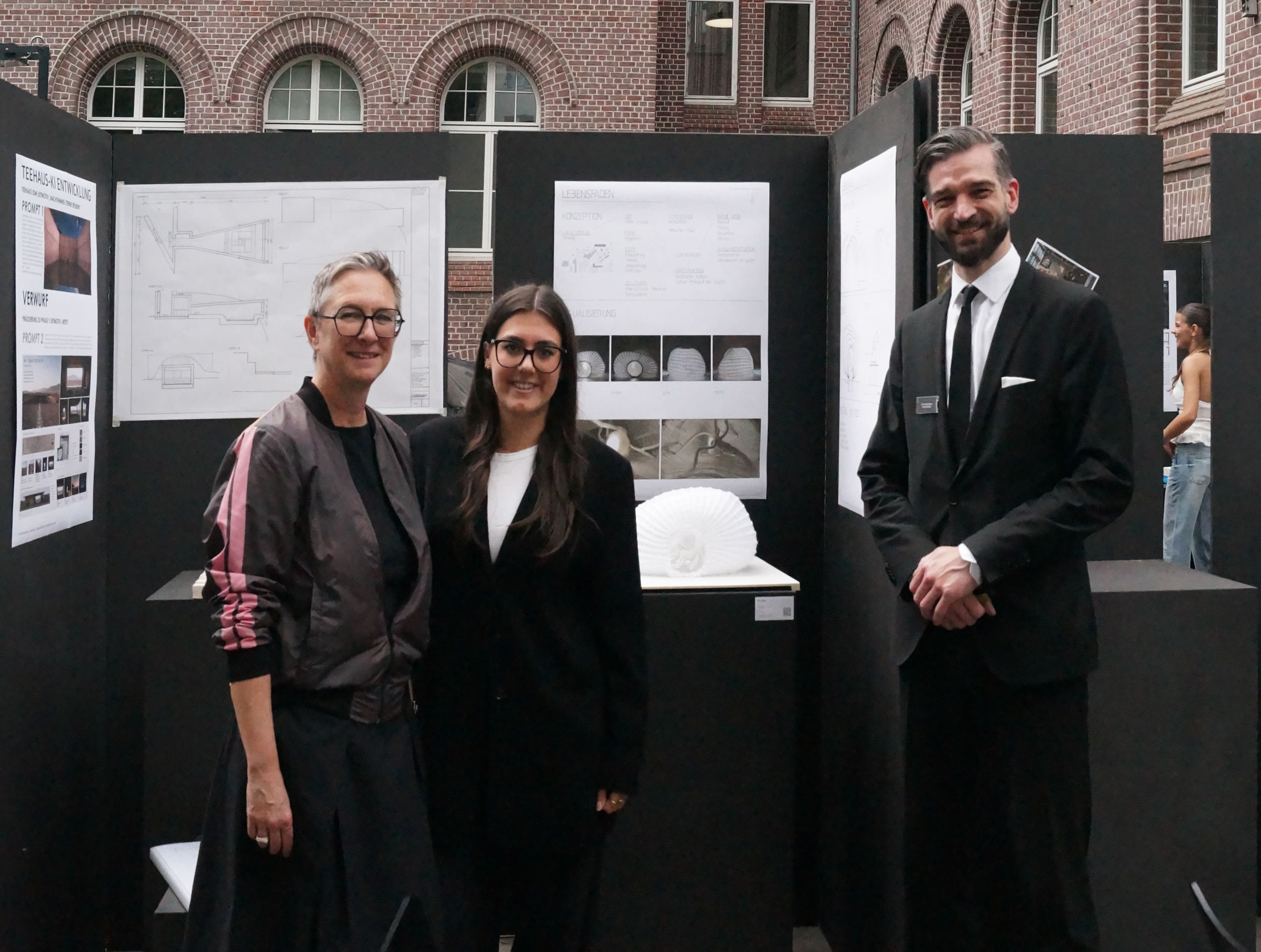
Katja Domschky (Präsidentin Architektenkammer NRW), Pia Marx (Studentin AMD Düsseldorf)
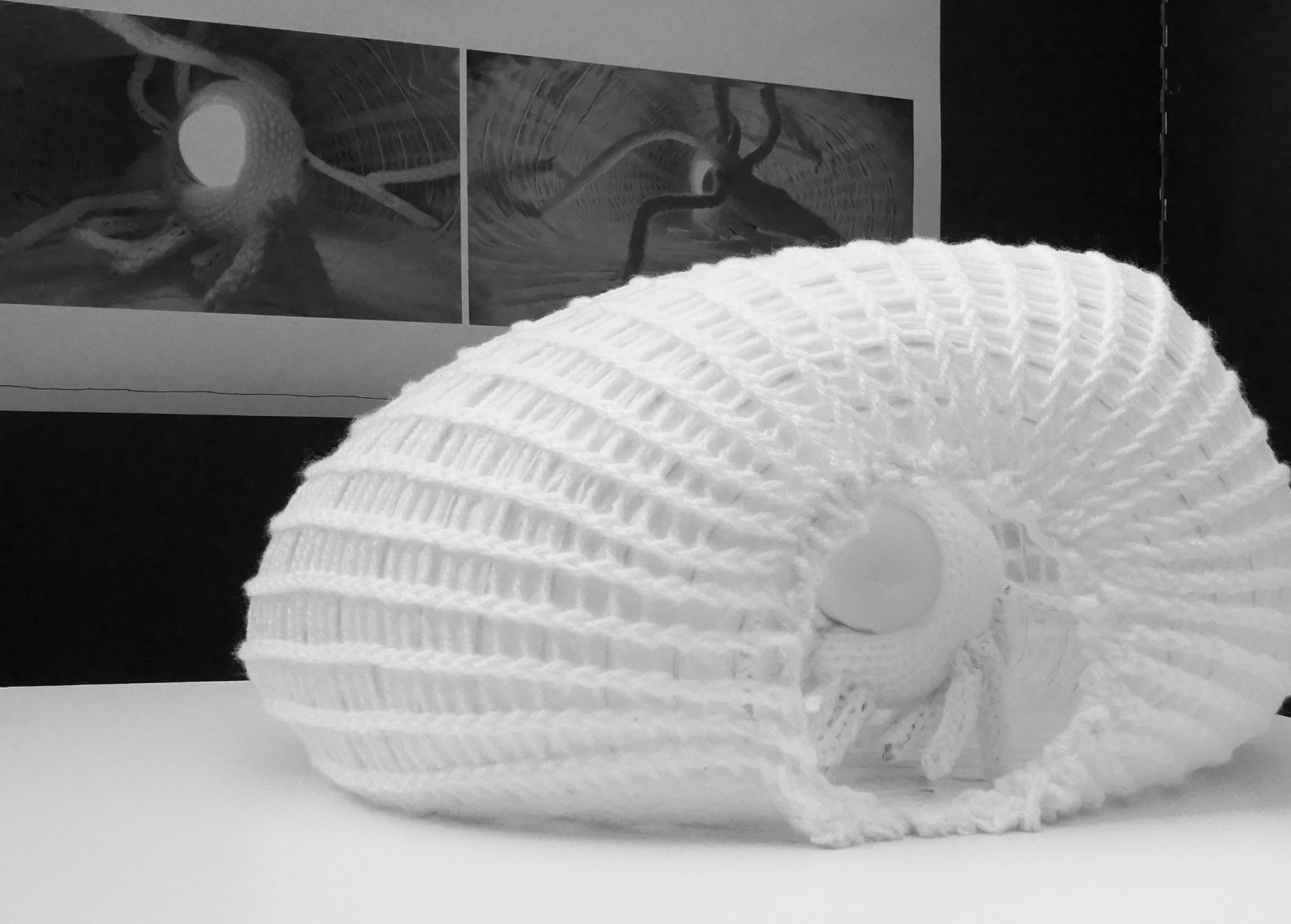
Model: Pia Marx (Studentin AMD Düsseldorf)
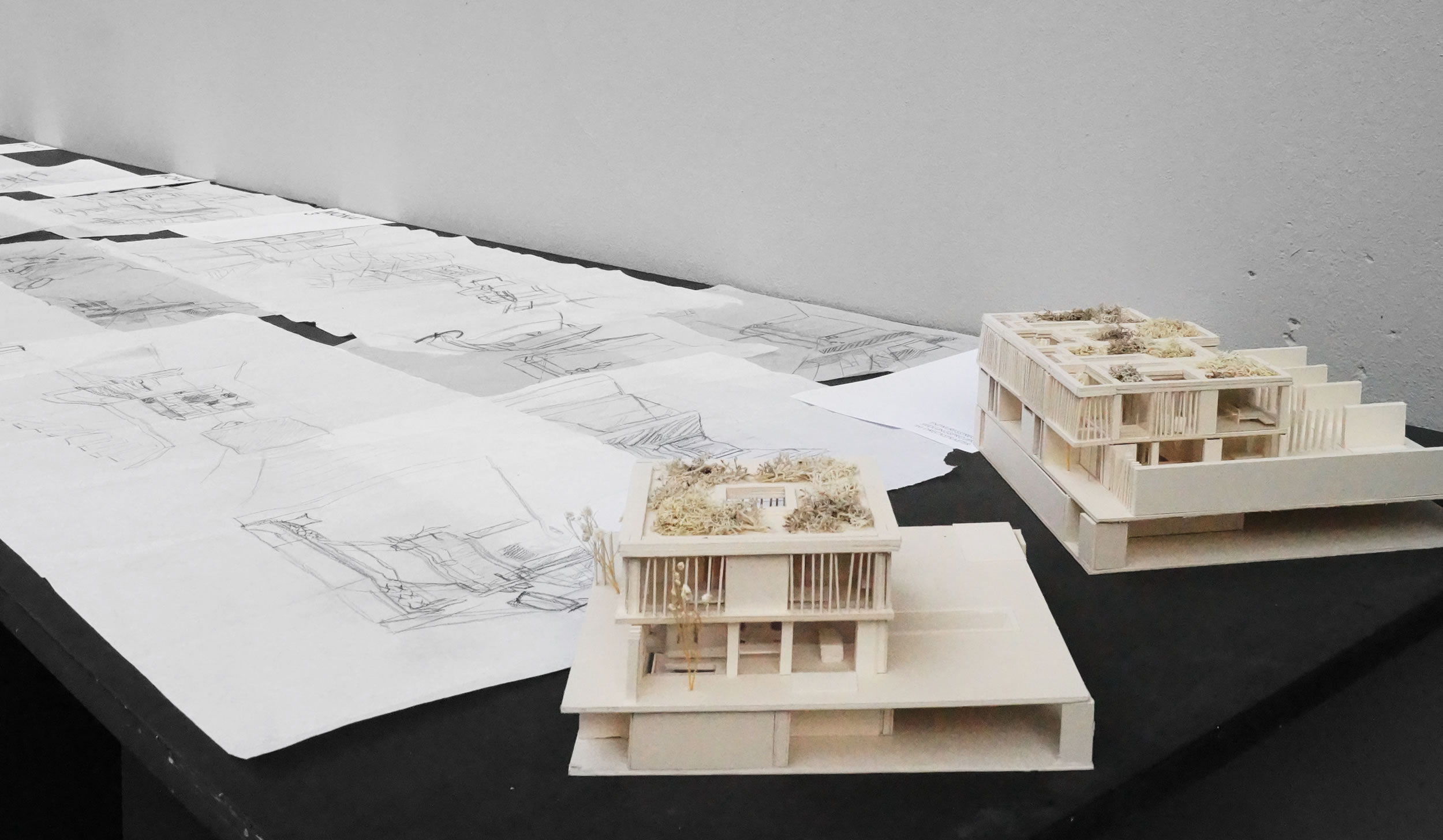
Model: Tim Dreckstraeter
Photos: Katharina Petsch