Klang & Raum documents an interdisciplinary investigation into the perception of space as a foundation for design.
During the winter semester 2025/26, students from the Interior Design programme at AMD Düsseldorf, the Master Class in Composition at the Robert Schumann Hochschule Düsseldorf, and TH Lübeck worked together. The project connected architecture, interior design and musical composition.
The collaboration involved Prof. Heiner Lippe (TH Lübeck), Prof. Oliver Schneller (Robert Schumann Hochschule Düsseldorf), and Prof. Dipl.-Ing. Felix Schwake together with the architect Dipl.-Ing. Gido Hülsmann within the Interior Design programme at AMD Düsseldorf.
A shared task was to examine precisely defined musical moments and translate them into spatial and sonic work. Rhythm, density, time and movement were addressed differently within the participating disciplines and brought into relation through mutual exchange.
Its point of departure is not form, but embodied experience: listening, movement, resonance.
The works presented understand space as an atmospheric phenomenon and design as a process of gaining insight.
The public presentation at the AIT-Architektursalon Hamburg showed a selection from this process.
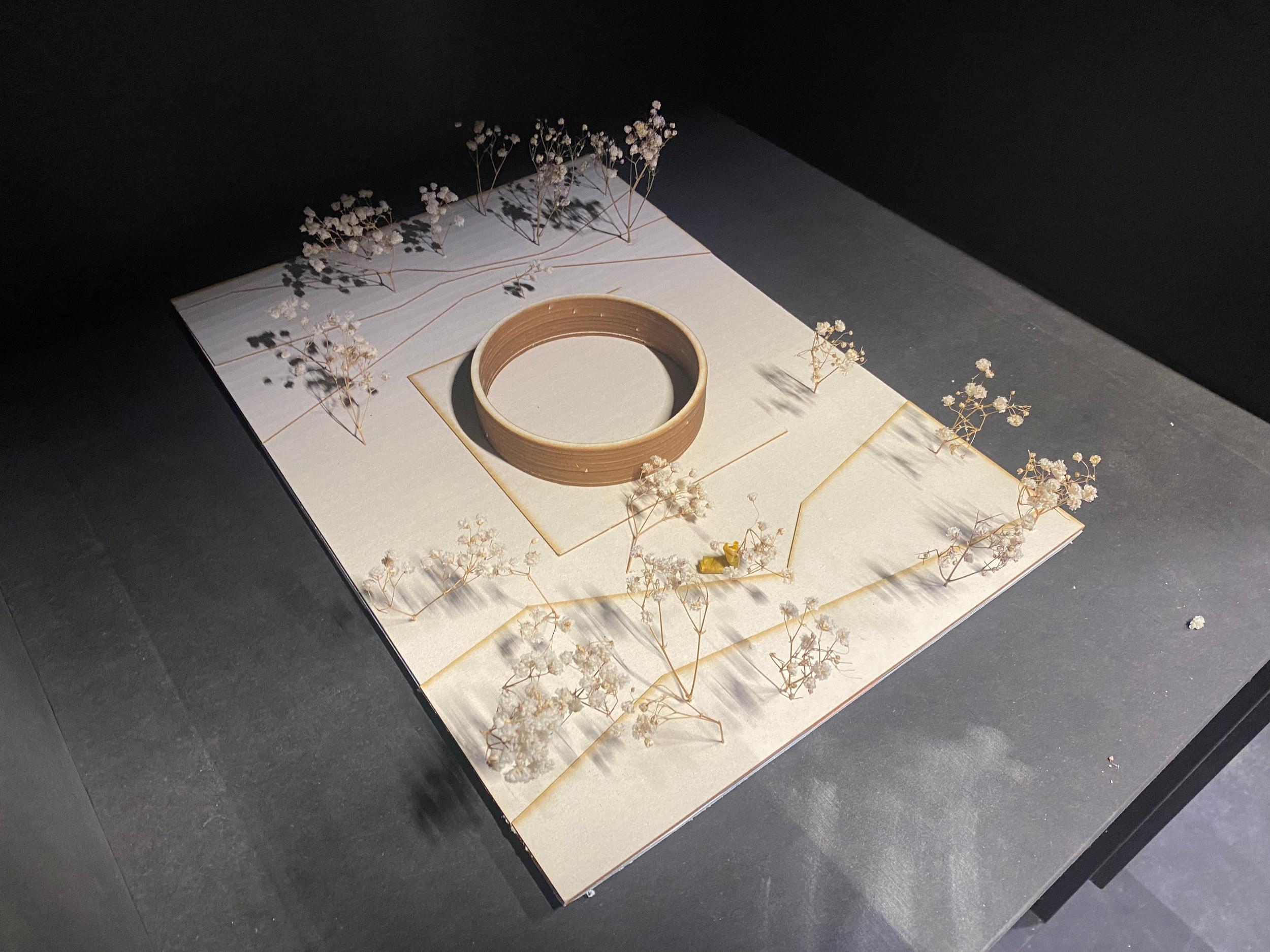
Design model by Ms Wagner for a ring of suspended sound elements. The spacing, density and movement of the elements relate spatial enclosure to a question of sound.
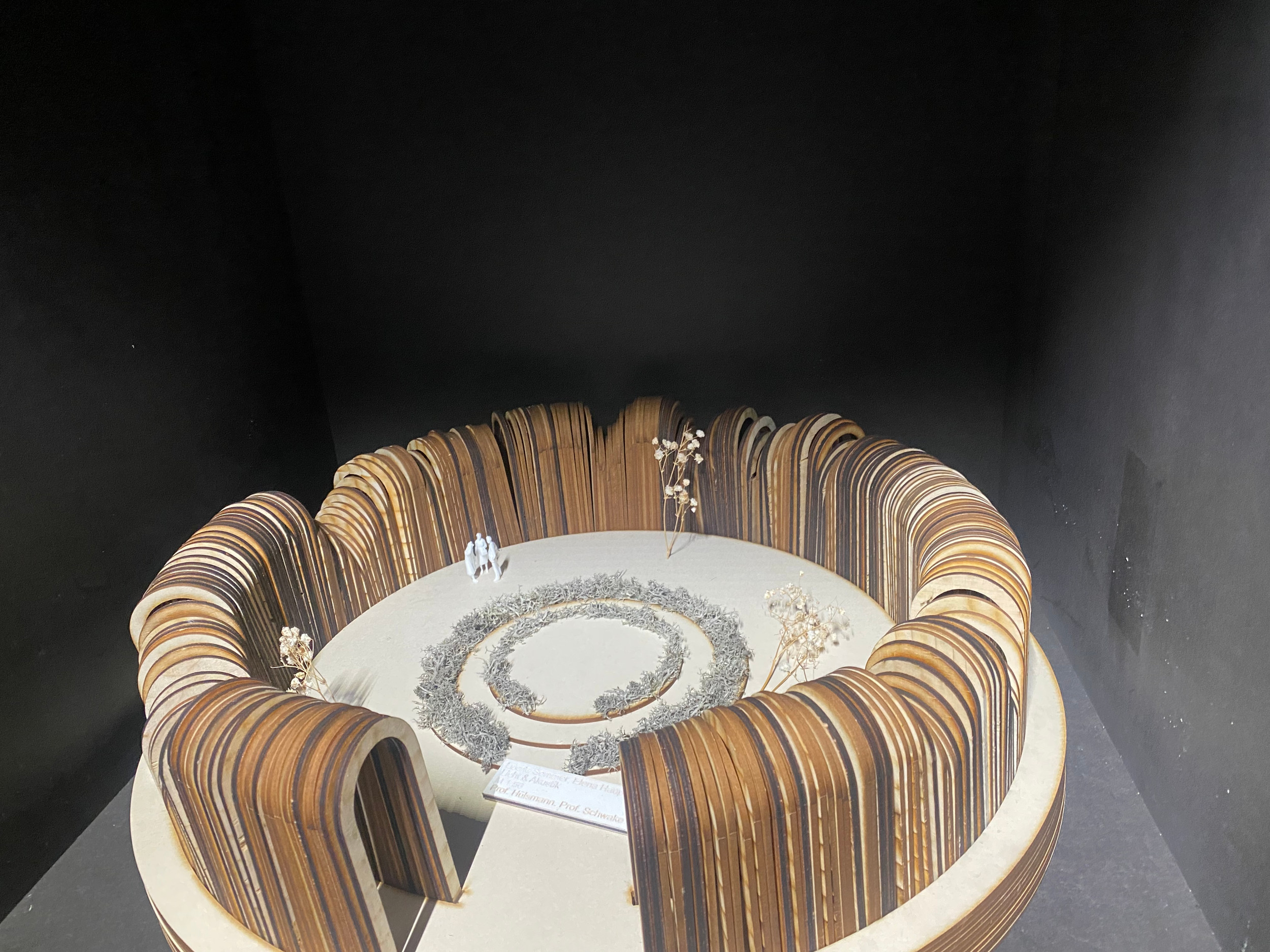
A spatial ring of movable hoops, designed by Ms Sommer, Ms Özdemir and Ms Haupt. Their adjustable positions connect different degrees of openness and density with the investigation of the acoustic situation.
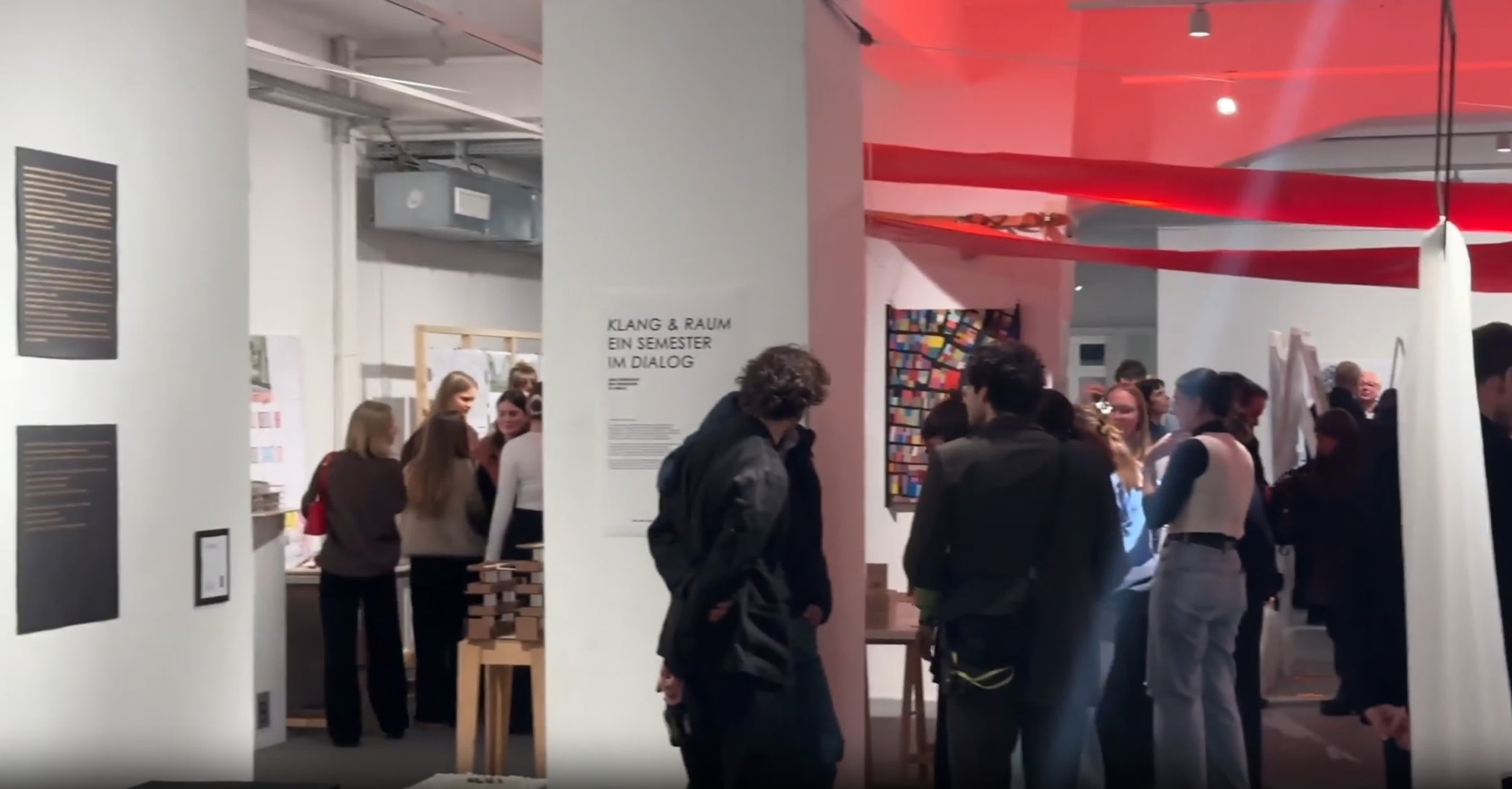
“Sound and Space – a semester in dialogue” at the AIT-Architektursalon Hamburg. The public presentation showed a selection of the spatial and musical works developed through the inter-university collaboration.
