
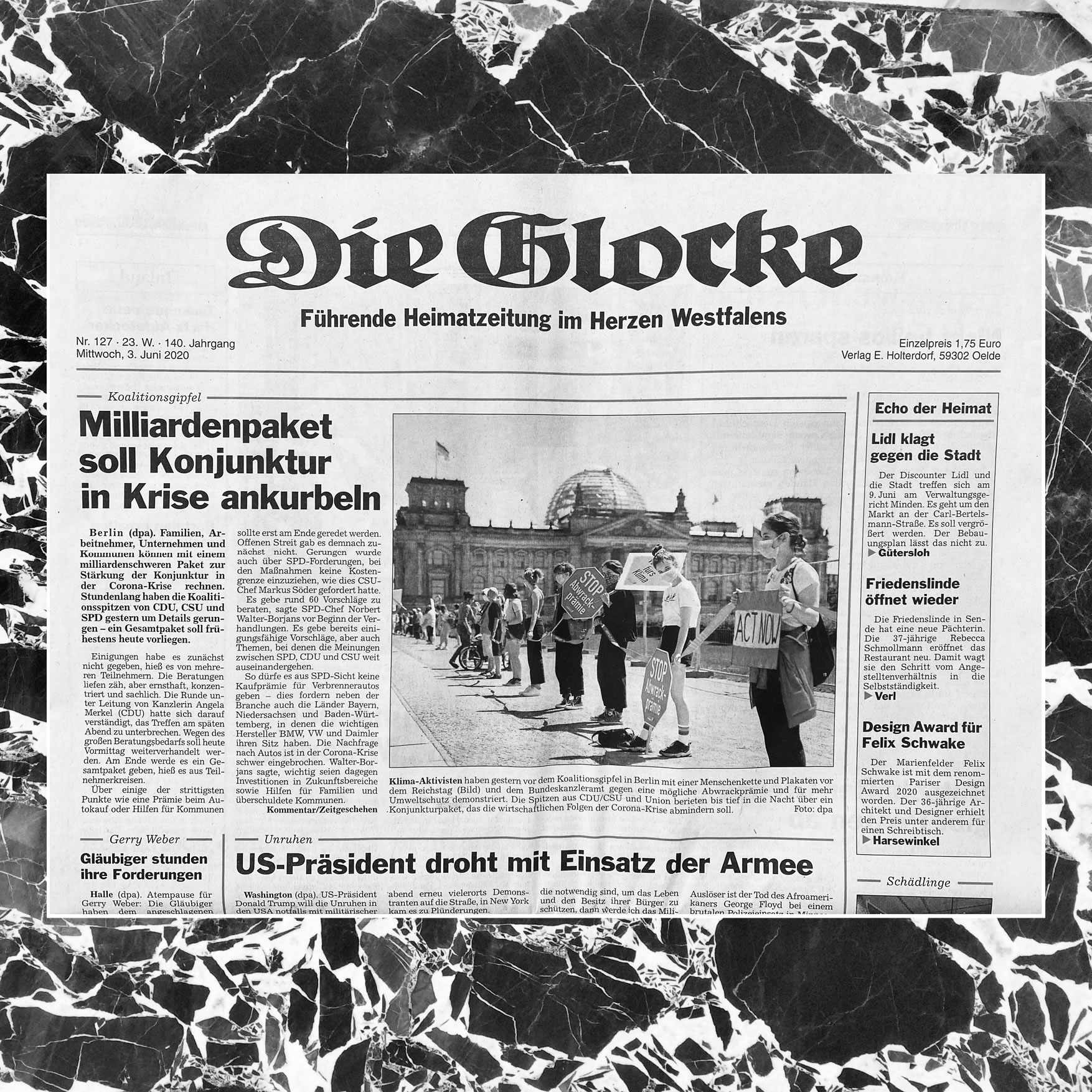
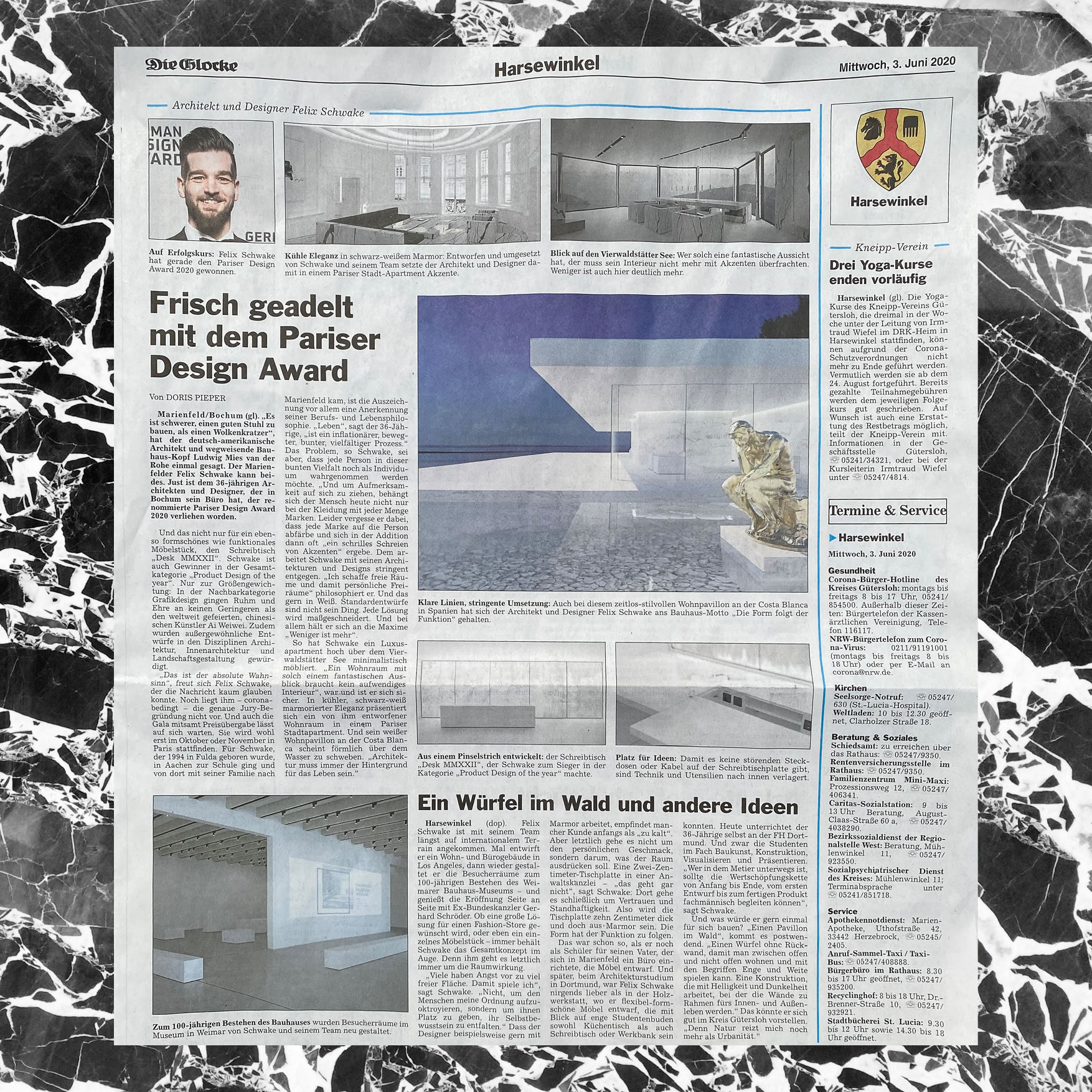
Die Glocke
Daily Newspaper 03-06-20
The works of Felix Schwake operate at the intersection of architecture, interior design, and functional art. The focus is not on the development of decorative standalone objects, but on the question of how spaces, furniture, and materials influence perception, concentration, and atmosphere.
The designs follow a deliberately reduced design attitude. Clear geometries, precise proportions, and the integration of functional requirements form the basis of the work. Functions are not added as visible elements, but fully embedded within the formal order. This results in calm objects and spaces that do not rely on visual intensity, but on clarity, materiality, and use.
The work does not understand design as a question of style, but as a responsibility toward everyday life. Architecture has a lasting impact on perception. For this reason, the focus is not on the short-term effect of an image, but on the development of durable spatial situations.
The concept of “functional art” describes less a category than an attitude. Art and use are not treated separately. Furniture, spaces, and objects emerge from the same design question: How can material, function, and atmosphere be combined in a way that allows use and spatial calmness simultaneously?
The reduction to simple geometric structures does not serve formal strictness alone. It creates concentration and enables a heightened perception of light, material, and space. Architecture is understood as a background for life — not as a permanent staging.
International awards in architecture and design point to the relevance of this attitude within an international discourse on materiality, permanence, and the role of functional design. Ultimately, however, what matters less is the individual award than the continuous engagement with the question of how design affects people, spaces, and everyday life over time.
The works of Felix Schwake therefore do not attempt to dissolve the boundaries between architecture, art, and design, but to make visible their shared foundation: responsibility toward space, material, use, and human experience.