
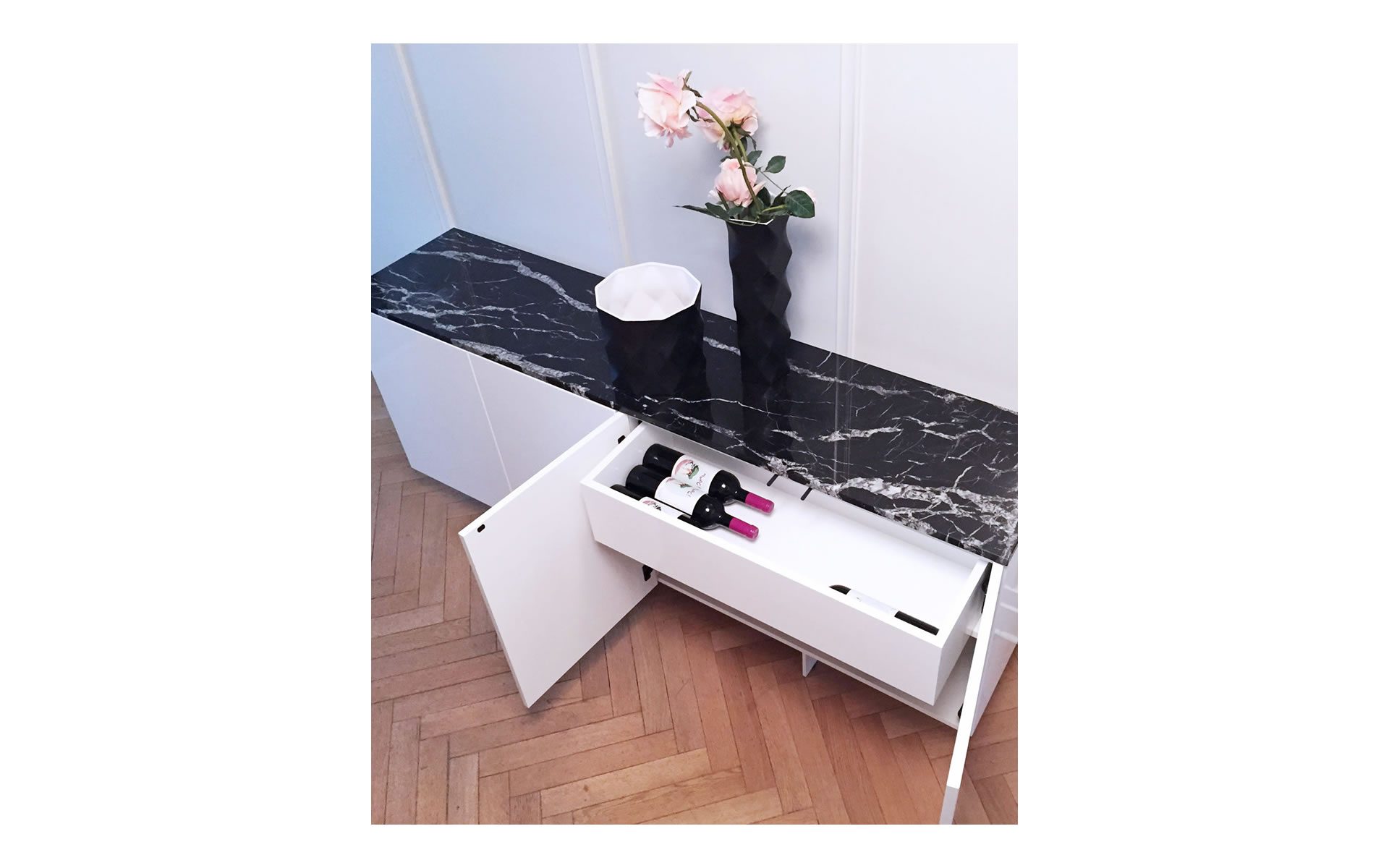
Cabinet III-II-I
Sideboard with Integrated Drawers
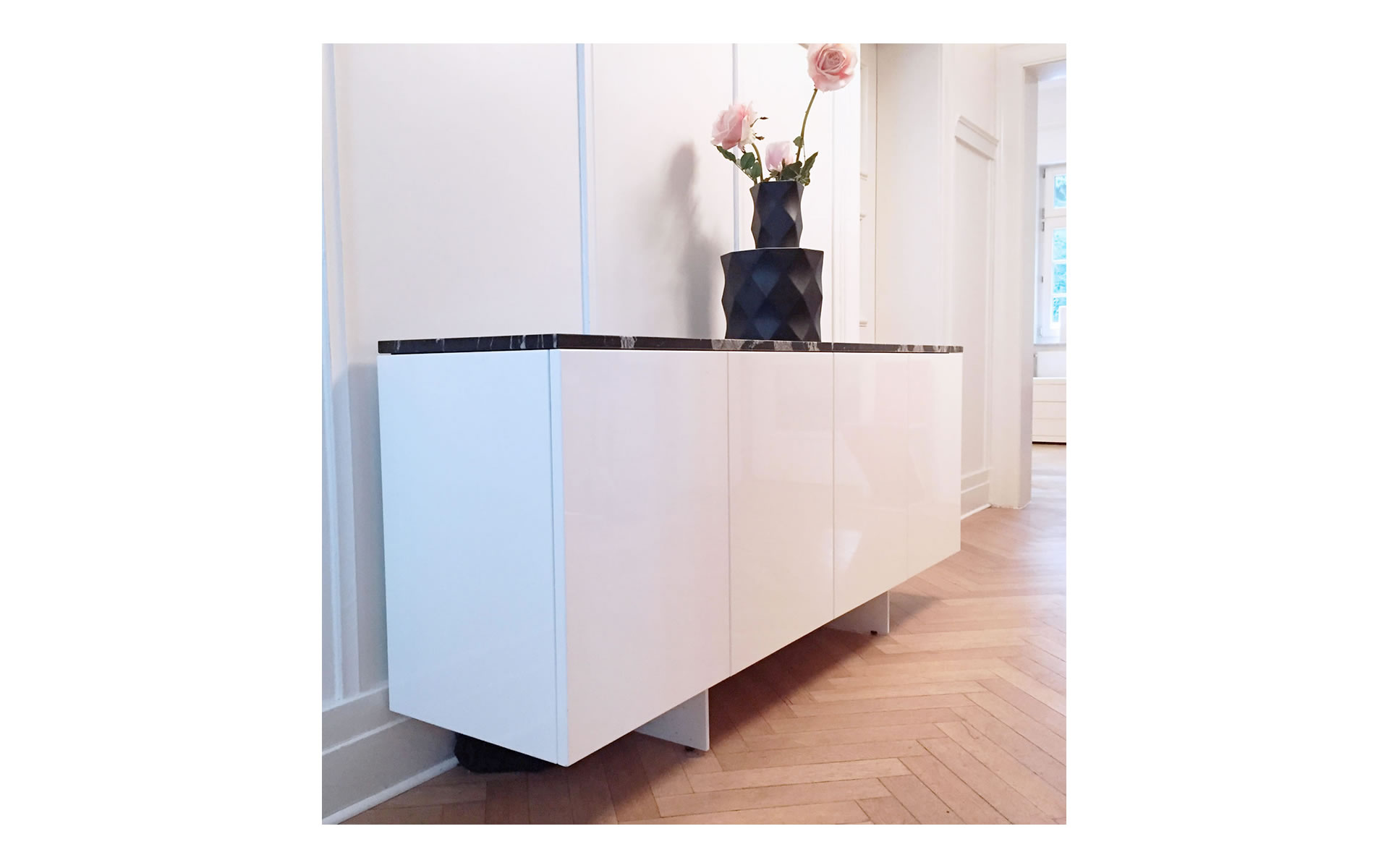
The sideboard CABINET III-II-I was conceived as a bespoke commissioned piece through an ongoing exploration of materiality, spatial calmness, and the complete integration of function within a clear geometric order.
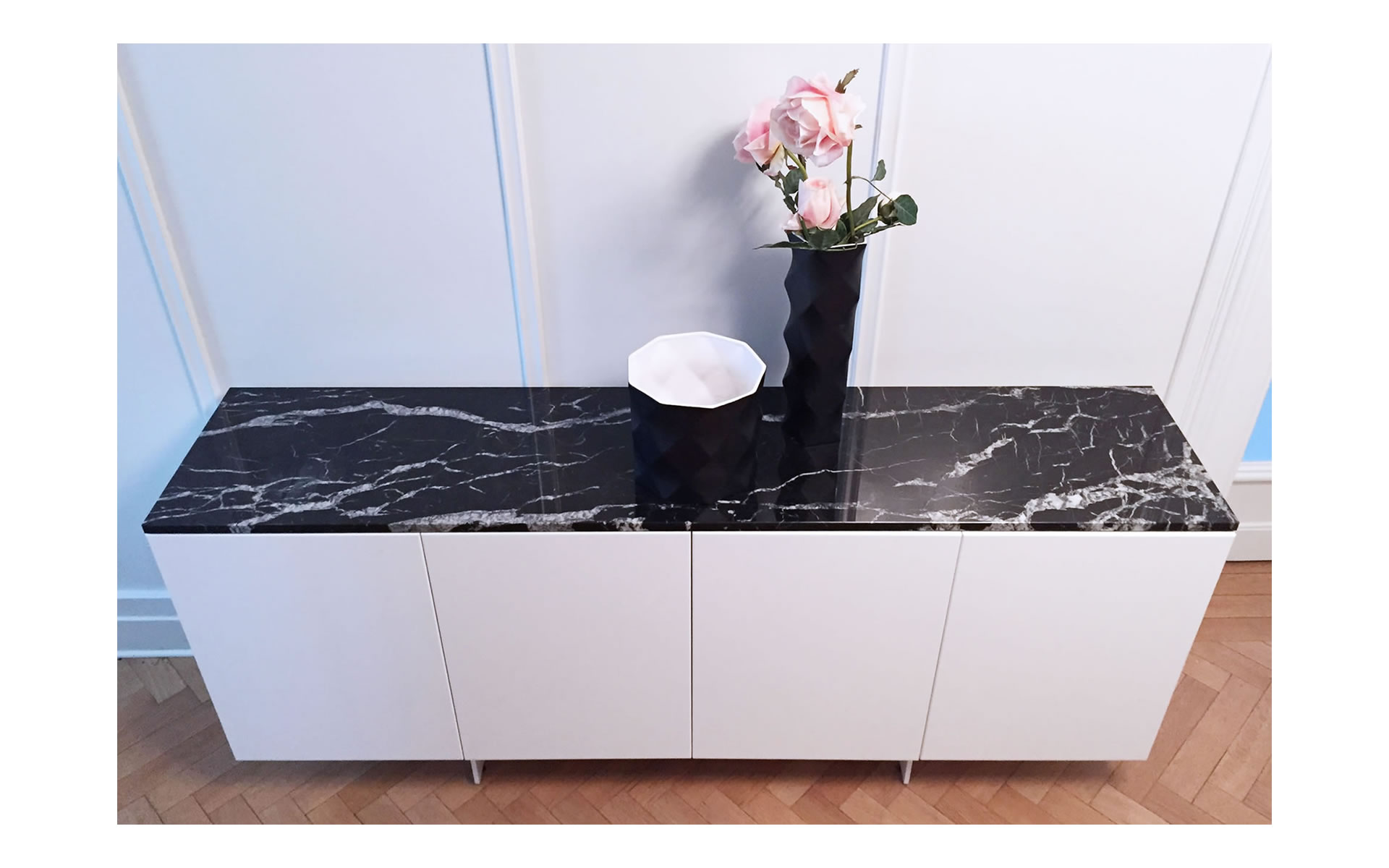
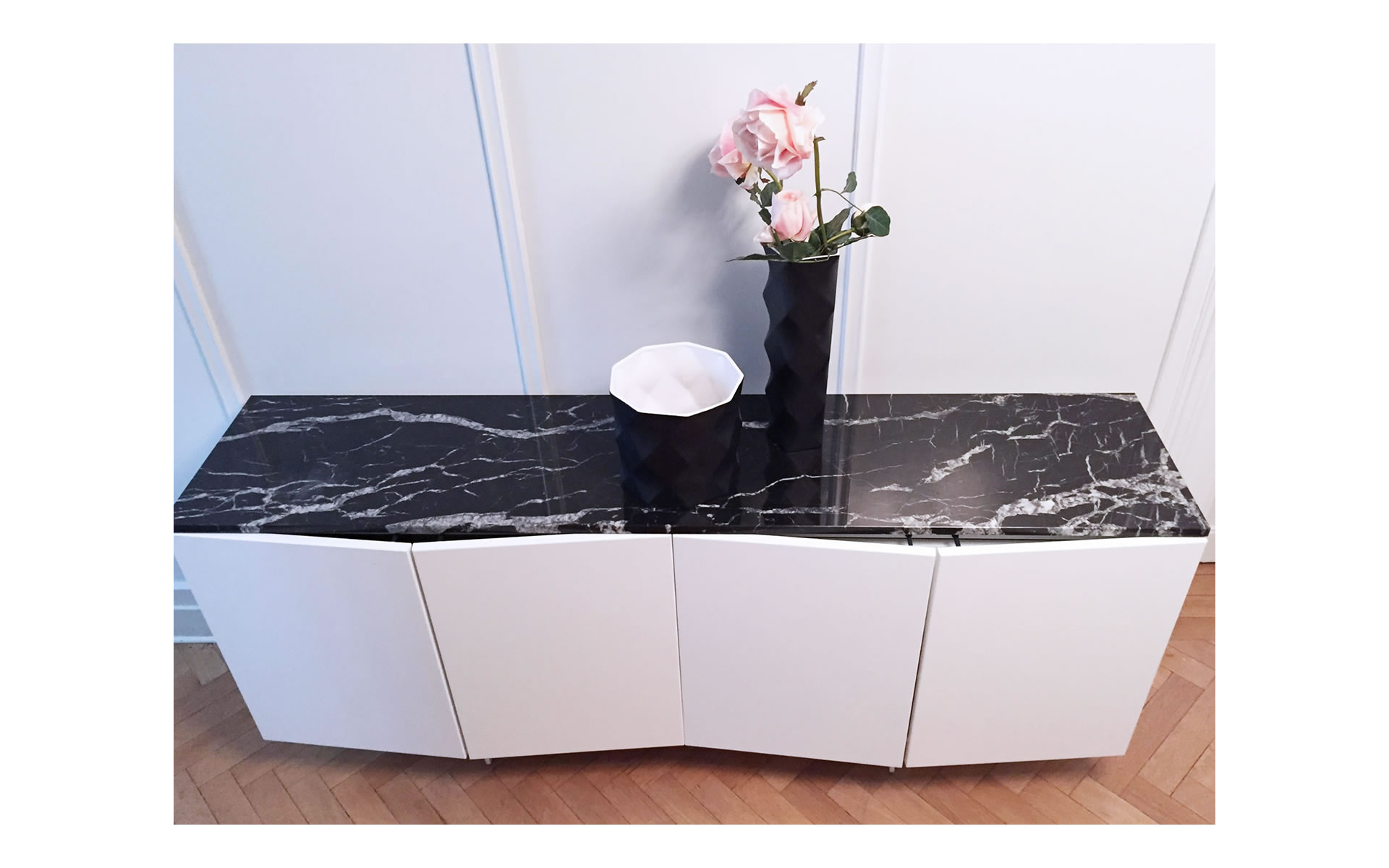
The work combines high-gloss piano lacquer surfaces with black natural stone. The intention is not decorative contrast, but rather a deliberate tension between reflection and material depth, between smooth surface and natural texture. Light, reflection, and stone enter into a restrained material dialogue.
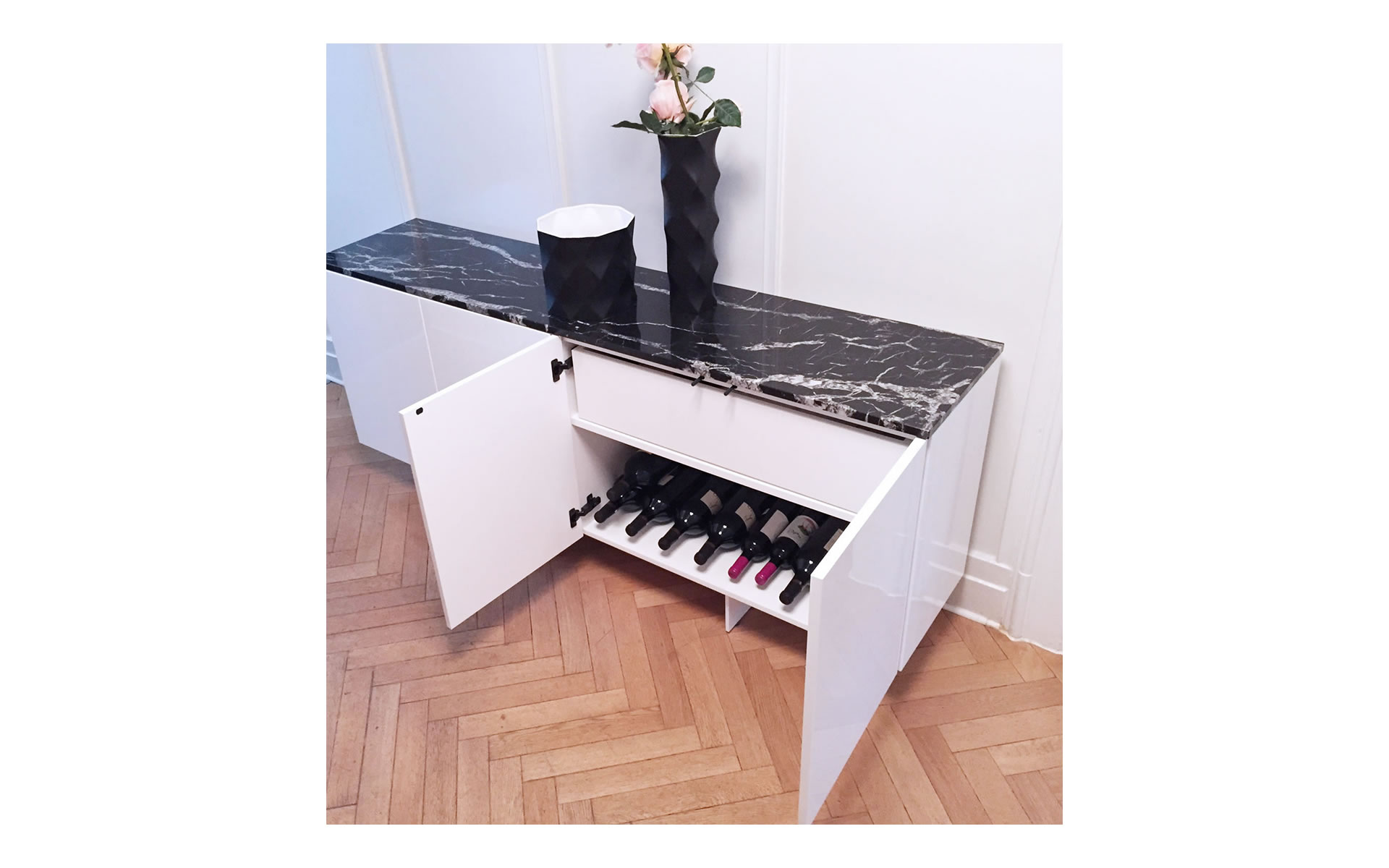
The design follows a reduced architectural approach. Visible handles and technical detailing are intentionally avoided. Doors and drawers open through integrated touch mechanisms activated by slight pressure. Function thereby recedes visually while remaining immediately accessible.
The piece is not understood as an isolated object, but as part of a spatial atmosphere. Its clear geometry establishes calmness and concentration within the space, while materiality and precision of craftsmanship shape the perception of the object itself.
The integration of wide internal drawers follows the same conceptual attitude as the exterior design: order is not achieved through additional formal gestures, but through the deliberate organization of use and function within the form itself.
The work therefore positions itself consciously between architecture, interior design, and functional art. Material, function, and spatial effect are not considered separately, but understood as part of a unified architectural task.
At the same time, the sideboard documents an ongoing engagement with questions of permanence, material awareness, and spatial clarity. Architecture and design are not understood as short-lived visual phenomena, but as long-term spatial experiences within everyday life.