
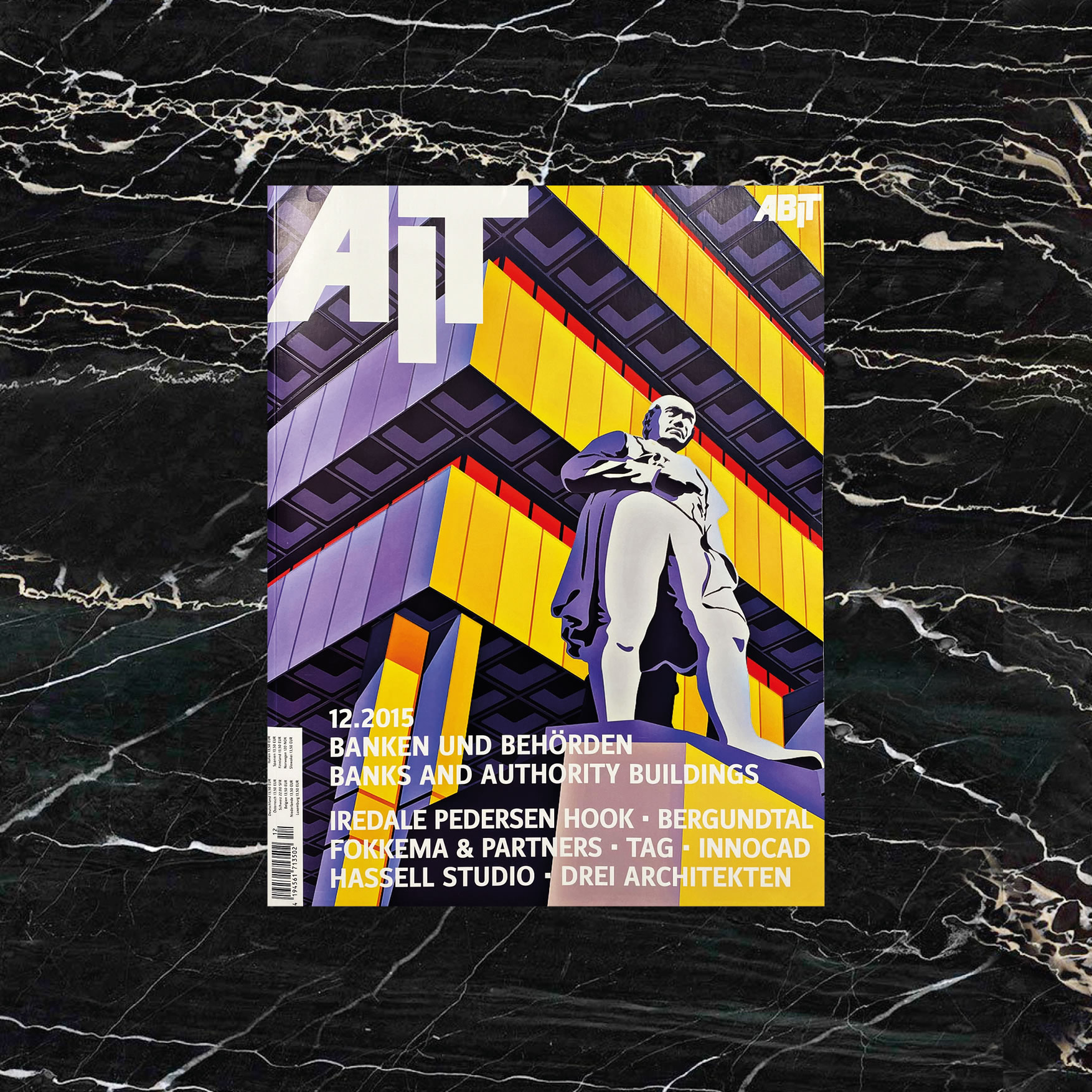
AIT
Architecture Magazine 12/15
The architecture magazine AIT presented the works of Felix Schwake within the context of a broader exploration of reduced architecture, interior design, and functional art.
The focus was not on the staging of individual objects, but on the question of how design can shape spatial atmosphere without pushing itself into the foreground. The works follow a deliberately restrained architectural attitude in which function, materiality, and spatial order are interlinked.
The designs move between furniture, object, and architecture. Clear geometries, reduced material languages, and the integration of functional requirements define the work. Functions are not added as visible elements, but fully embedded within the form. This results in calm spatial structures that foster concentration and perception.
The design is not conceived as a decorative assertion within space. Rather, it aims at the development of lasting spatial situations in which use, atmosphere, and material form a unity. Architecture is understood as a background for life — not as a permanent visual overlay.
International design awards in architecture and interior design point to the relevance of this attitude within an international discourse on materiality, permanence, and conscious reduction. Ultimately, however, what matters less is the award itself than the continuous engagement with the responsibility of design toward everyday life and perception.
The publication in AIT also reflects a gradual shift within design culture: away from short-lived stylistic images toward a more precise discourse on space, use, material, and atmosphere.
The works of Felix Schwake therefore do not attempt to oppose art and function. They emerge from the conviction that spatial quality arises precisely where use, clarity, and atmospheric effect are brought together.