
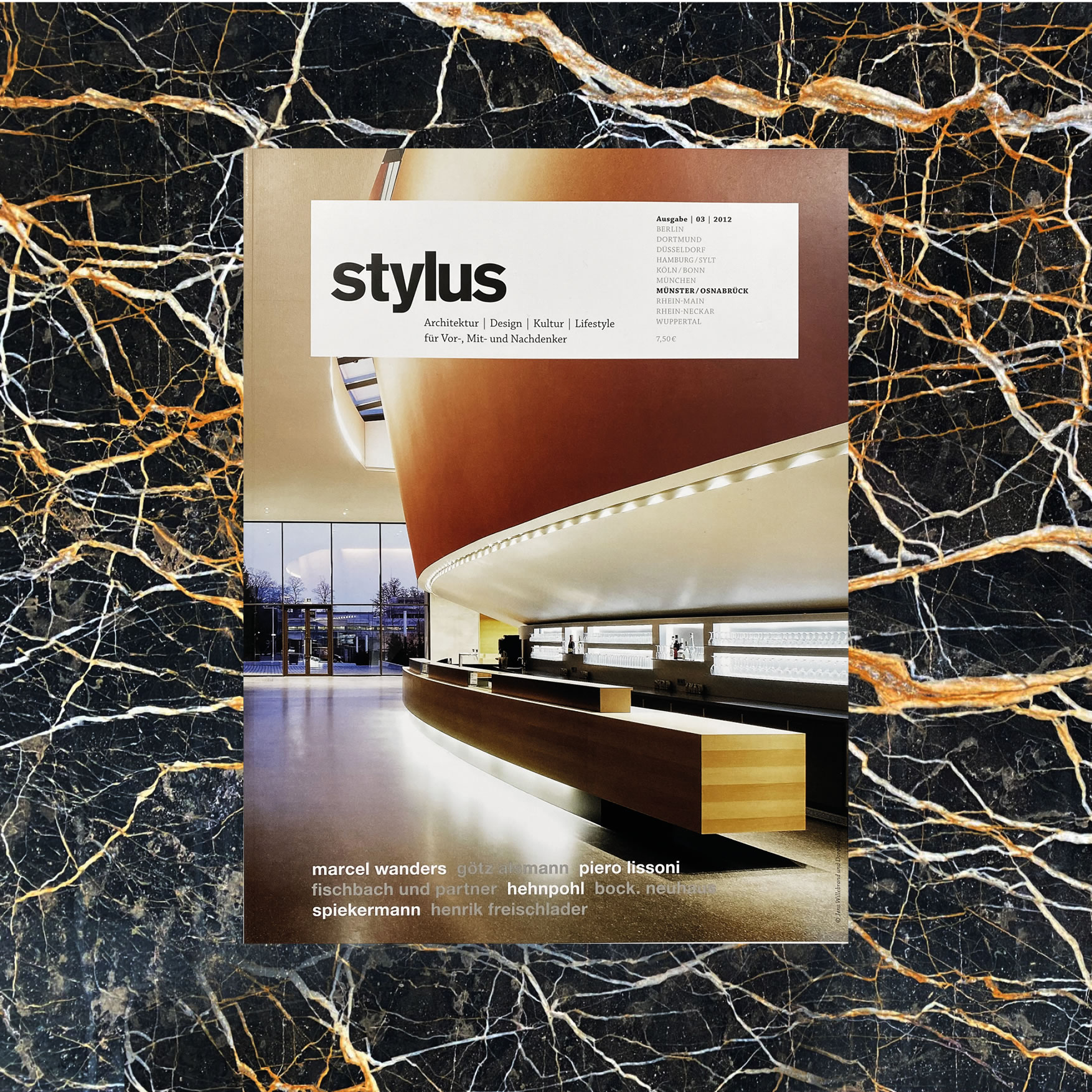
Stylus
Architecture Magazine 3/12
The architecture magazine Stylus dedicated its 3/2012 issue to the work of Felix Schwake and its position between architecture, interior design, and functional art.
The publication particularly addressed the question of how utilitarian objects can evolve into spatial structures. The works follow a reduced design attitude in which clear geometries, materiality, and function are not treated separately, but form a shared spatial order.
The objects are not conceived from decorative intent. Rather, they are based on a conscious reduction to what is essential. Superfluous elements are removed in order to make material, proportion, light, and use more precisely perceptible. This creates calm spatial situations that foster concentration and perception.
The works consciously move between furniture, architecture, and functional art. They are not intended solely to be observed, but to be used and physically experienced. Function is not understood as a technical addition, but as an integral part of the form.
The architectural origin of the designs remains visible. Spaces, furniture, and objects follow the same principles: order, clarity, material awareness, and the deliberate shaping of atmosphere. Architecture is not understood as image production, but as a long-term responsibility toward everyday life.
International awards in architecture and interior design point to the relevance of this attitude within a broader design discourse. Ultimately, however, what matters less is individual recognition than the continuous engagement with the question of how design affects people and spaces over time.
The publication in Stylus thus documents an early phase of a design position that continues to be shaped by the same questions today: How can art and use be combined? How can reduction lead to spatial clarity? And how does atmosphere emerge from material, proportion, and deliberate restraint?