
QUBIQUE
Design Fair Berlin
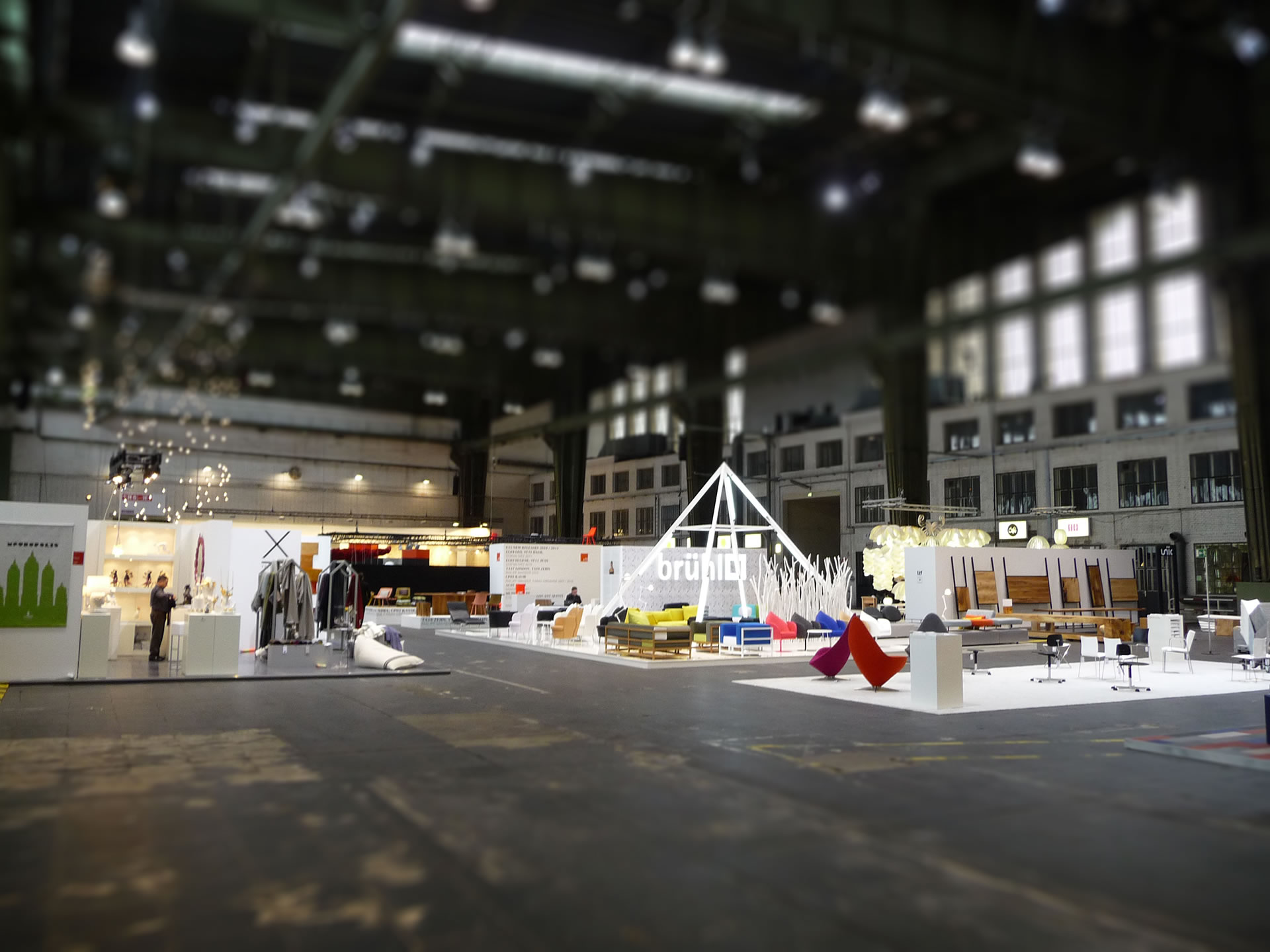
At the end of 2011, Felix Schwake presented large parts of his new collection to an international audience for the first time at the international design fair QUBIQUE in Berlin. The fair was regarded as a platform for contemporary furniture and interior design and offered particular visibility to experimental and architecturally oriented positions.
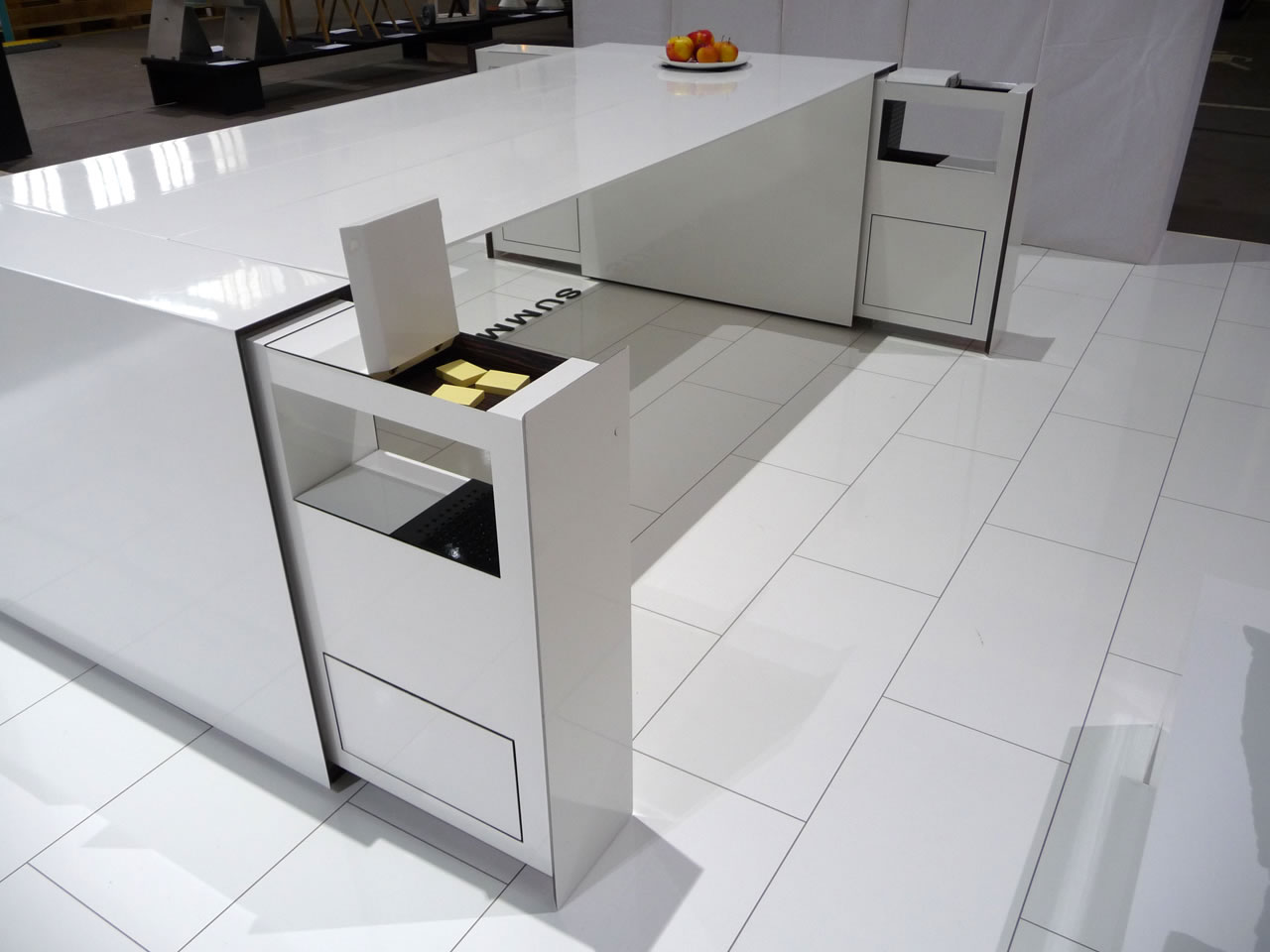
Among the exhibited works were the design bed B-1 and the already award-winning multimedia table K-1. Both designs exemplified the central design approach that continues to define the work of Felix Schwake: the connection between minimalist geometry, technical integration, and functional calmness.
The exhibition concept of the trade fair stand was conceived entirely in white and understood itself as a spatial staging of the exhibited works. High-gloss lacquered surfaces were deliberately contrasted with warm natural wood materials, creating an atmosphere situated between technical precision and material warmth.
The furniture was not presented as decorative individual objects, but rather as elements within an overarching architectural composition. The restrained color palette and the clear geometry of the stand generated a calm spatial order within which the exhibited objects could unfold their presence.
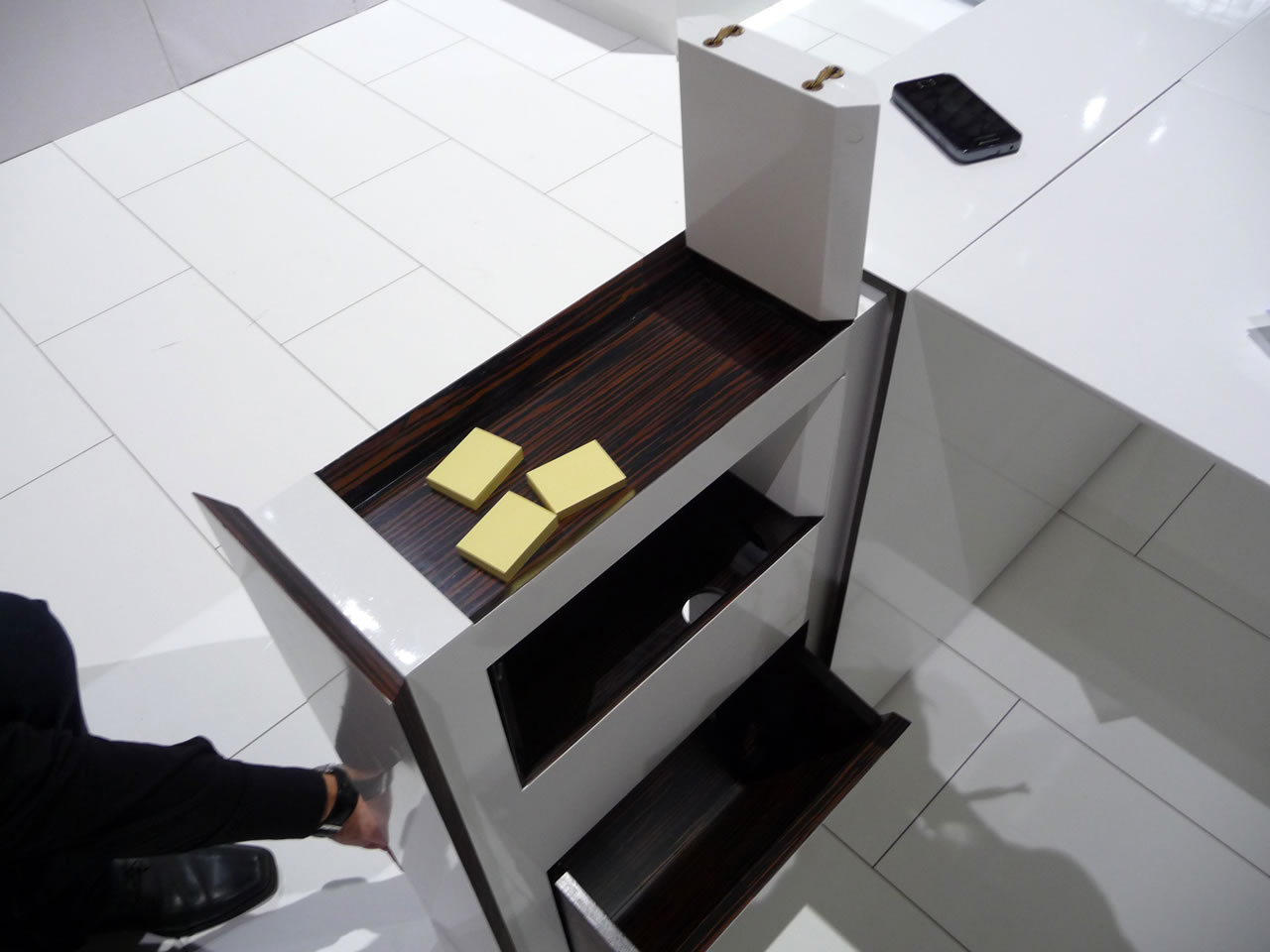
Particularly characteristic of the presented works was the complete integration of functional requirements into the design itself. Multimedia technology, storage space, and organizational functions disappear within the furniture volumes and remain largely invisible within the space. As a result, the external form remains consistently reduced and calm.
The multimedia table K-1 illustrated this approach particularly clearly: despite its extensive technical equipment, the working surface remains free of visible technology and enables a focused spatial atmosphere. The design bed B-1, in turn, explored the idea of maximum spatial reduction within the context of the sleeping environment.
The presentation at QUBIQUE 2011 marked an important stage in the public perception of Felix Schwake’s work. The fair demonstrated that his designs should be understood less as conventional furniture collections and more as spatial systems situated between architecture, functional art, and interior design.