
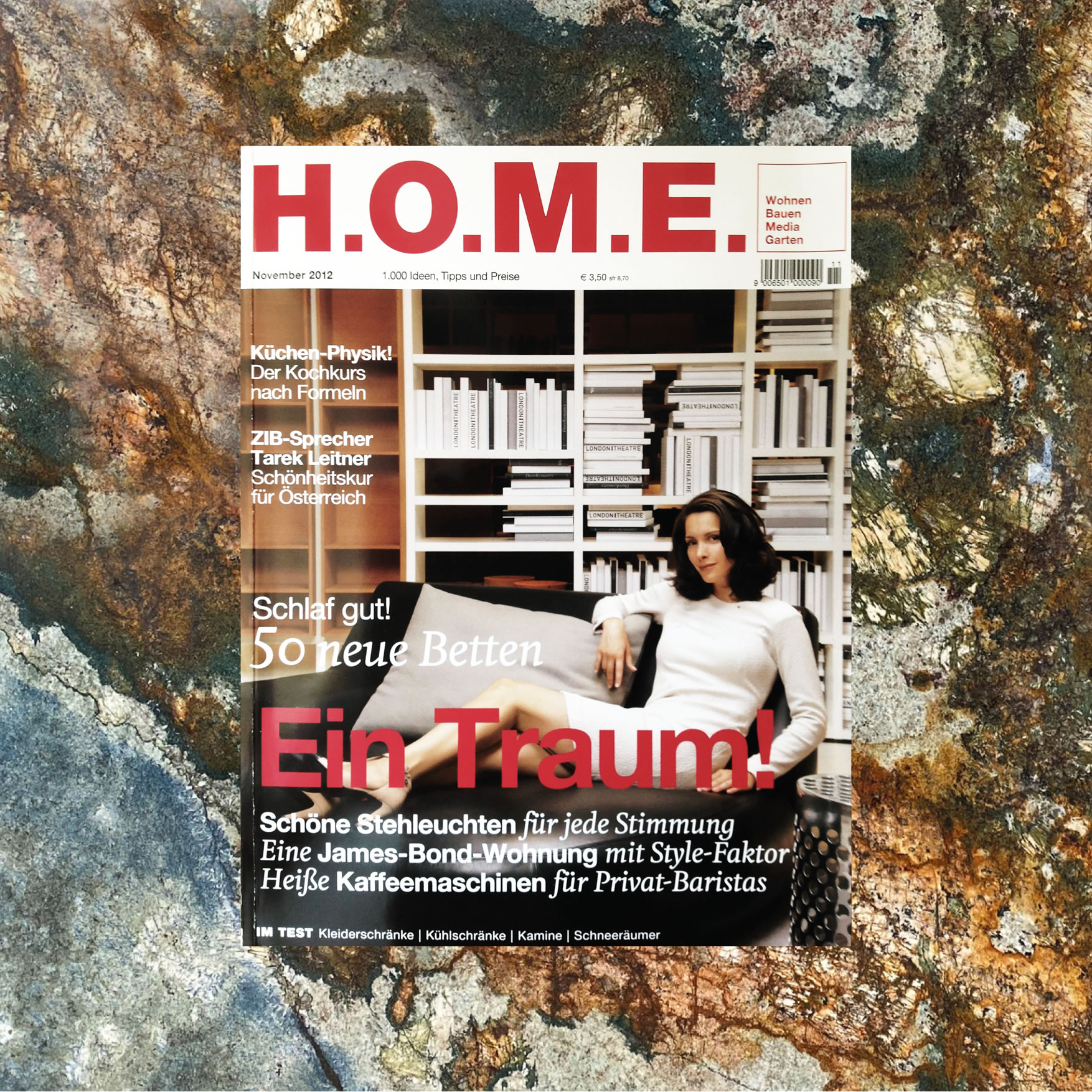
H.O.M.E.
Architecture Magazine 11–12
The architecture and design magazine H.O.M.E. dedicated its November/December issue to the work of Felix Schwake and the question of how art, architecture, and use can be meaningfully combined.
The focus was the concept of “functional art” — not as a stylistic category, but as an attempt to question the usual separation between art object and utilitarian object. The works consciously move between architecture, furniture, and spatial structure. They are not intended merely to be observed, but to be used, experienced, and physically perceived.
The designs follow a reduced design attitude. Clear geometries, precise materiality, and a focus on function form the foundation of the work. Reduction is not understood as a formal gesture, but as a means to create calmness, concentration, and spatial clarity.
The objects do not attempt to generate attention through complexity or decorative layering. Instead, they aim to create conditions for perception and use. Architecture and design are understood as a background for life — not as a permanent visual assertion within space.
Particular importance is given to the relationship between function and atmosphere. The works are intended to structure everyday actions while simultaneously generating a calm spatial effect. Material, light, proportion, and use are therefore not developed separately, but understood as a coherent spatial experience.
The publication also refers to a design position that consciously resists short-lived stylistic trends. The focus is not on trends or decorative effects, but on permanence, material awareness, and the question of how design affects perception and everyday life over time.
Thus, the term “functional art” describes less a category than an attitude: the idea that utilitarian objects, architecture, and art can emerge from the same responsibility toward space, material, and human experience.