
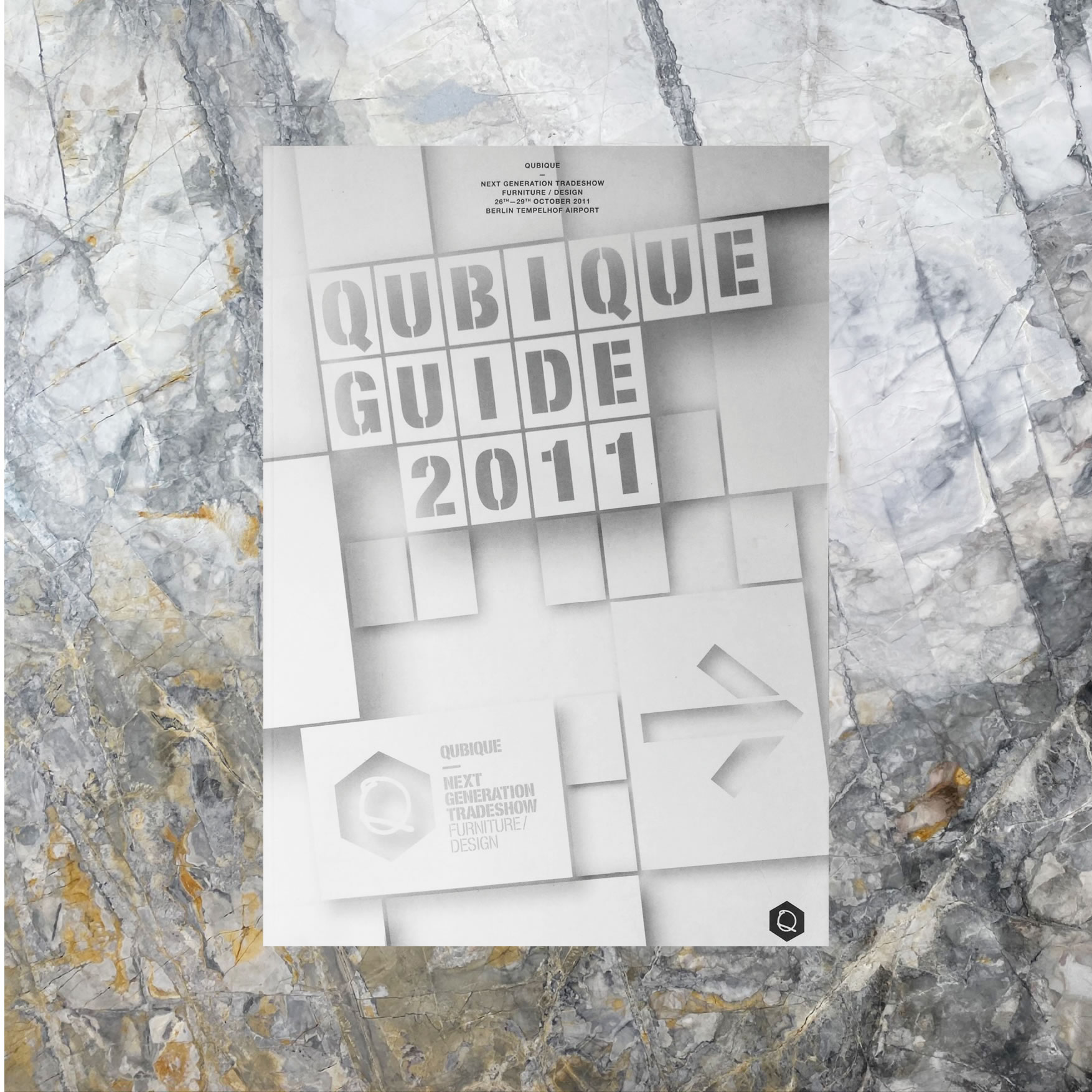
Qubique
Architecture Guide 2011
The first presentation of works by Felix Schwake at Qubique in 2011 marked the beginning of a public engagement with a design attitude that deliberately does not separate architecture, design, and functional art.
The focus of the exhibition was the question of how utilitarian objects can be reduced with regard to their spatial and atmospheric impact. The works presented followed a clear geometric order and deliberately avoided decorative overlays. Material, proportion, and function formed the foundation of the designs.
Even at this early stage, it became clear that the works were not intended to be understood as conventional furniture objects. Rather, the aim was the development of spatial situations in which use, perception, and atmosphere are interconnected. Function is not added as a visible layer, but integrated into a calm formal structure.
The multi-page publication in the Qubique magazine particularly reflected this attitude: the combination of reduced geometry with concrete use and the deliberate focus on what is essential. Architecture and design are not understood as the staging of style, but as a responsibility toward space, material, and everyday life.
The works are oriented toward an idea of design that enables calmness rather than generating permanent visual stimuli. Reduction is not an end in itself, but creates concentration and a heightened perception of space. Objects become spatial tools that structure use and influence atmosphere.
In retrospect, the exhibition marked an early starting point for themes that continue to shape later work: clarity of geometry, integration of function, material awareness, and the idea that architecture and design should serve as a background for life — not as its permanent visual overlay.