
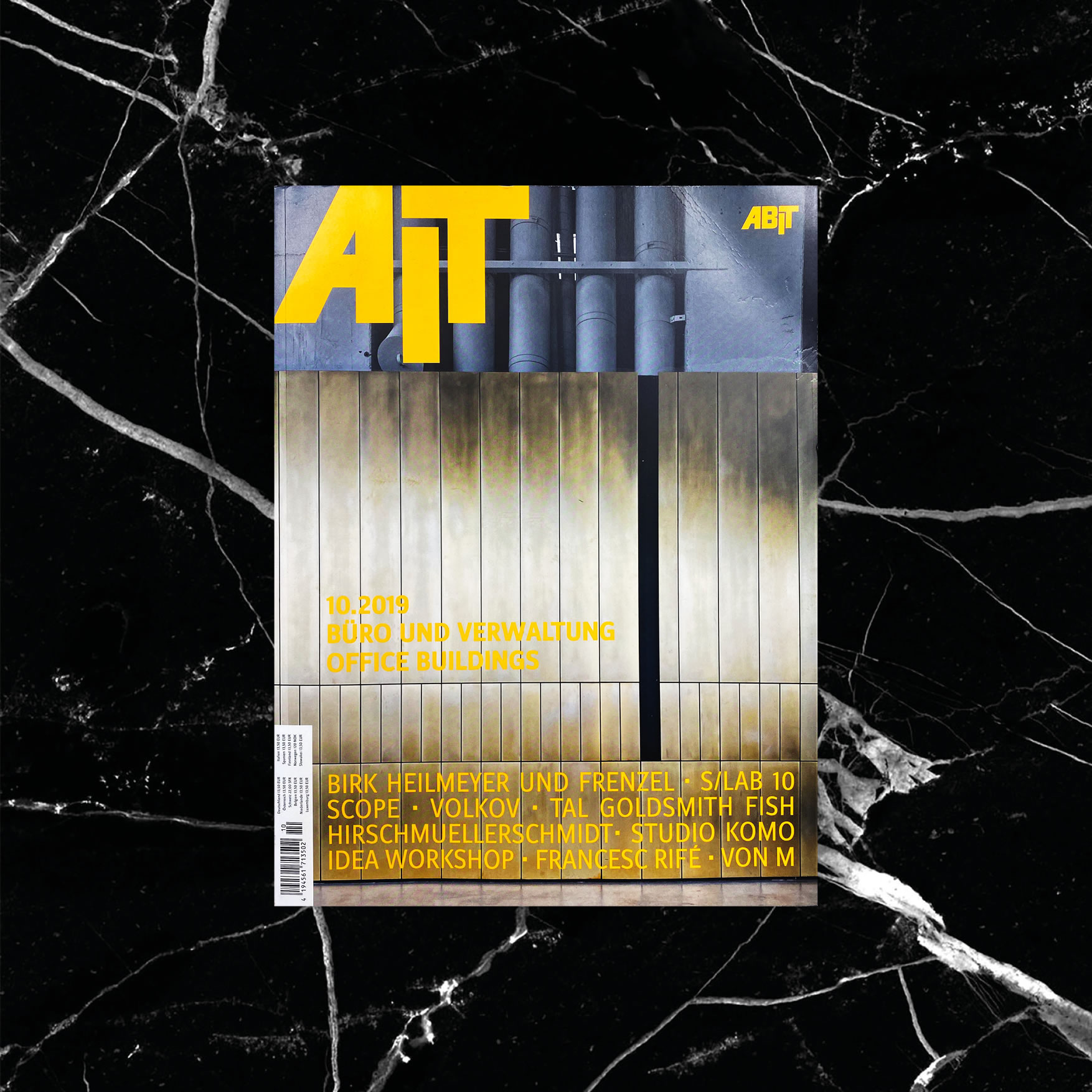
AIT
Architecture Magazine 10/19
AIT reported in its 10/2019 issue on the work of Felix Schwake and its position within a design discourse between architecture, interior design, and functional art.
The publication focused on an attitude that does not understand design as decorative surface treatment, but as a deliberate organisation of space, material, and use. The works follow a reduced geometric language in which functions are fully integrated into the form, thereby creating calm spatial situations.
The objects consciously move between furniture, architecture, and art. They are not intended merely to be observed, but to be used and physically experienced. Materiality, light effects, and proportion are given the same significance as function itself. Architecture and interior design are understood as a continuous spatial experience.
The reduction to clear forms does not serve formal strictness alone. Rather, it aims to create concentration, calmness, and a heightened awareness of perception. Design is not meant to constantly demand attention, but to create conditions in which everyday life, thinking, and use can move into the foreground.
The works therefore follow an attitude that understands architecture as a background for life. Spaces and objects carry responsibility for atmosphere and perception, precisely because they continuously surround human beings.
International awards in the field of architecture and interior design point to the relevance of this position within a broader design discourse on materiality, permanence, and spatial quality. Ultimately, however, what matters less is public recognition than the continuous engagement with the question of how design affects people and spaces over time.
The publication in AIT thus documents a body of work that consciously resists short-term stylistic trends and instead seeks to translate architecture, function, and atmosphere into a lasting spatial order.