
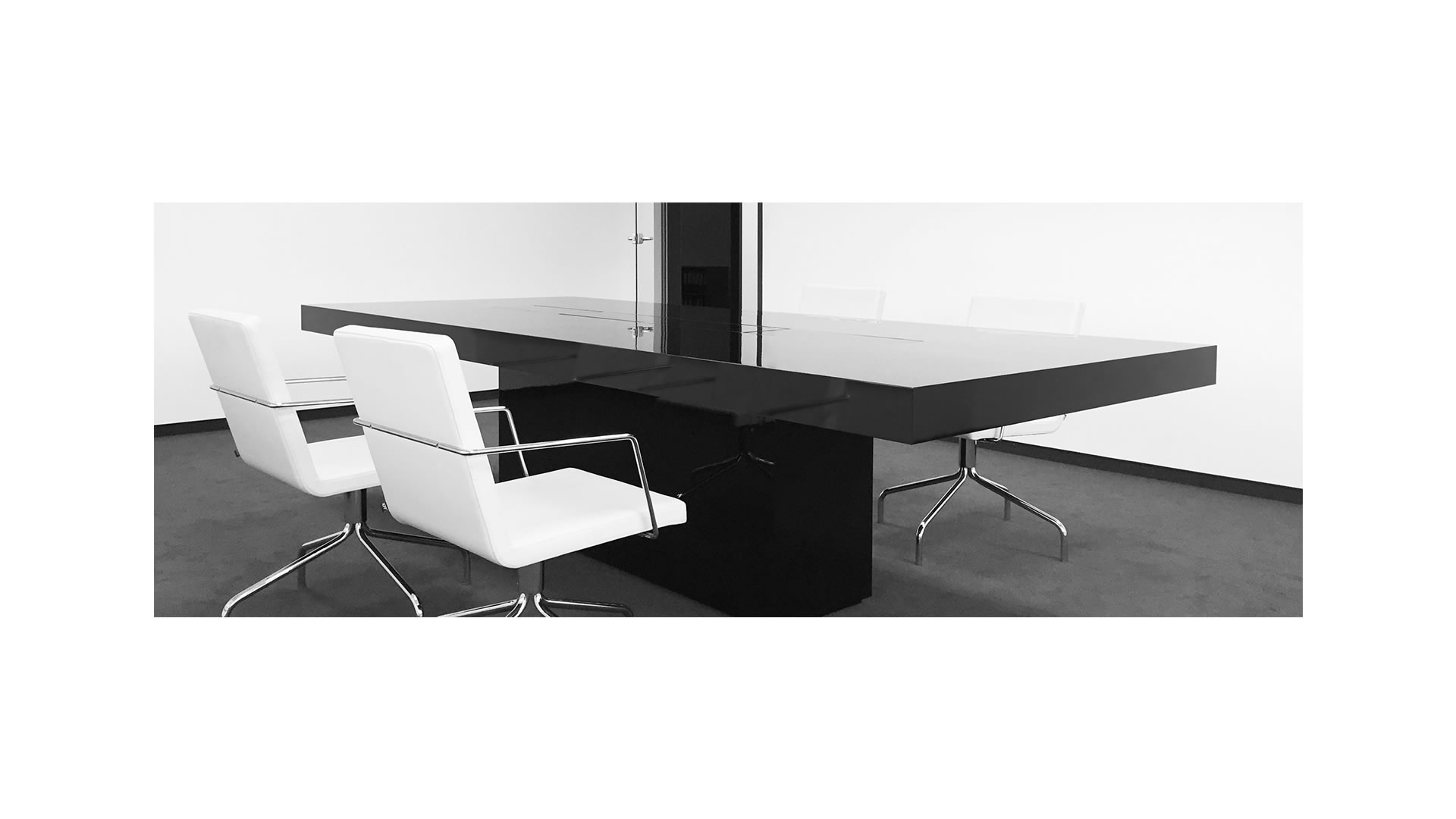
Conference Table
Dark Macassar Ebony and Light Zebrano Wood
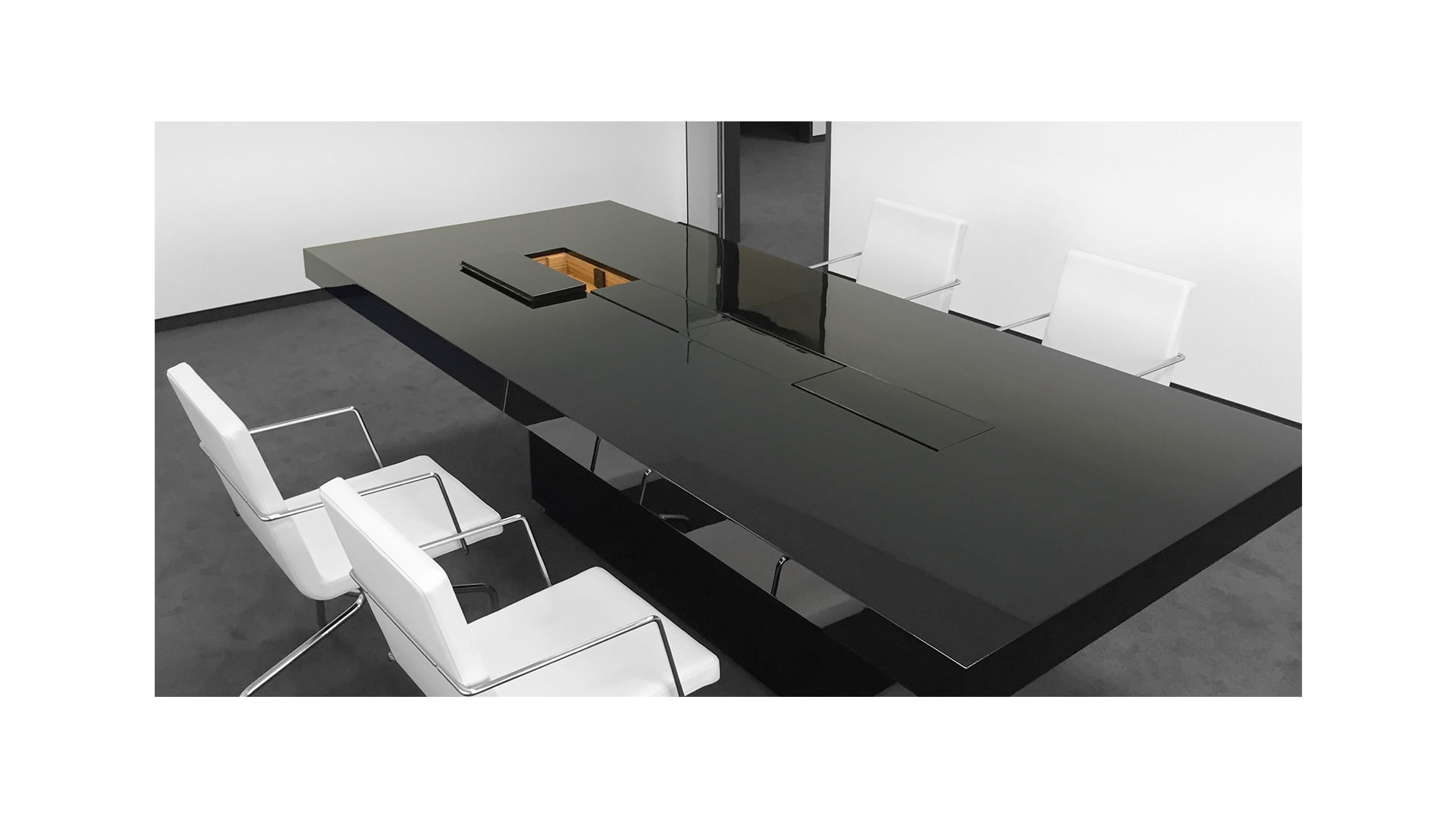
The conference table and the accompanying reception counter were developed as custom-made works for a law firm through the deliberate integration of materiality, function, and spatial atmosphere.
The material concept combines dark Macassar ebony with light Zebrano wood. Both woods possess a distinctive spatial depth and, due to their structure and material quality, are traditionally also used in instrument making. Light, surface, and grain change their appearance depending on perspective and time of day.
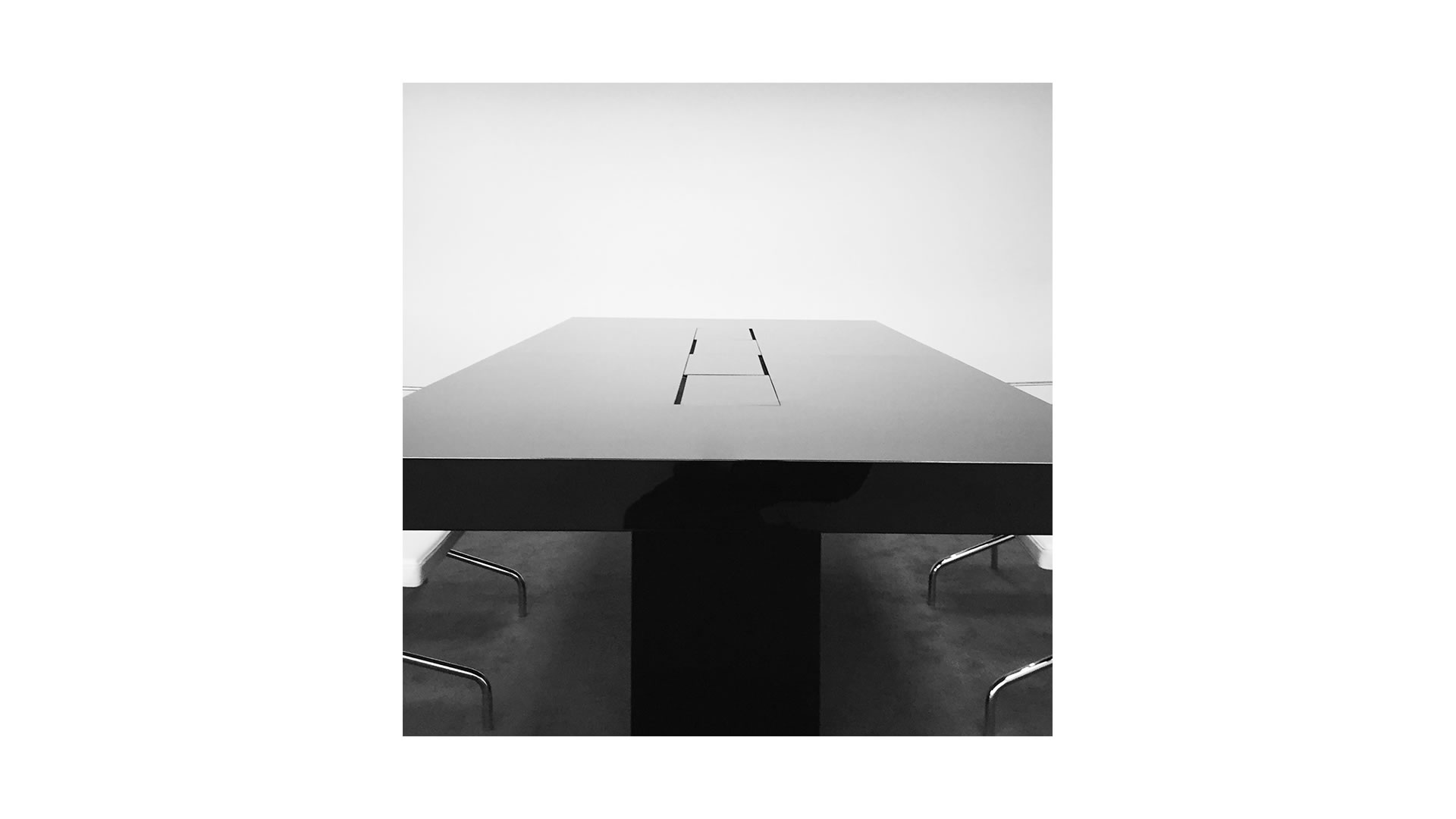
The almost black Macassar ebony initially creates a restrained and calm appearance. Only under direct light do the depth, coloration, and structure of the material become visible. The design therefore consciously avoids loud material staging in favor of a calm architectural presence.
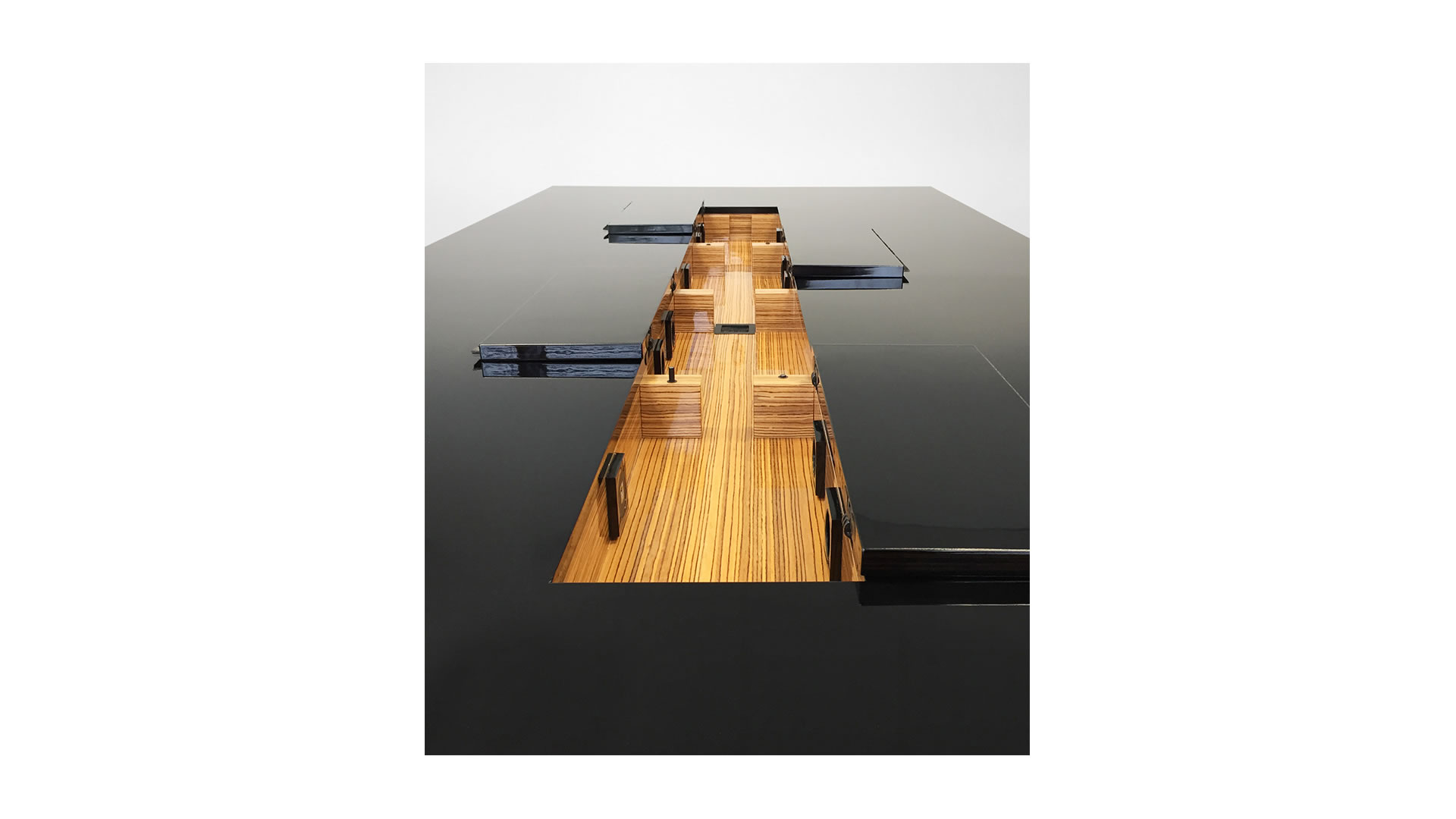
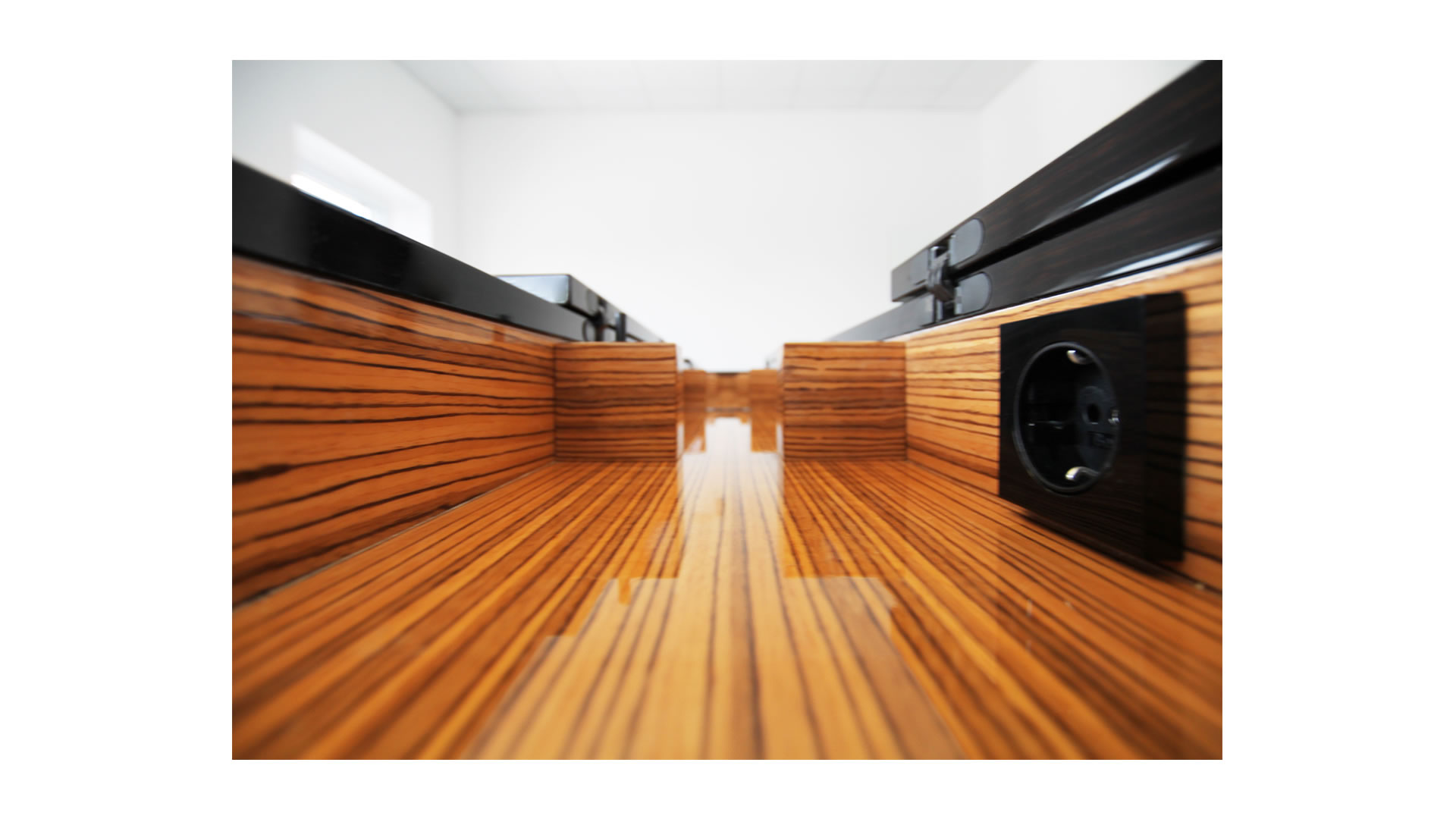
In contrast, the light Zebrano wood appears within the interior of the cable channel. It only becomes visible through use and creates a warm material contrast to the dark exterior body of the table. The opening of the cable channel thereby recalls the material character of a precisely crafted object or instrument rather than a conventional technical integration.
All functions of the conference table were fully integrated into a clear geometric order. Technology, cable management, and usability remain discreetly organized so that spatial calmness and concentration can be preserved.
In addition, a custom-designed reception counter was developed as a combination of workspace, storage, and architectural spatial boundary. The counter structures the transition between the public reception area and internal work processes without diminishing the openness of the spaces.
Here as well, the design follows the same architectural approach: functions remain largely invisibly integrated, while materiality, proportion, and spatial clarity determine perception. Extensive filing and work areas are fully incorporated into the construction while remaining immediately functional and accessible.
The works consciously position themselves between architecture, interior design, and functional art. Design is understood not as a decorative surface, but as the deliberate development of long-term spatial quality and atmosphere.
Further insights into materials, custom-made works, and individual project developments are provided through personal consultation.