
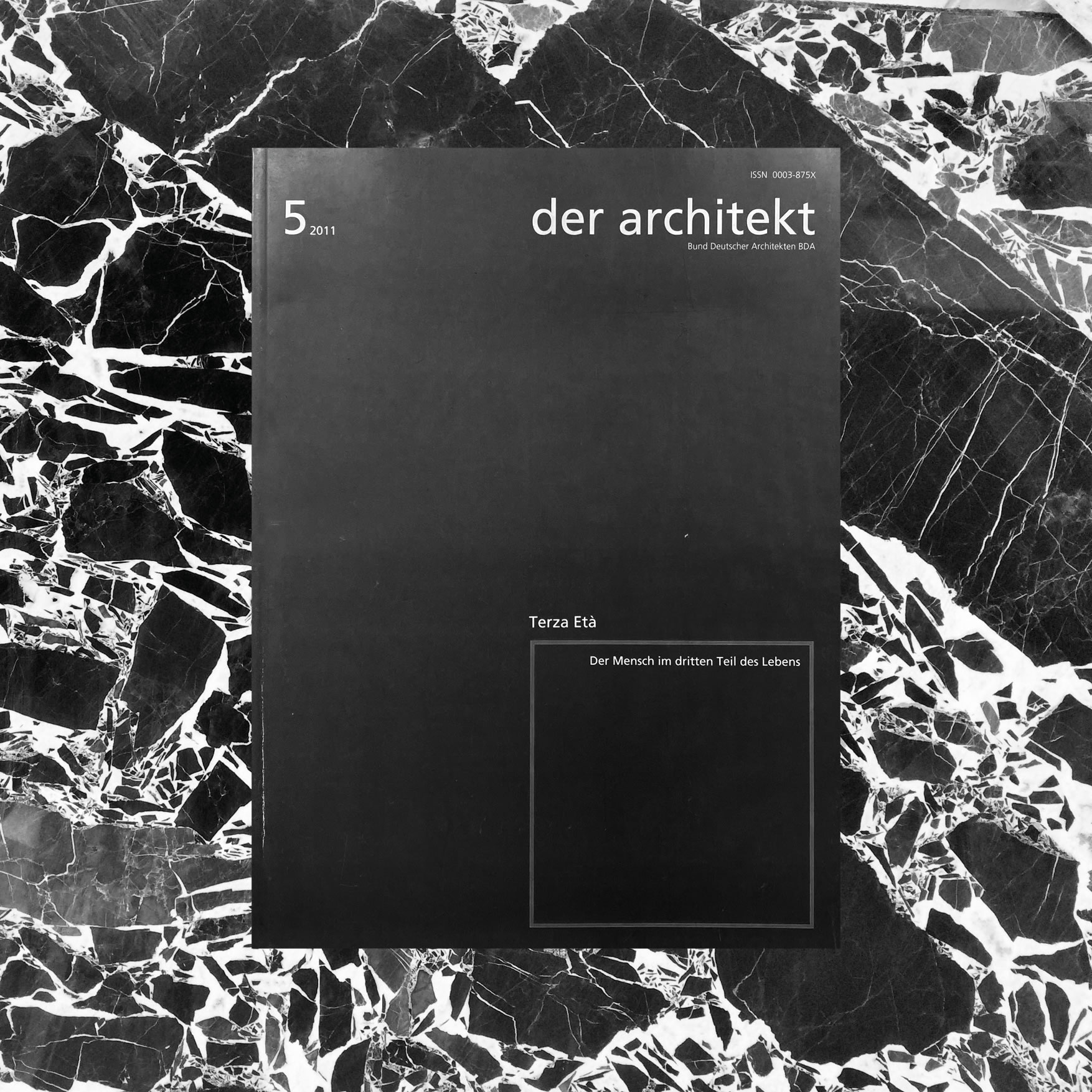
The Architect
Architecture Magazine 5/11
The architecture magazine Der Architekt dedicated its 5/2011 issue to the work of Felix Schwake and its position between architecture, design, and functional art.
The focus was a design attitude that does not consider spaces and objects in isolation, but understands them as part of a comprehensive spatial experience. The works follow a reduced architectural order in which material, light, proportion, and use are consciously aligned.
The furniture and objects are not conceived from decorative intent. Rather, the central question is how design can enable concentration, calmness, and spatial clarity. Superfluous elements are removed in order to make the effect of materiality, geometry, and atmosphere more precisely perceptible.
The works consciously move between architecture and object design. Furniture is not understood as an autonomous standalone piece, but as a spatial element that influences perception and use. Function remains an integral part of the form and does not appear as a technical addition.
The publication particularly addressed the relationship between use and spatial effect. Architecture and design are not understood as opposites of art, but as different expressions of the same responsibility toward space and human experience.
The reduced formal language does not follow stylistic trends. It emerges from the conviction that permanence, clarity, and material awareness are more relevant in the long term than short-term visual effects. Architecture is not meant to constantly demand attention, but to serve as a background for life, thought, and use.
International awards in architecture and interior design point to the relevance of this attitude within a broader design discourse. Ultimately, however, what matters less is public recognition than the continuous engagement with the question of how spaces and objects generate atmosphere and shape human behaviour.
The publication in Der Architekt thus documents an early phase of an attitude that continues to define the core of the work today: the integration of architecture, function, material, and conscious spatial experience.