Architecture, AI and agency – Who acts in design?
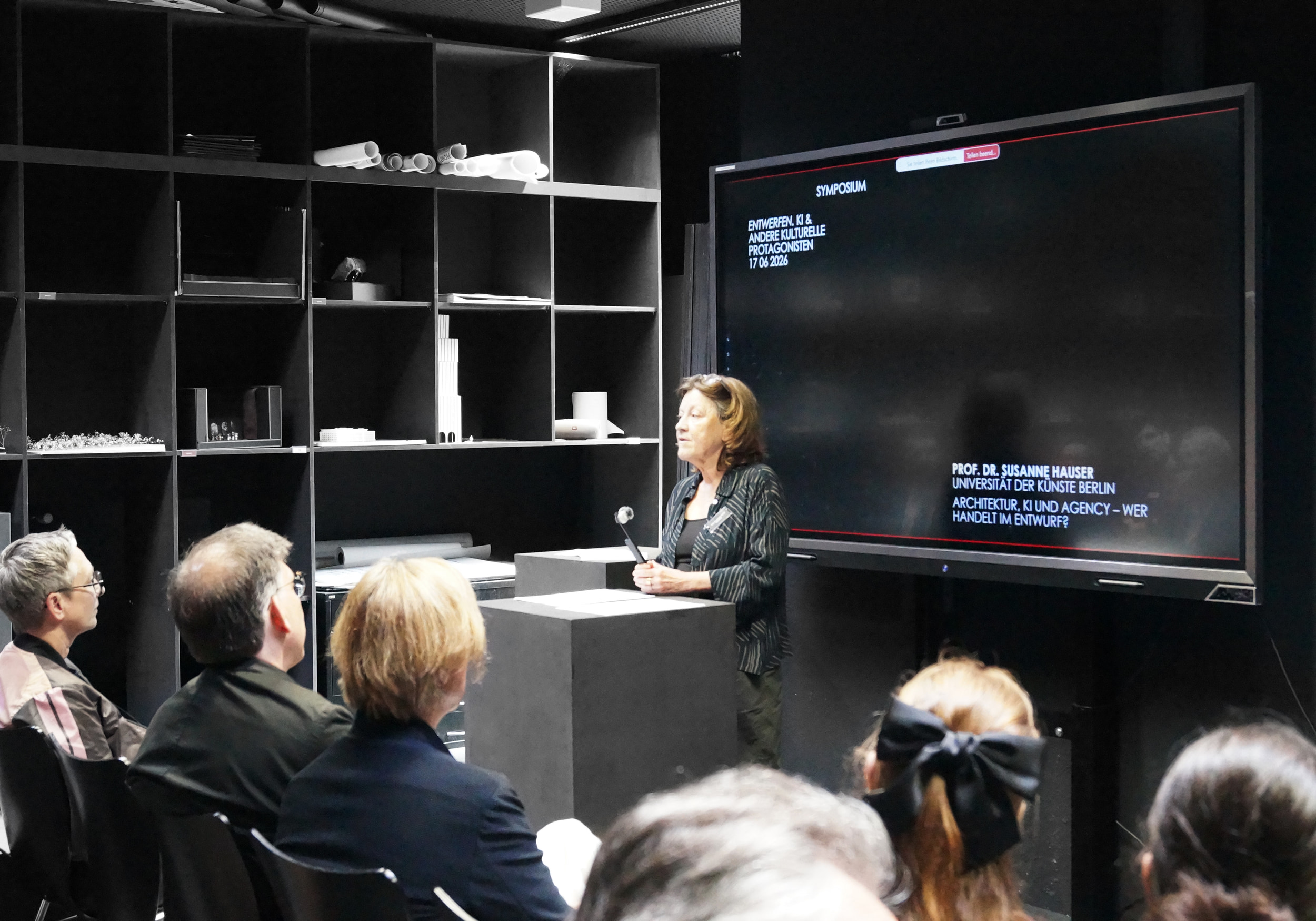
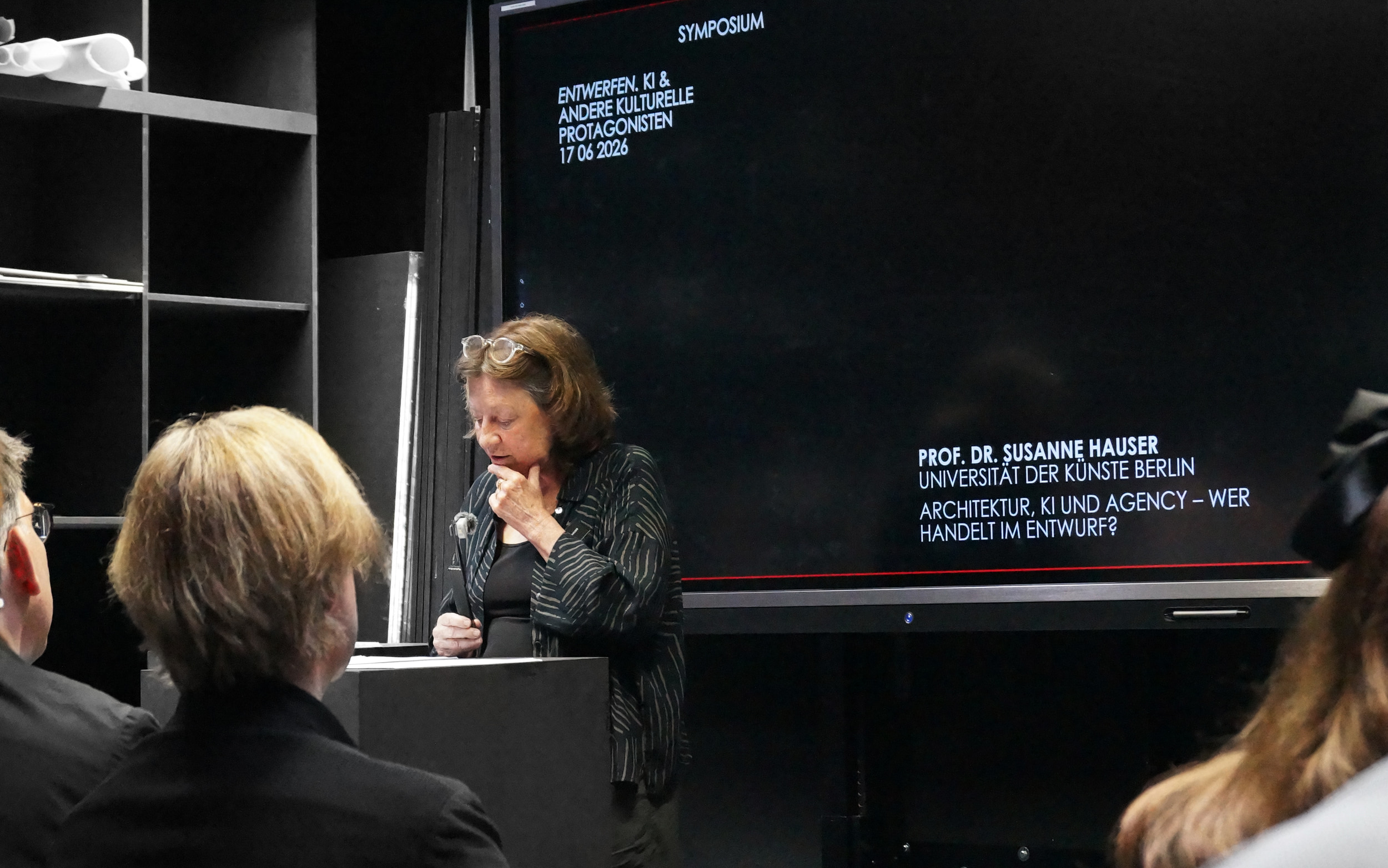
Prof. Dr. Susanne Hauser (UdK Berlin)
Original language: German. The English version was translated using AI.
Prof. Dr. Susanne Hauser
UdK Berlin
17 June 2026 · 10:20
Symposium “Designing. AI and other cultural protagonists.” · AMD Düsseldorf.
Ever since architectural theory turned its attention to design media, the question of their agency has been present—often accompanied by the suspicion that programs and algorithms initially conceived as tools are increasingly disempowering human designers. AI—the capacity to process large quantities of data of all kinds and, for example, to mediate and reorganise them in response to prompts, that is, linguistic instructions—has prompted two main responses in architectural discourse: an interested search for pragmatic applications in design, and a fundamental concern about the future of designing as a creative process. What does AI mean for the ways in which architects can work? This fundamental question has reopened the debate about where agency is located in design. This is the subject of my talk.
From the text Prof. Dr. Susanne Hauser prepared for the symposium. Translated from German.
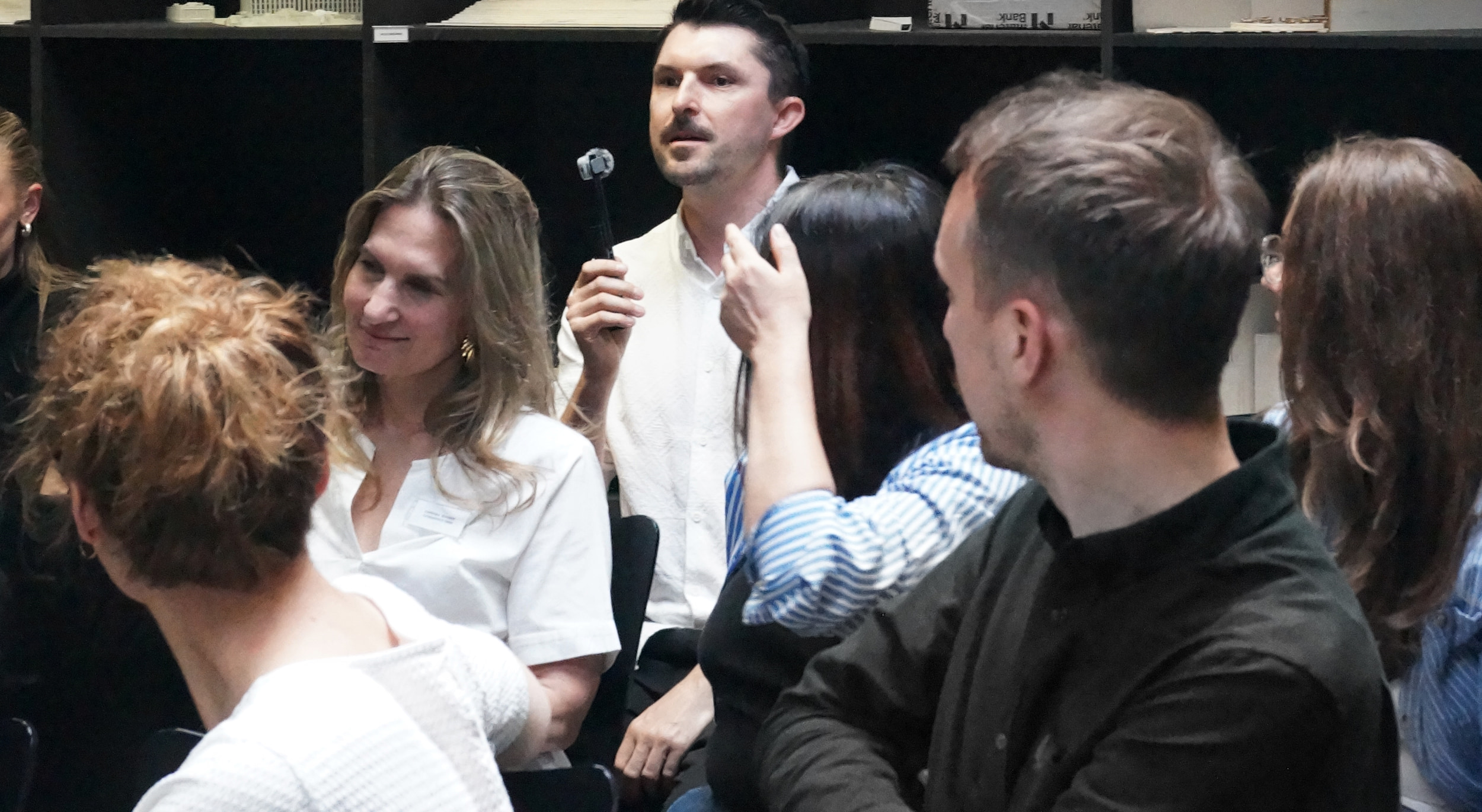
The later collective Discussion II considers the accelerating pace of designing. Its guiding question is restated during the exchange: “what happens when hardly any time remains between an idea and an image?” One contribution broadens the inquiry to changing relationships between technical means, capabilities and possibilities for designing.
The argument maintains a plurality of media. New technologies shift the field, while established means retain possibilities for productive use under changed conditions. An exclusive focus on AI would leave the constellations within which it operates insufficiently examined. Social meaning adds another dimension: what actions should a design enable, what freedoms should it open up, and what unfamiliar functions might it accommodate? Such requirements can take shape through discussion and negotiation without already existing entirely as data.
The discussion touches here on a central idea from Ms Hauser’s lecture. Her account of agency includes media, procedures and conditions alongside human participants. The later debate gives this inquiry a concrete direction: evaluating rapidly generated images requires attention to social relations and to goals that may themselves emerge through designing.
Selected contributions from Discussion II – Design and teaching at 15:30. Quotations translated from German.
Next contribution: Digitality, technology, epistemic shifts – Univ.-Prof. Dr. phil. Vera Bühlmann
Photographs: Katharina Petsch
