Theory and foundations
Discussion I (AMD Düsseldorf)
Original language: German. The English version was translated using AI.
Discussion I
Symposium
17 June 2026 · 12:00
Symposium “Designing. AI and other cultural protagonists.” · AMD Düsseldorf.
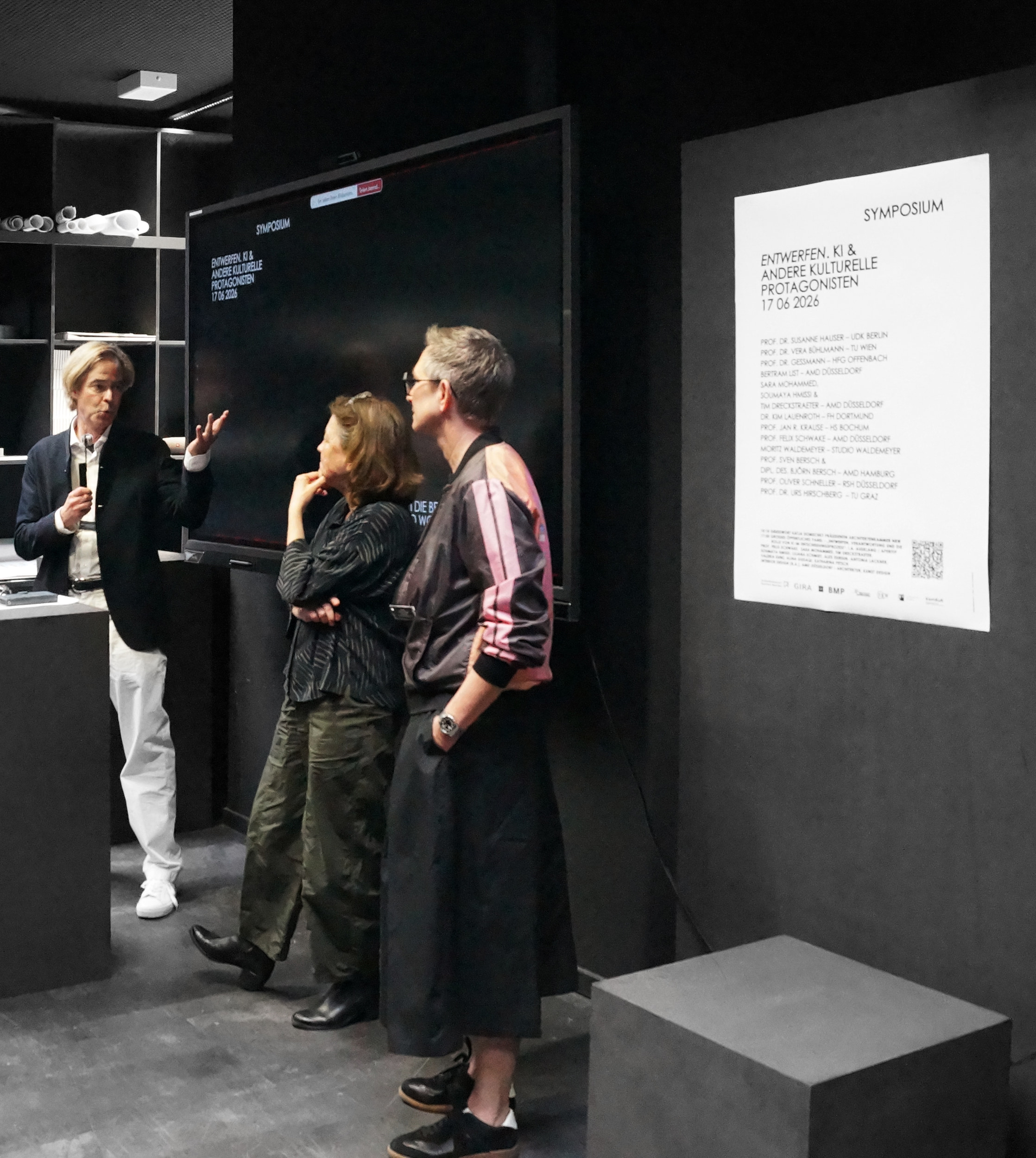
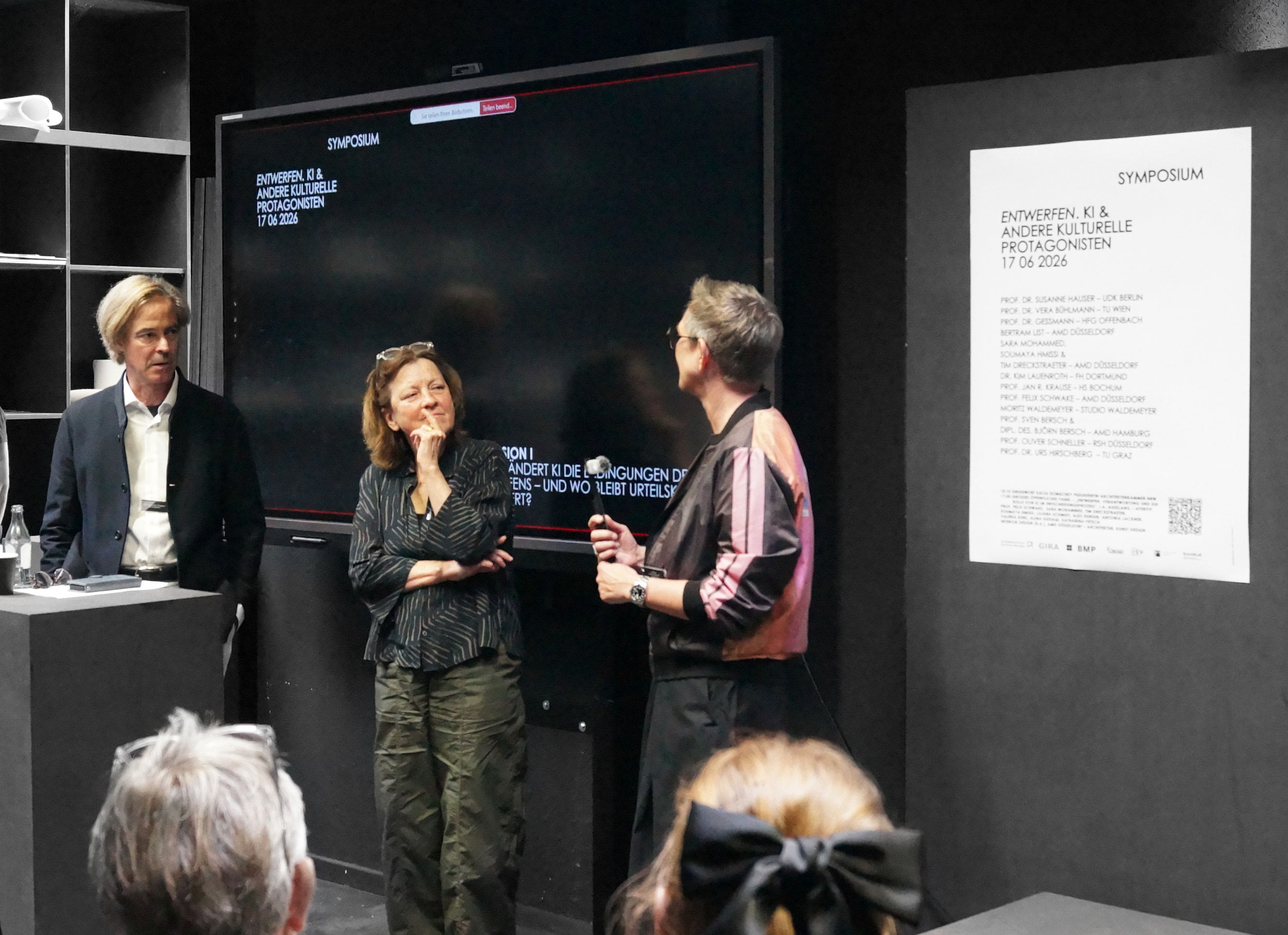
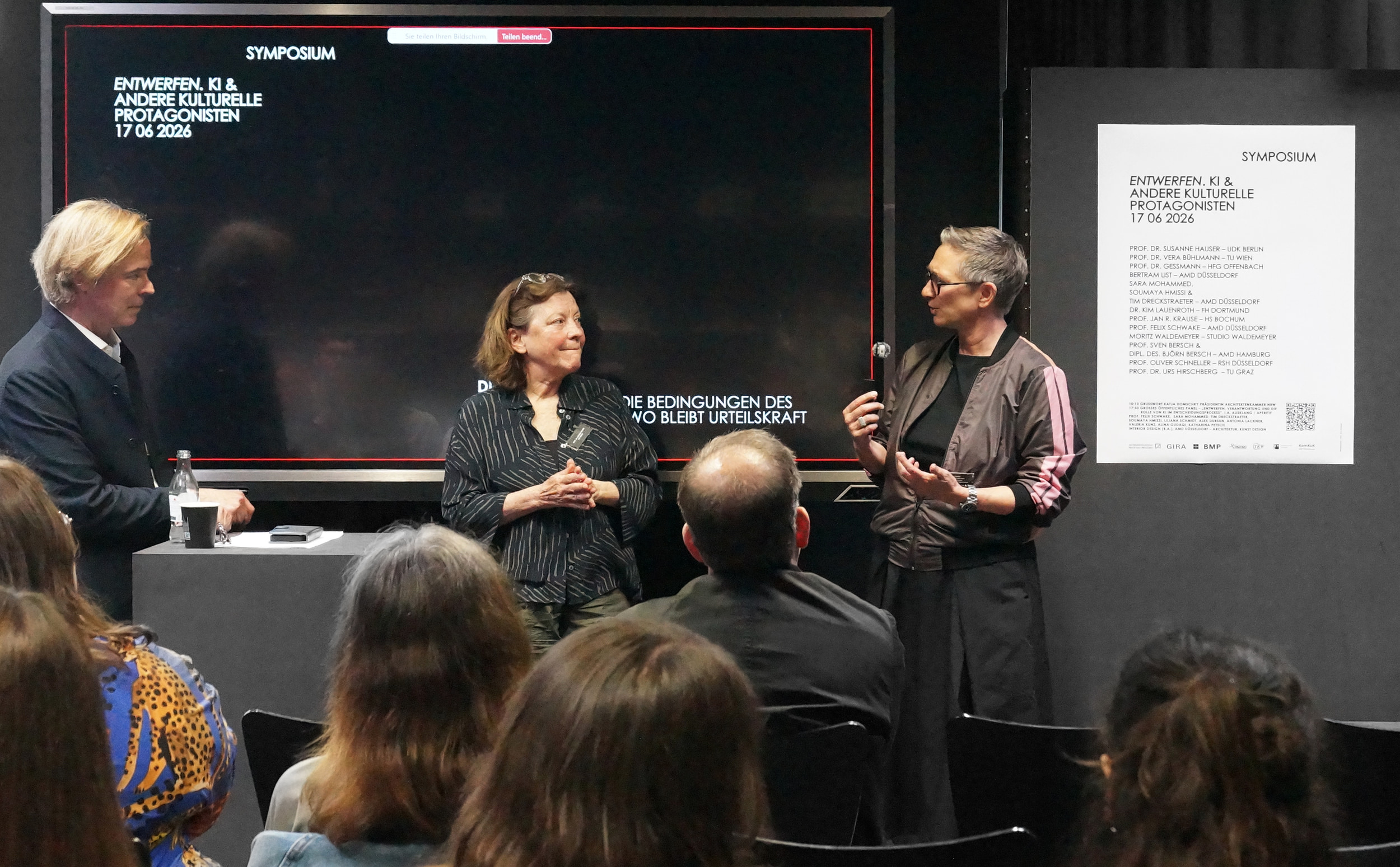
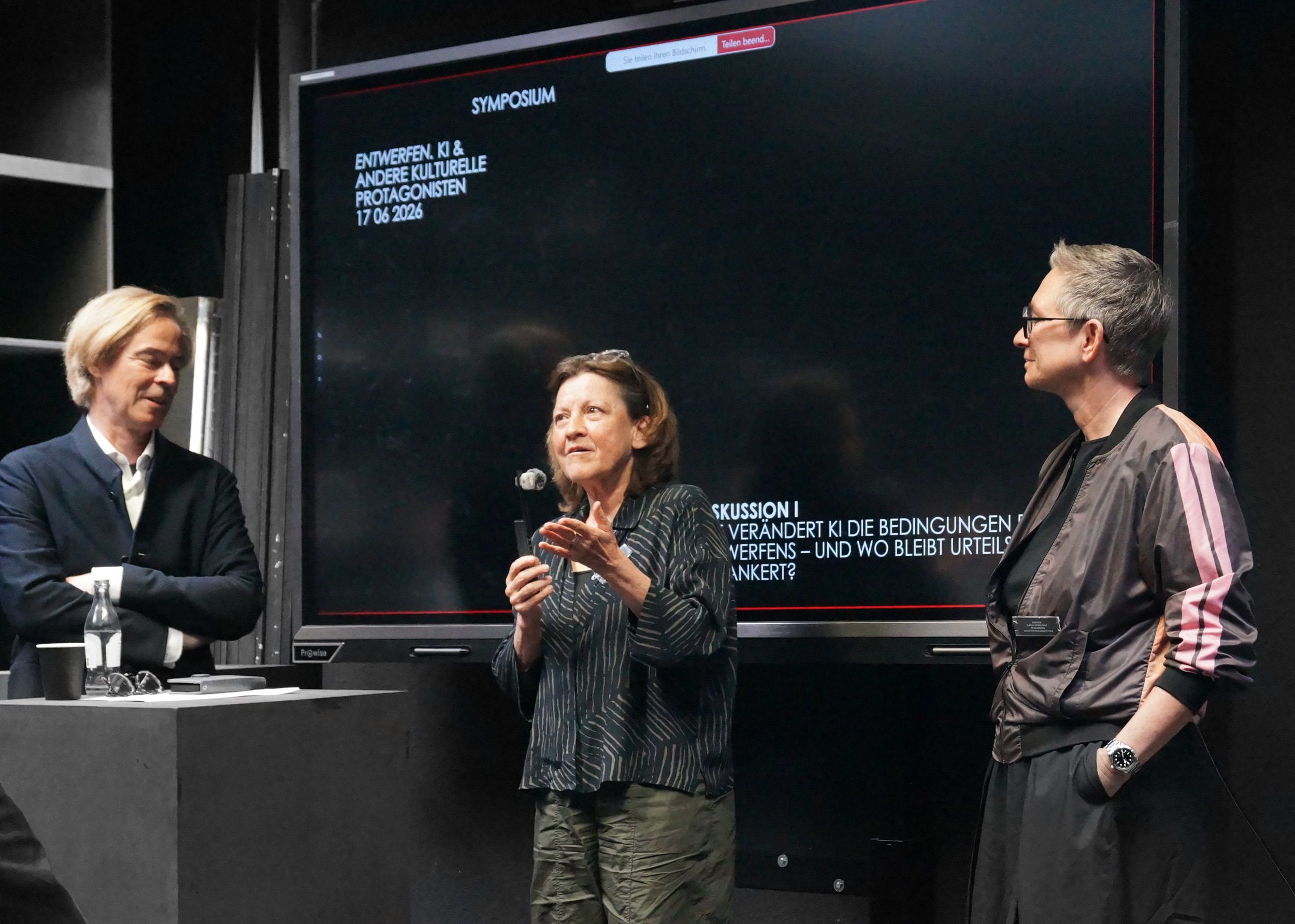
Discussion I at 12:00 brought together the morning’s theoretical contributions. It asked how AI changes designing and what knowledge remains necessary to help shape that change responsibly. Different understandings of technological development, professional competence and the role of universities came into view.
Prof. Jan R. Krause asked Prof. Dr. Martin Gessmann why AI provides a renewed reason for architectural theory. Mr Gessmann, drawing on Wittgenstein, described theory as a means of finding orientation when familiar concepts no longer suffice: “Theory comes into play whenever we say: I do not know my way around.” He explicitly refrained from presenting a finished new concept of designing. Such a concept would have to emerge through dialogue with people engaged in design practice. An alternative contribution questioned whether a new concept was necessarily required, proposing that the integration of another technology into established design practices should first be understood. The extent of the conceptual reorientation therefore remained open to debate.
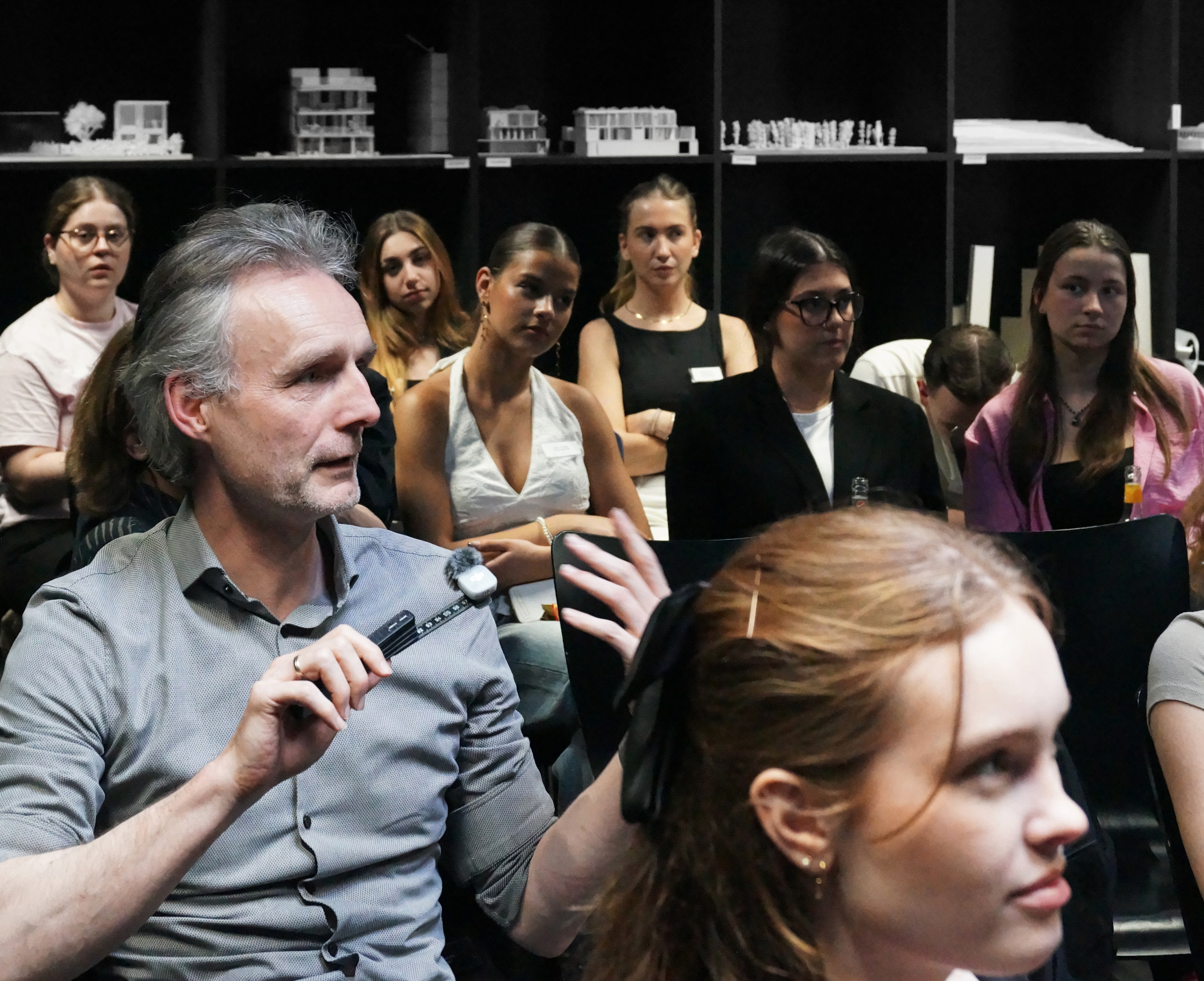
One contribution connected the question of learning with a sobering experience: CAD, BIM and other technical innovations had accelerated work without automatically releasing more time for conceptual thinking or the common good. This prompted a crucial distinction. A quick answer is not yet a reasoned judgement; a designer needs knowledge and a position of his own to accept or reject a proposal. Institutions and procedures through which knowledge is tested and taught were equally important. The discussion thus moved from the availability of information to the conditions under which reliable orientation can develop.
Prof. Dr. Vera Bühlmann argued for an active engagement with the upheaval: “For me, it is almost a duty to be an optimist.” Her comparison with the introduction of zero addressed the potential cultural and social reach of mathematical inventions. Universities should provide time for open-ended thinking and optimistic scenarios. Other contributions stressed the transfer of agency to large platforms and the appropriation of knowledge by their operators. Optimism and criticism stood in a demanding relationship: exploration requires openness, while the economic and institutional conditions of that exploration must themselves remain subject to scrutiny.
Agentic AI raised the question of whether the term tool would remain adequate. The discussion considered systems that assemble information and take over sequences of action. One possibility was that they might bypass familiar user interfaces and establish another layer of mediation between people and digital services. Questions of dependence, transparency and design followed. The further suggestion that such systems might acquire a character of their own remained contested; a response pointed out that the effects described could occur without any such character.
A design example from Vienna added another cultural dimension. A proposal for an automated art repository was considered through an analogy with sacred space, with the machine acting as a mediator between different realms of experience. This raised the question of the authority people attribute to technology. A call for an abstract, mathematical understanding of how technology works challenged the elevation of technical possibility into unquestioned authority. Designing emerged both as work on forms and as an engagement with the social meanings of technical systems.
Selected ideas from Discussion I – Theory and foundations on 17 June 2026 at 12:00. Quotations translated from German.