From tool to partner. Design education for the digital in the age of AI
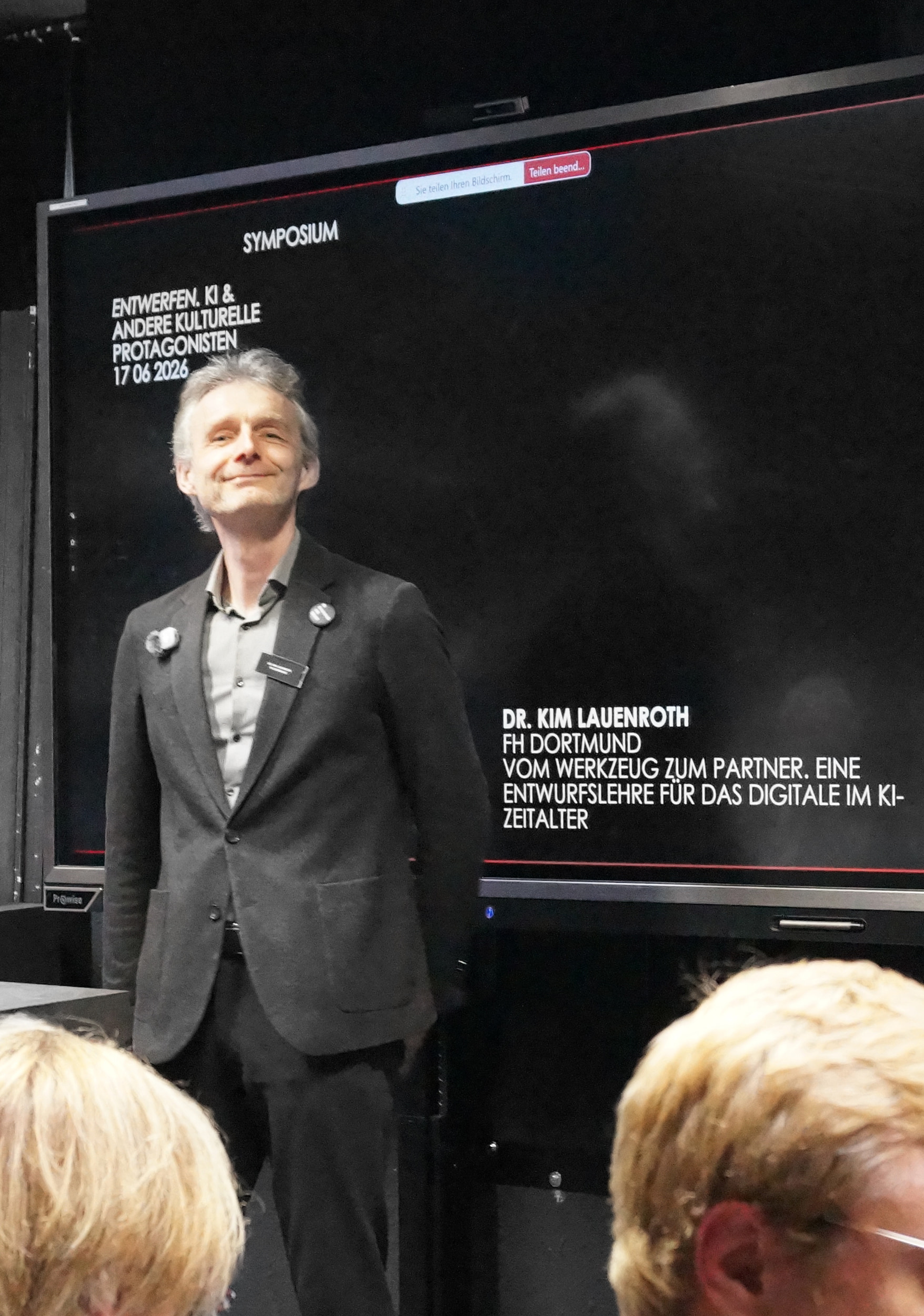
Dr. Kim Lauenroth (FH Dortmund)
Original language: German. The English version was translated using AI.
Dr. Kim Lauenroth
FH Dortmund
17 June 2026 · 13:55
Symposium “Designing. AI and other cultural protagonists.” · AMD Düsseldorf.
In the age of AI, the economics of digital value creation are shifting: implementation is becoming inexpensive. Design becomes the real challenge. It determines whether the new speed leads to good solutions or to more digital waste. A discipline that has long remained underdeveloped in the digital domain is therefore suddenly gaining importance: design theory.
Yet design also faces a challenge: at first, I experienced the capabilities of AI as an affront, because at first glance it seems to replace me as a designer. On closer inspection, the situation looks different.
AI need not be a competitor; instead, it can become a partner with complementary strengths. We simply need the courage to have confidence in this collaboration. The talk makes the case for a theory of design for the digital and outlines the levels and facets of a model in which questions of tools, delegation, responsibility and quality can be clearly formulated.
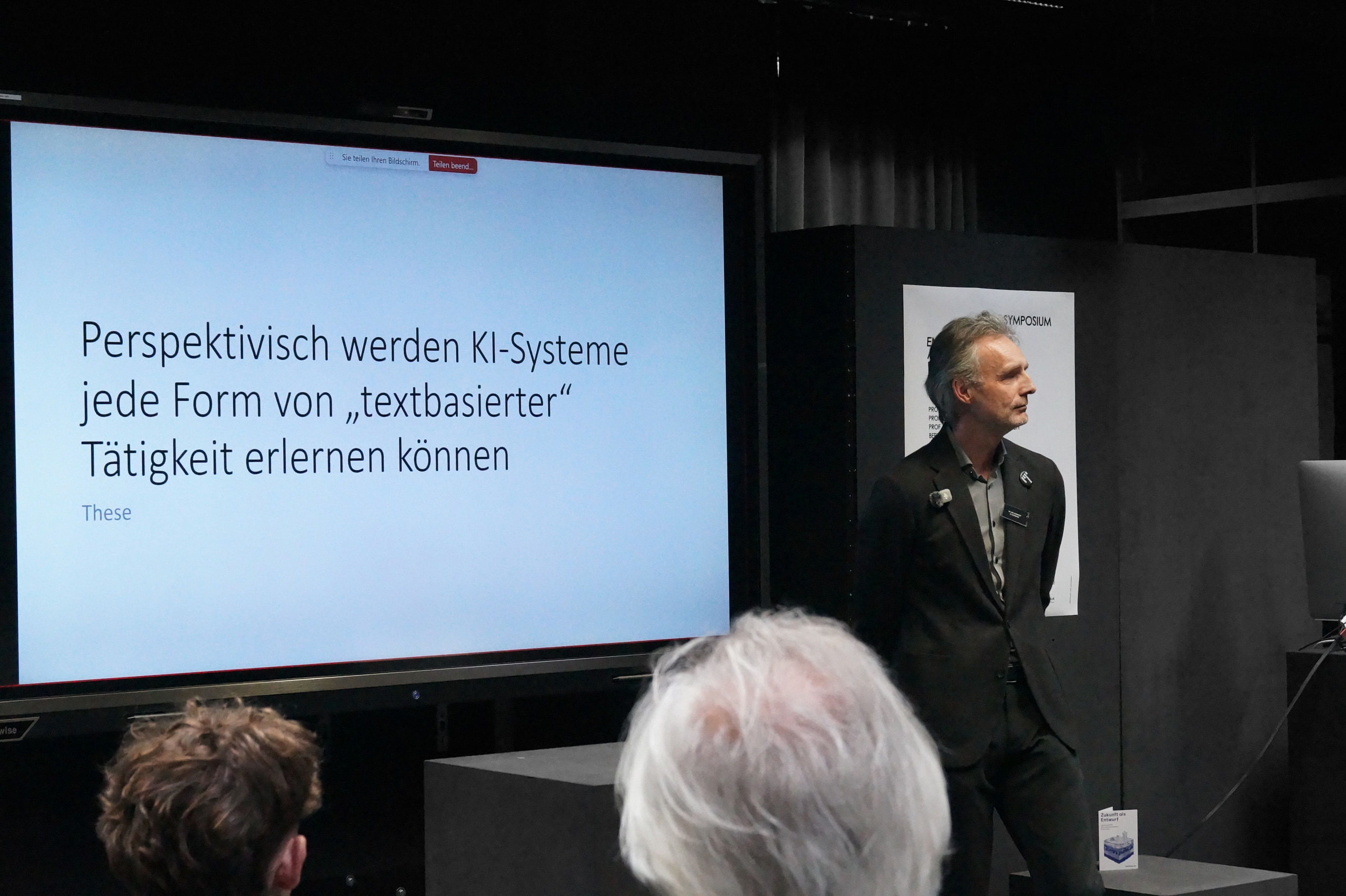
Thesis: In design, AI becomes a partner with strengths of its own. It is neither a tool nor a proxy. Responsibility nevertheless remains with the human being.
From the text Dr. Kim Lauenroth prepared for the symposium. Translated from German.
In the student-led conversation, collaboration with AI was tested against the ability to justify design decisions. Discussing a teahouse, the students asked how the ability to justify a project changes when the design process is accelerated enormously
. Their example was an initially persuasive AI image whose spatial and material decisions appeared questionable on closer inspection.
Mr Lauenroth’s response distinguished generating an image from working with a developed design brief. He asked which requirements had actually been specified and used his example of the energy church: clear structures and more precise instructions change the results that can be worked on with a system. Responsibility for the design remains with the designer. Feedback from AI was presented as an opportunity to examine and refine the question, rather than as a substitute for a reasoned brief.
A further question concerned client communication: do you show drawings, or do you only show visualisations
? The responses contrasted the openness of sketches with expectations of readily understandable images. A contribution from software practice placed advice at the centre: the task is to understand the other person’s information needs and use an appropriate medium at the appropriate moment. The discussion thus gave concrete form to the relationship between technical support and human responsibility.
Selected questions and responses from the discussion accompanying the student contribution Speed versus attitude at 13:20. Quotations translated from German.
Next contribution: AI = Collaborative intelligence – Prof. Dipl.-Ing. Jan R. Krause BDA DWB
Photographs: Katharina Petsch
