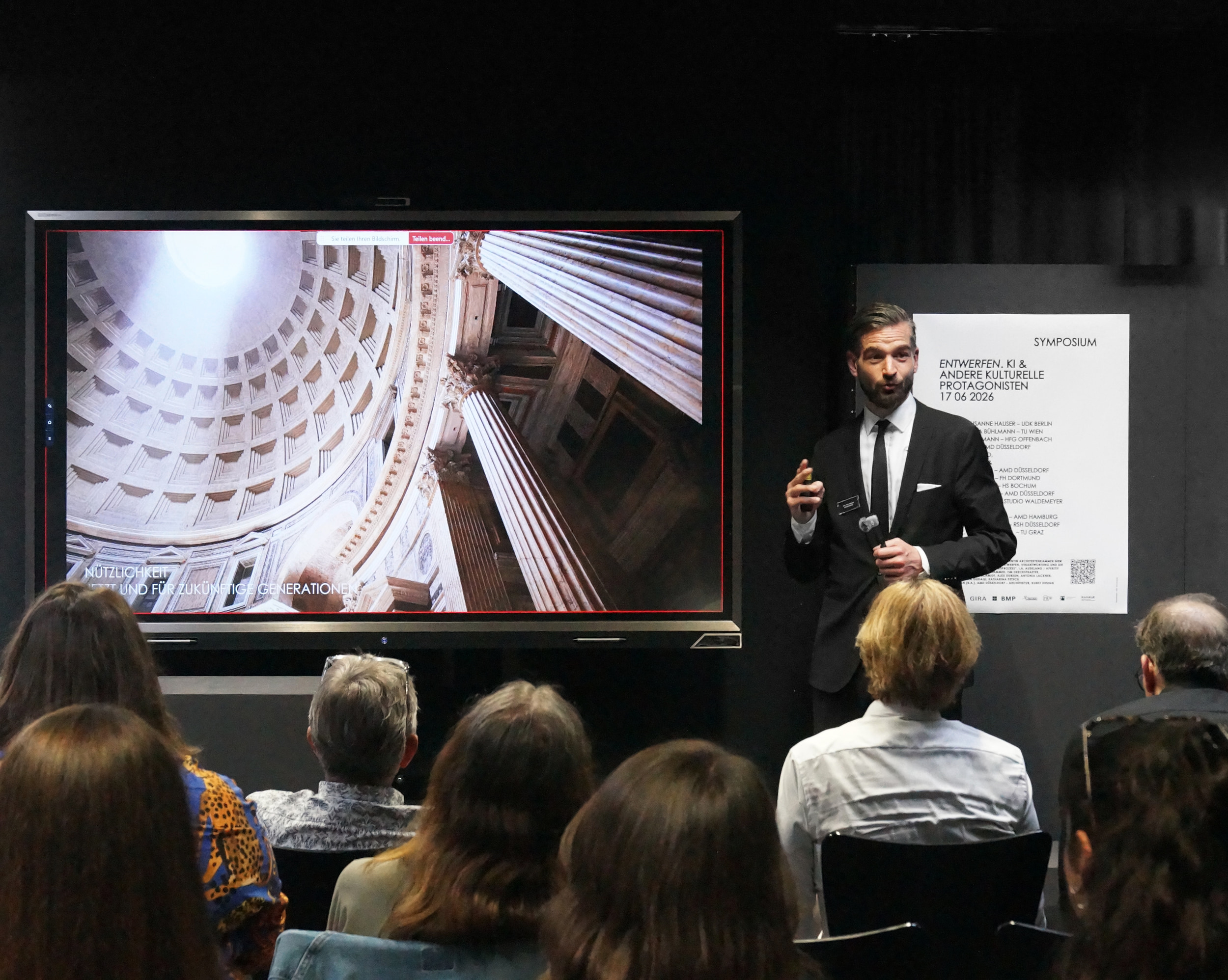
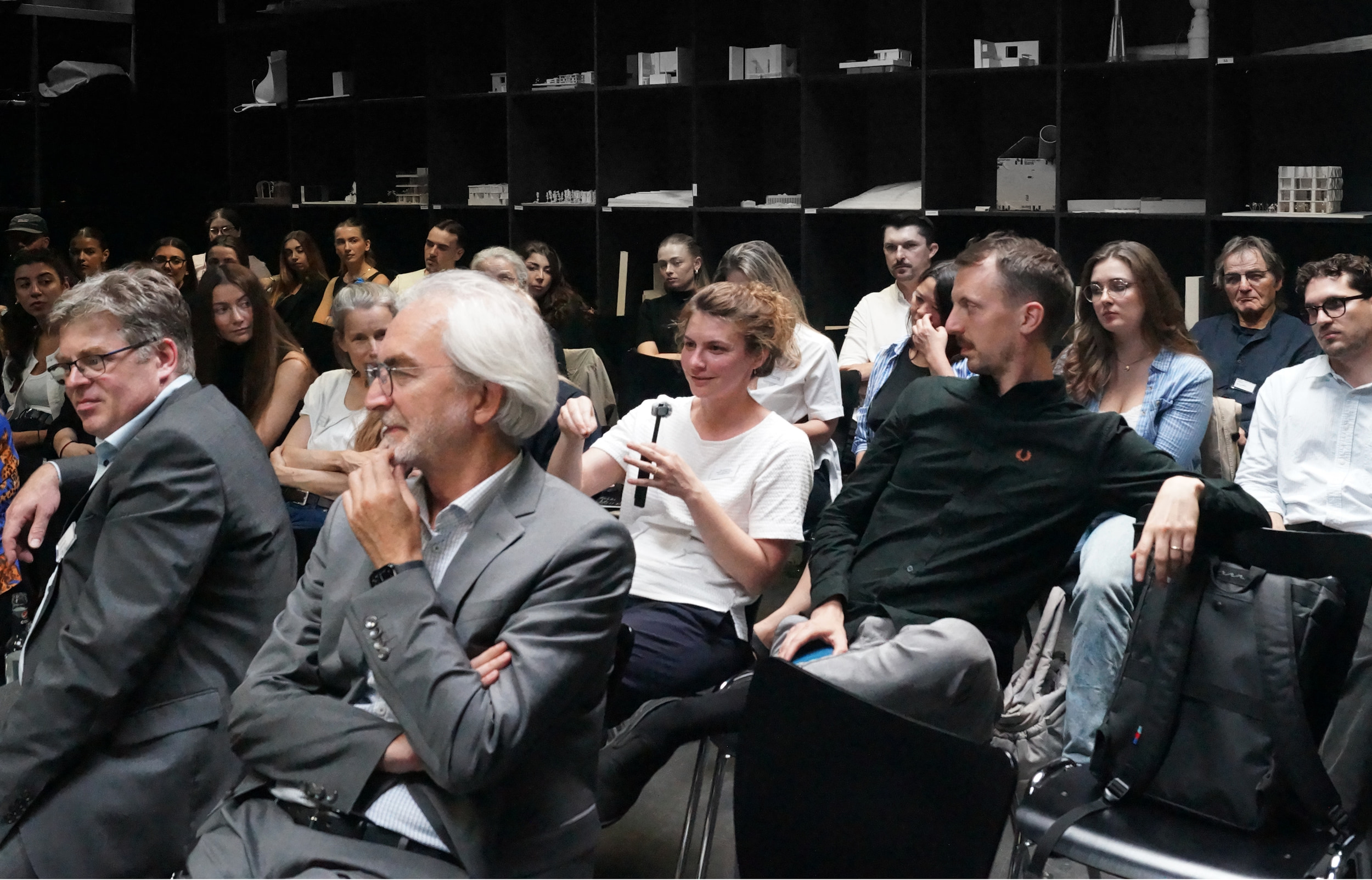
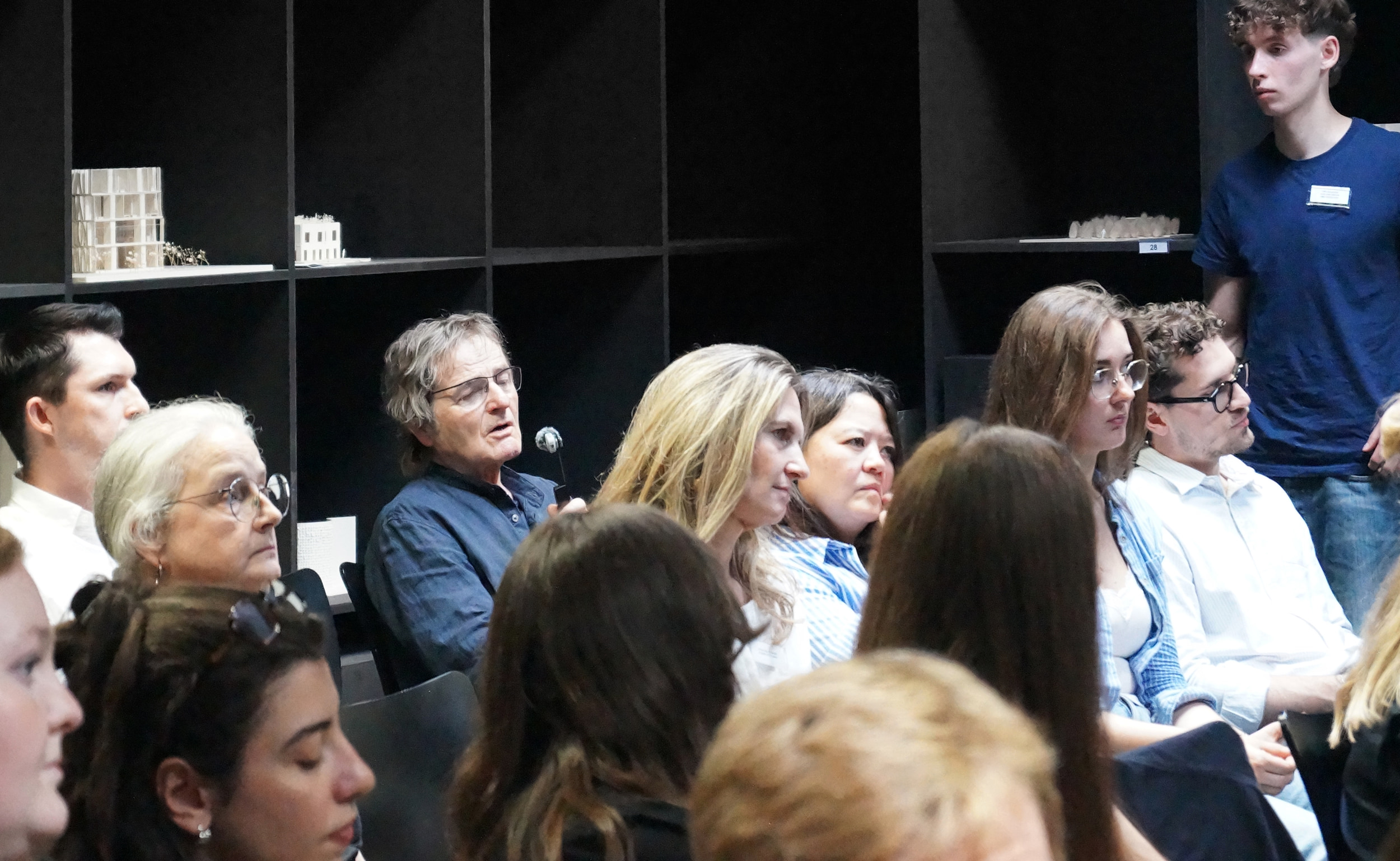
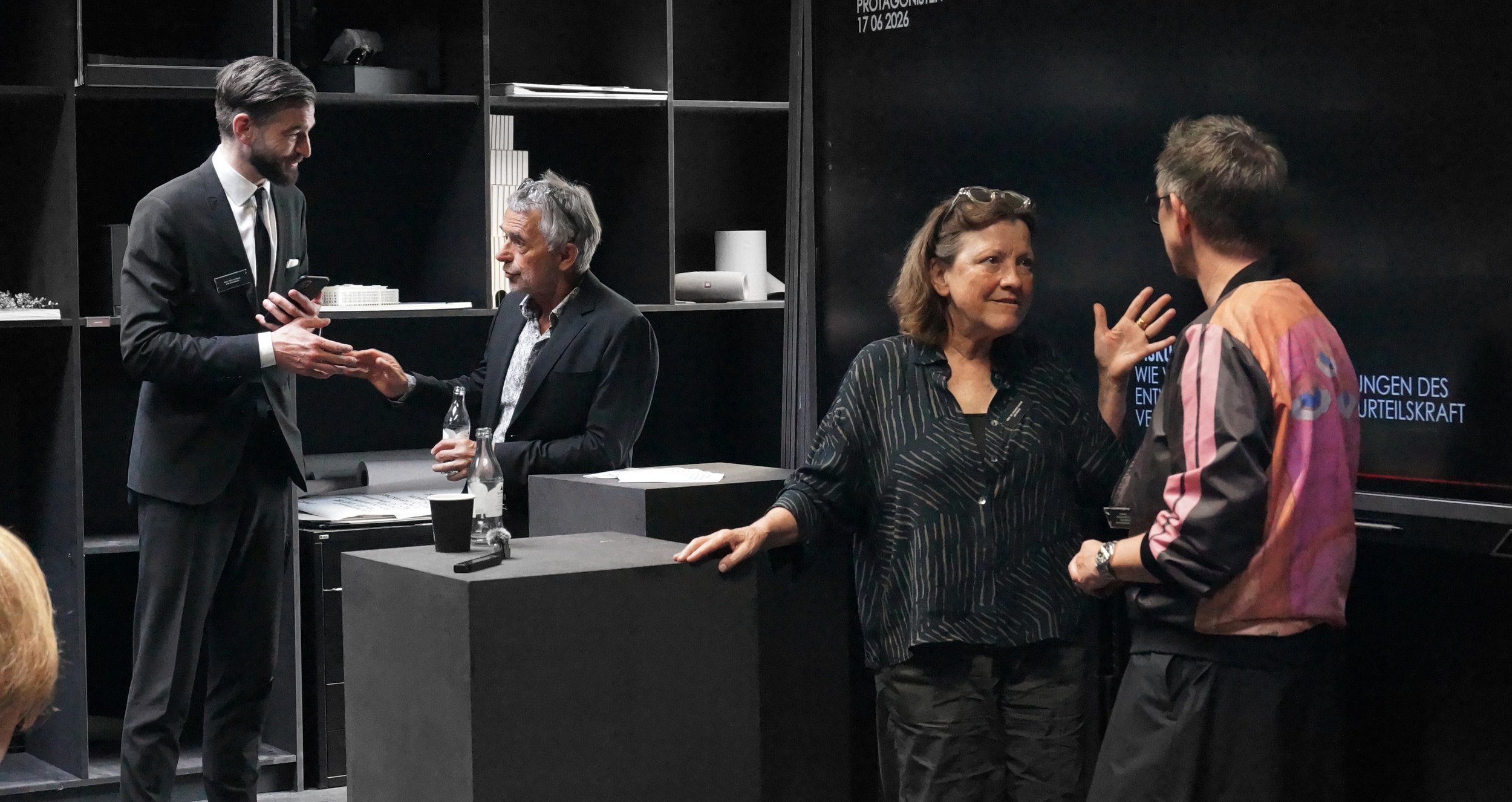
Closing remarks
Prof. Dipl.-Ing. Felix Schwake (AMD Düsseldorf)
Original language: German. The English version was translated using AI.
Prof. Dipl.-Ing. Felix Schwake
AMD Düsseldorf
17 June 2026 · 18:35
Symposium “Designing. AI and other cultural protagonists.” · AMD Düsseldorf.
Over the course of the day, the question of AI broadened into a question about design itself. Which decisions can a computational process support, and which responsibilities remain with the architect or designer? The lectures and discussions did not converge on a single answer. They revealed where more careful distinctions are needed: between a generated image and a fully developed design, between faster production and higher quality, and between using a tool and understanding its possibilities and limitations.
Discussion I at 12:00 considered how design can be understood under the conditions of AI. Theory emerged as a means of finding orientation in a changed situation. The origins of knowledge, dependence on platforms and the scope for independent action also came into focus. A new technical capability does not in itself explain what purpose it should serve. Design decisions still require criteria against which proposals can be examined and justified.
The student contribution and Discussion II at 15:30 connected these questions with education. The second-semester students’ analogue work and the digital experiments with AI opened up different approaches to design. Time spent on a project could be understood as time for perception, examination and the rejection of proposals. At the same time, participants argued for testing new methods in practice early on. Disagreement remained over which foundations must be acquired first and how independent achievement can be assessed. Education therefore faces the task of developing both design judgement and an informed approach to new methods.
The main panel at 17:50 broadened the discussion to changes in professional work, communication with clients, social frameworks and environmental consequences. A convincing AI image can make it easy to underestimate the work still required to produce a viable design. Nor does technical efficiency automatically create more time for design. Designers therefore need to select their methods, explain the value of their work and consider the consequences of using those methods.
For me, the substantive outcome is the need for active, critical engagement. Reservations do not relieve us of the need to investigate new possibilities; available possibilities do not relieve us of the need to make reasoned decisions. Education in particular must bring these two demands together: openness to change and the ability to judge quality independently. The day did not provide a ready-made method. It sharpened the questions against which further work in design, research and education will have to be tested.
Prof. Dipl.-Ing. Felix Schwake
AMD Düsseldorf
Architect with a practice in Bochum. Dean of Studies for Interior Design and Product Design at AMD Düsseldorf.