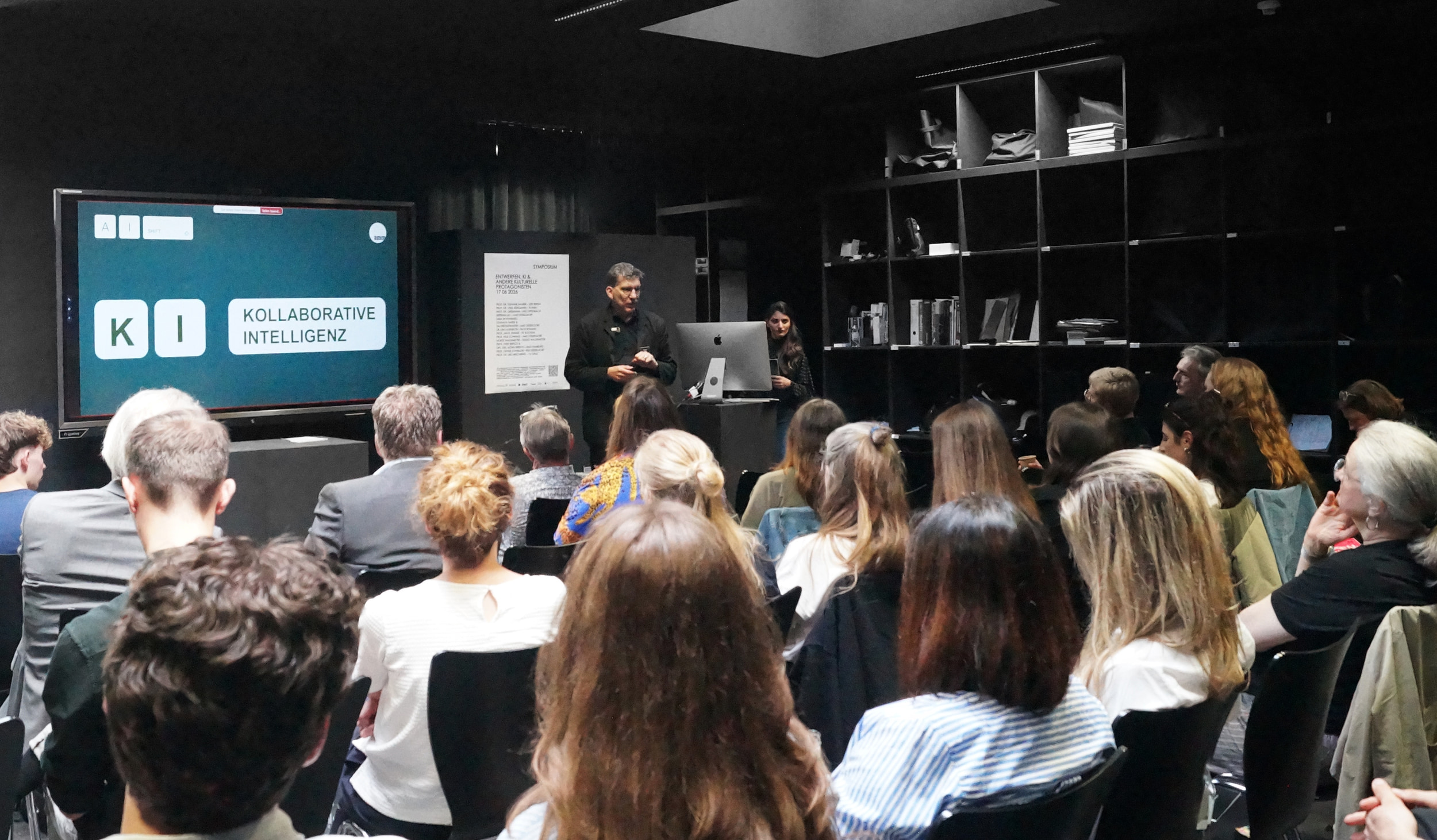
AI = Collaborative intelligence
Prof. Dipl.-Ing. Jan R. Krause BDA DWB (HS Bochum)
Original language: German. The English version was translated using AI.
Prof. Jan R. Krause
Hochschule Bochum
17 June 2026 · 14:30
Symposium “Designing. AI and other cultural protagonists.” · AMD Düsseldorf.
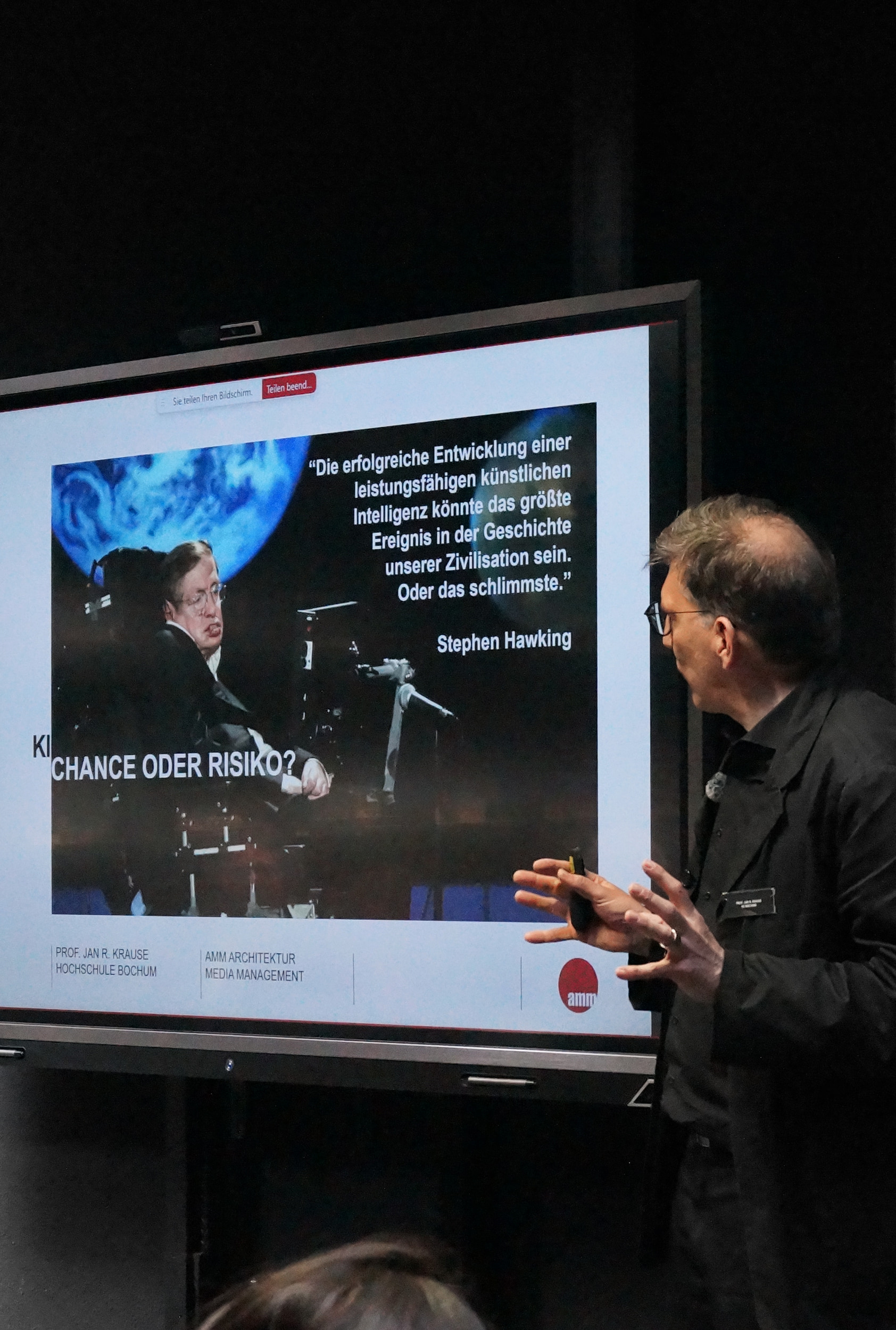
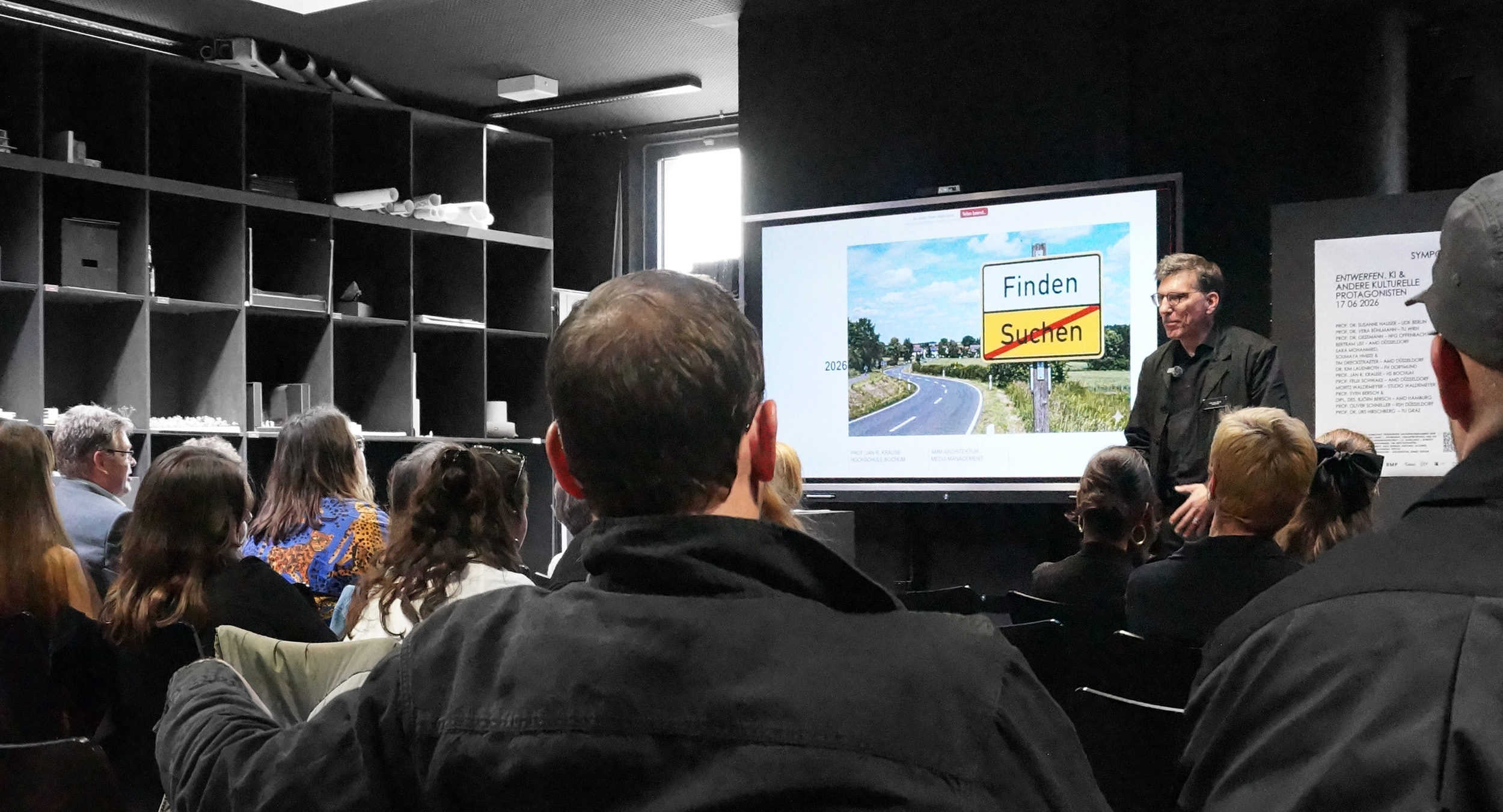
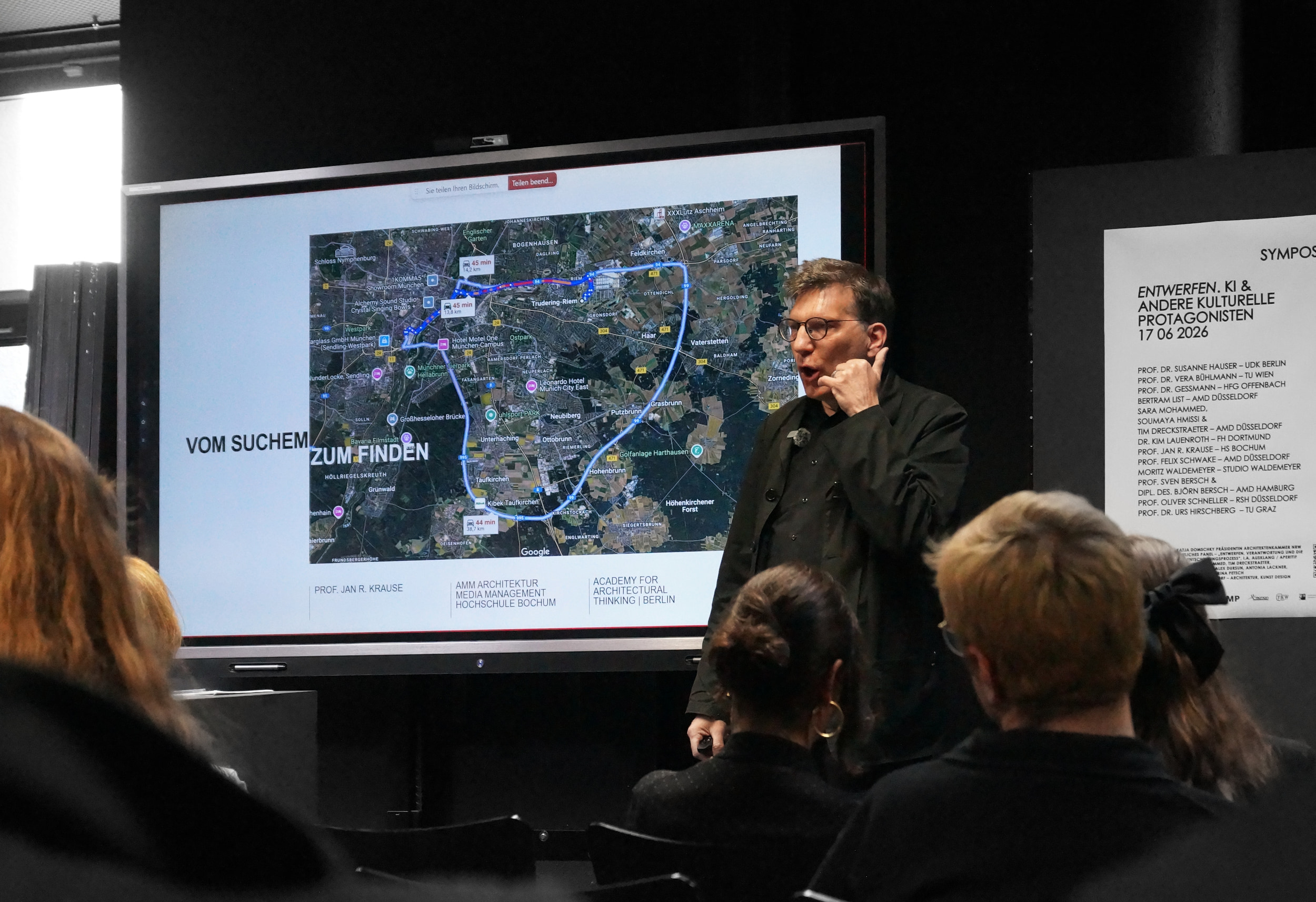
Artificial intelligence is radically changing our processes in architecture and communication. And in education. We are experiencing a new form of collaboration between humans and machines. Yet AI has no ambitions, no goals, no capacity for reason, no consciousness, and it assumes no responsibility. These are precisely our tasks as architects. We should understand AI as “collaborative intelligence”. In 2022/23, we spoke of AI as a “tool”. In 2024/25, we discovered AI as an “assistant”. Now we speak of AI “agents”. AI can function like a new employee. It must be selected, inducted and trained. And we must regularly check whether this AI fits our own ways of working and organisational culture. If this succeeds, a productive collaboration between humans and machines can emerge, in which the strengths of AI work together with our purposeful thinking and responsible action.
From the text Prof. Dipl.-Ing. Jan R. Krause BDA DWB prepared for the symposium. Translated from German.
Discussion II raised the question of what happens when there is hardly any time between an idea and an image?
Responses distinguished rapid access to alternatives from the evaluation of a design. On one side, participants emphasised the opportunity to test ideas early and use available resources for more thorough scrutiny. On the other, they warned against treating rapid image production as evidence that architectural planning as a whole can be accelerated.
One contribution described this danger as an efficiency trap
and argued: We must offer a commitment to quality.
The proposed use of AI was to support better-grounded decisions, for example by providing indications of cost and environmental implications and using images as a basis for discussion. This was a goal, not an established effect of every use of AI. For collaborative intelligence, the substantive issue was which tasks a system takes on and how its contribution is assessed.
The exchange also led to the question: what does AI do to our forms of assessment and the ways we demonstrate our work?
Participants distinguished acquiring design competence from demonstrating it. Different positions on analogue and digital routes to learning remained in play. The discussion therefore called for reasons for AI’s role in education and practice, rather than deriving that role from technical capability alone.
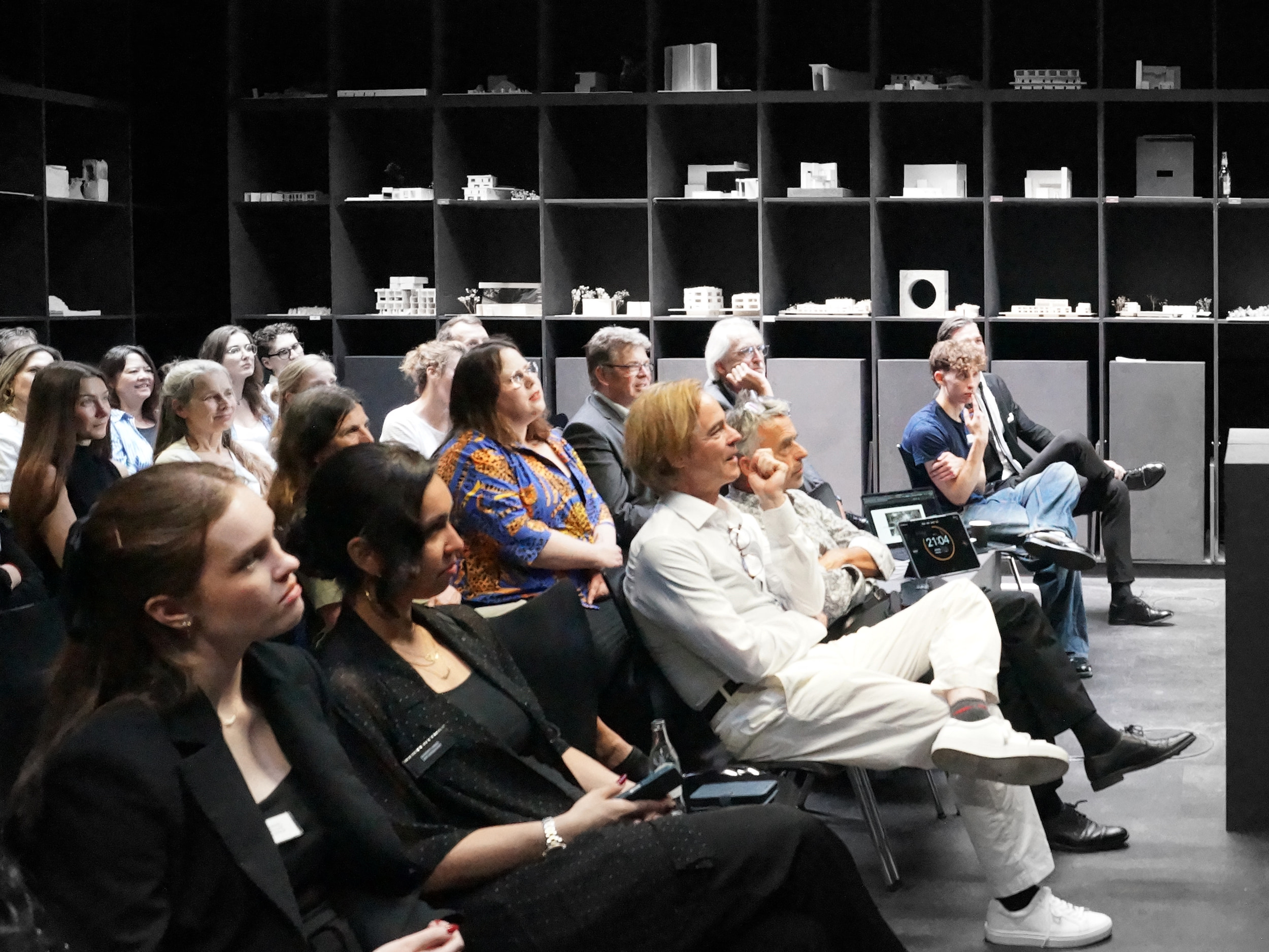
Selected contributions from Discussion II – Design and teaching at 15:30. Quotations translated from German.


Next contribution: Judgment, embodied experience and responsibility – Prof. Dipl.-Ing. Felix Schwake
Photographs: Katharina Petsch
