Design and teaching
Discussion II (AMD Düsseldorf)
Original language: German. The English version was translated using AI.
Discussion II
Symposium
17 June 2026 · 15:30
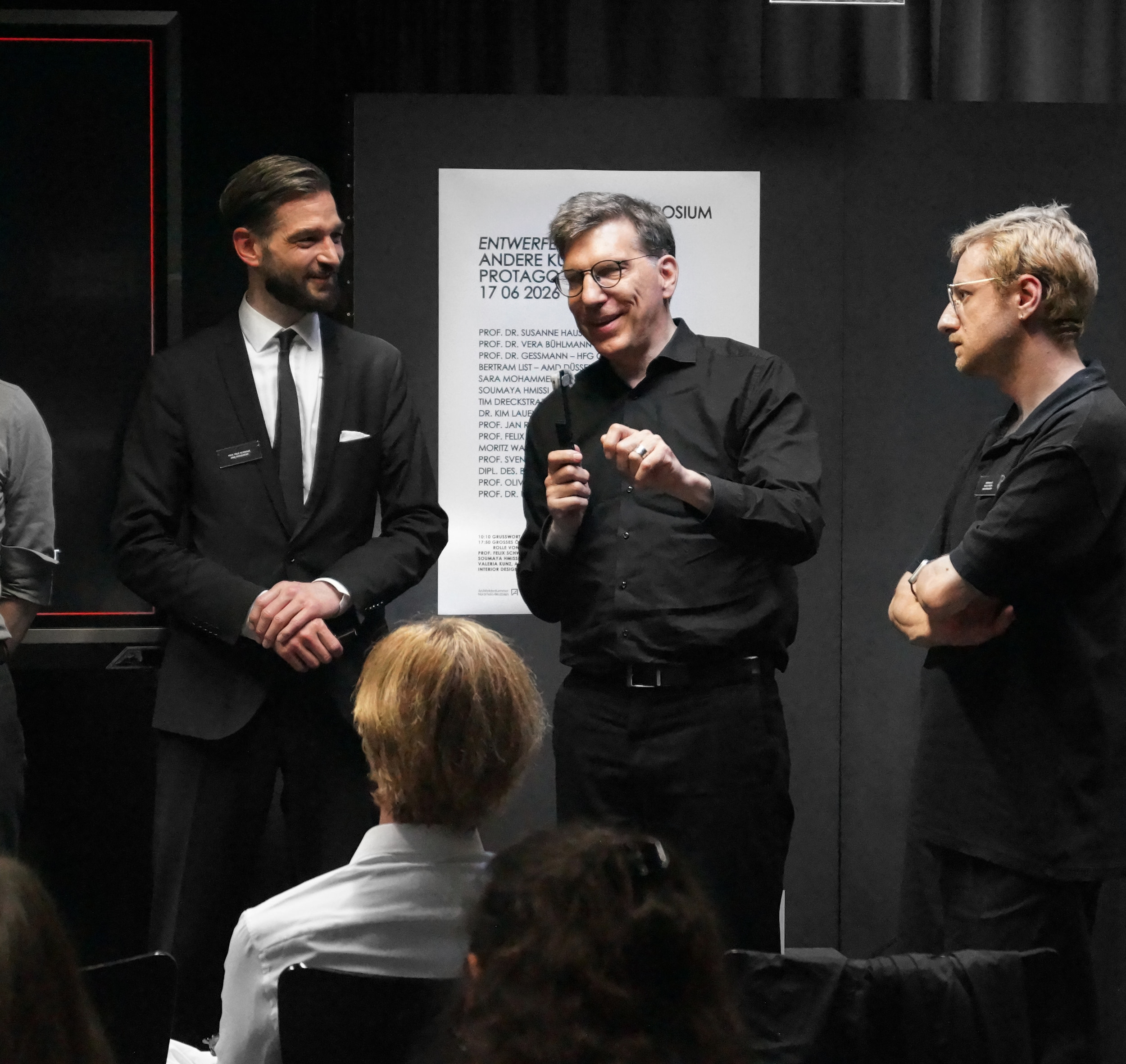
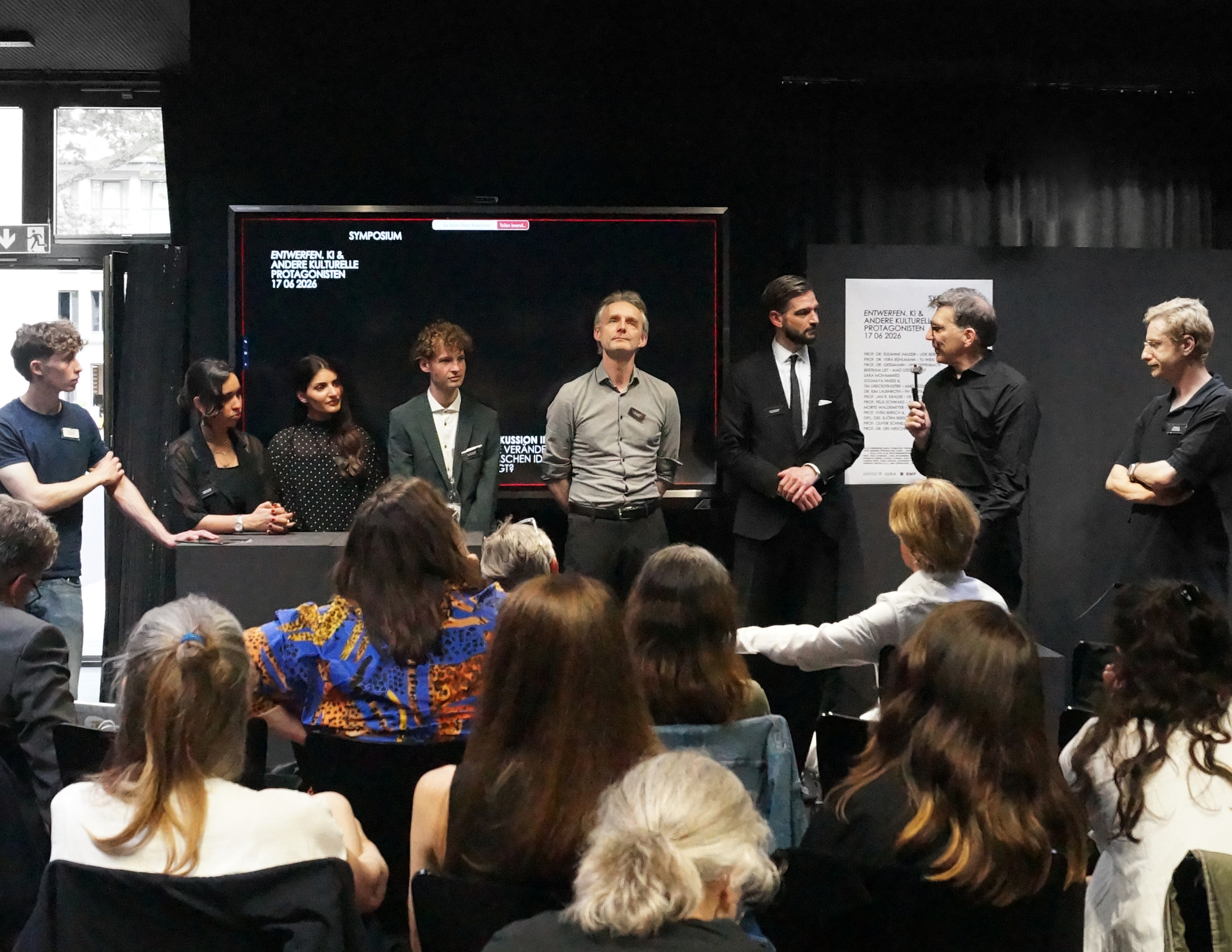
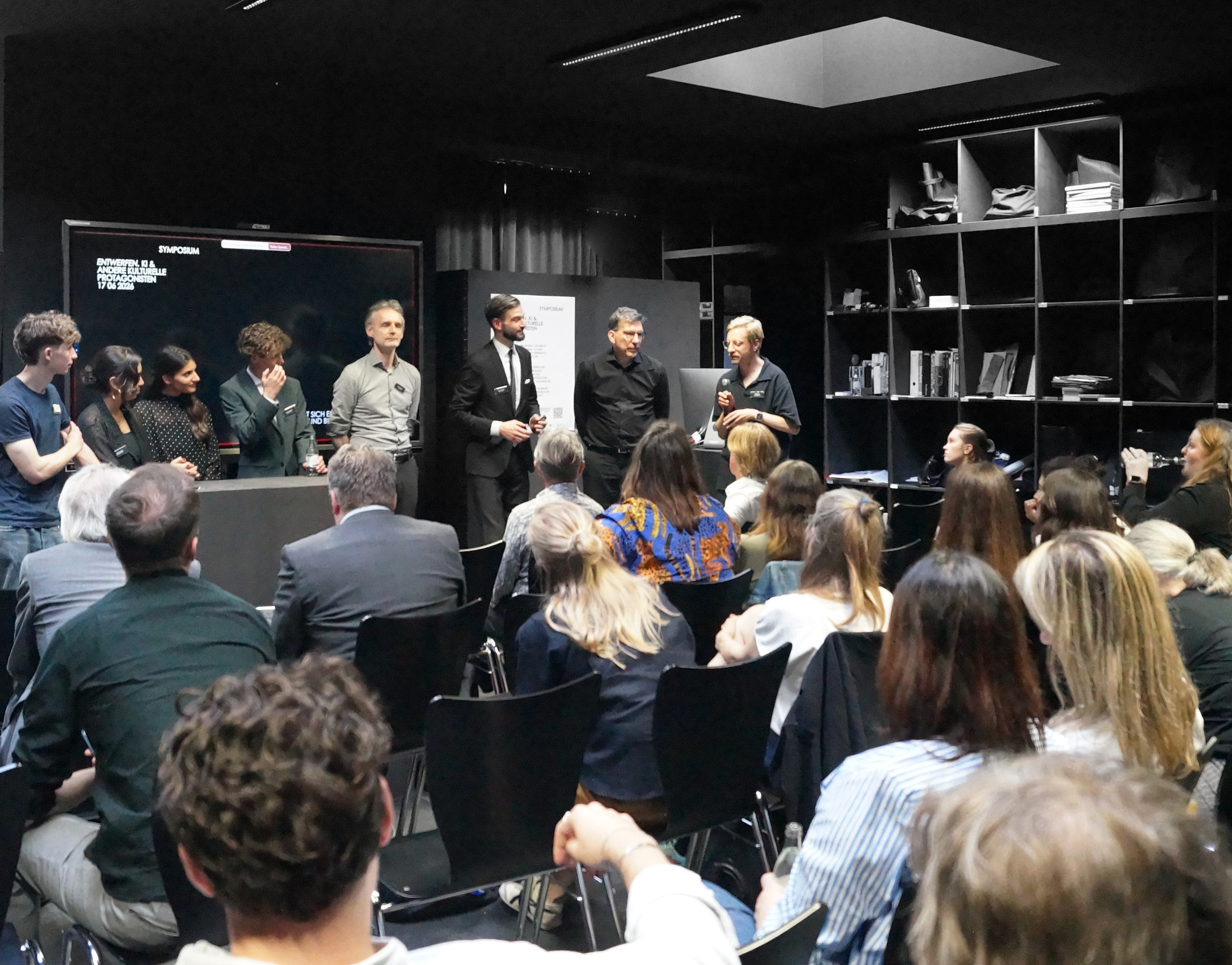
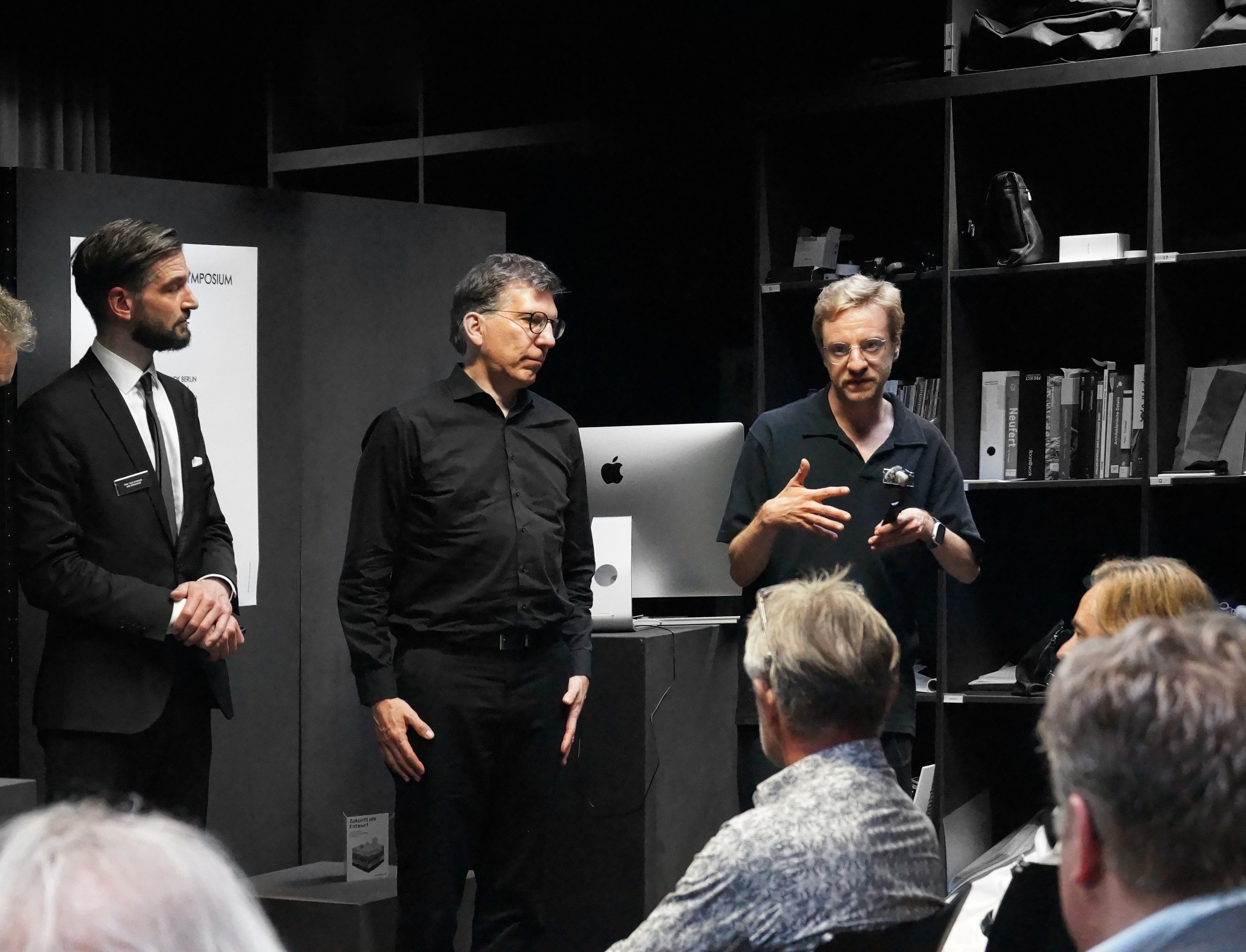
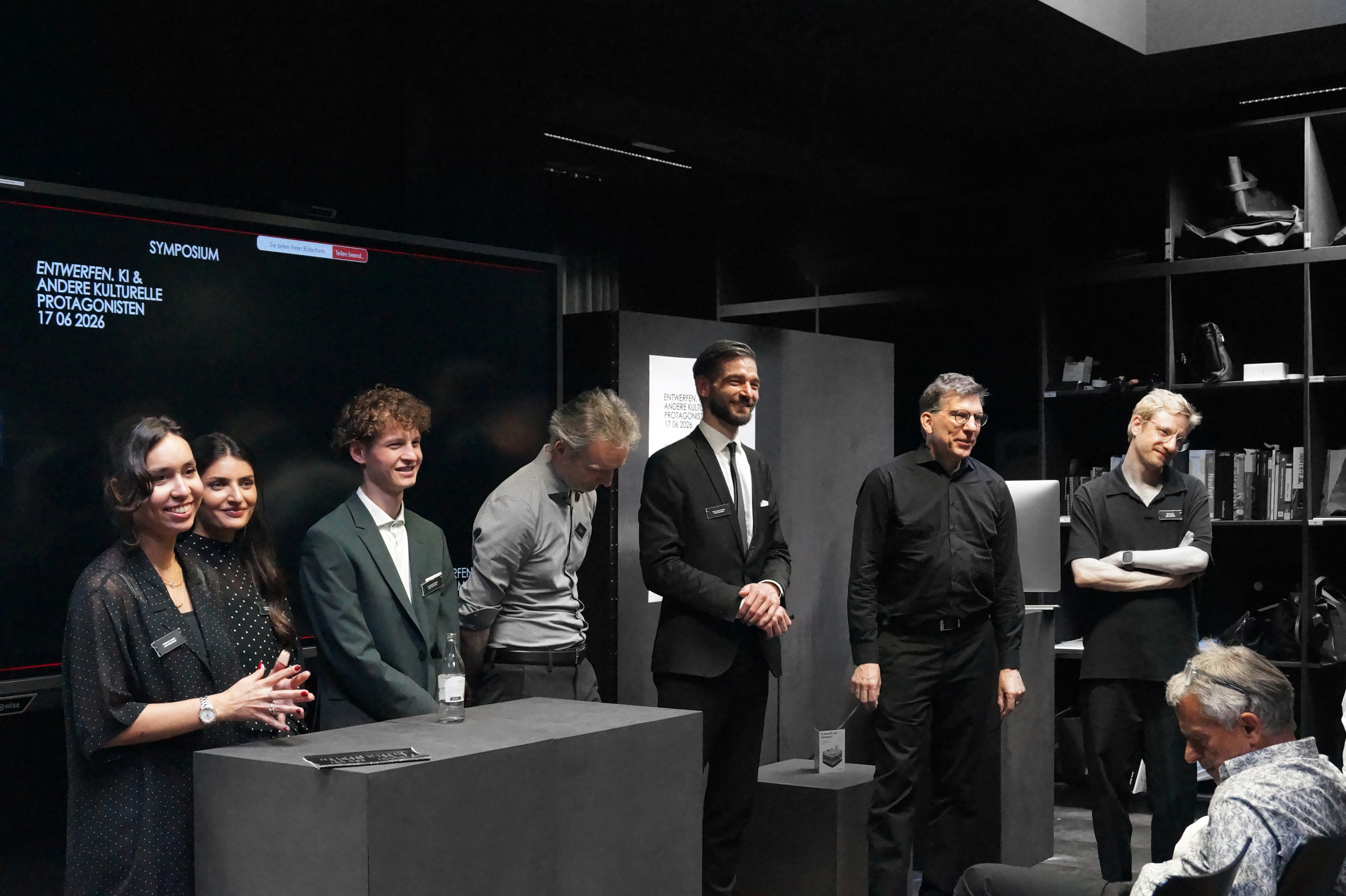
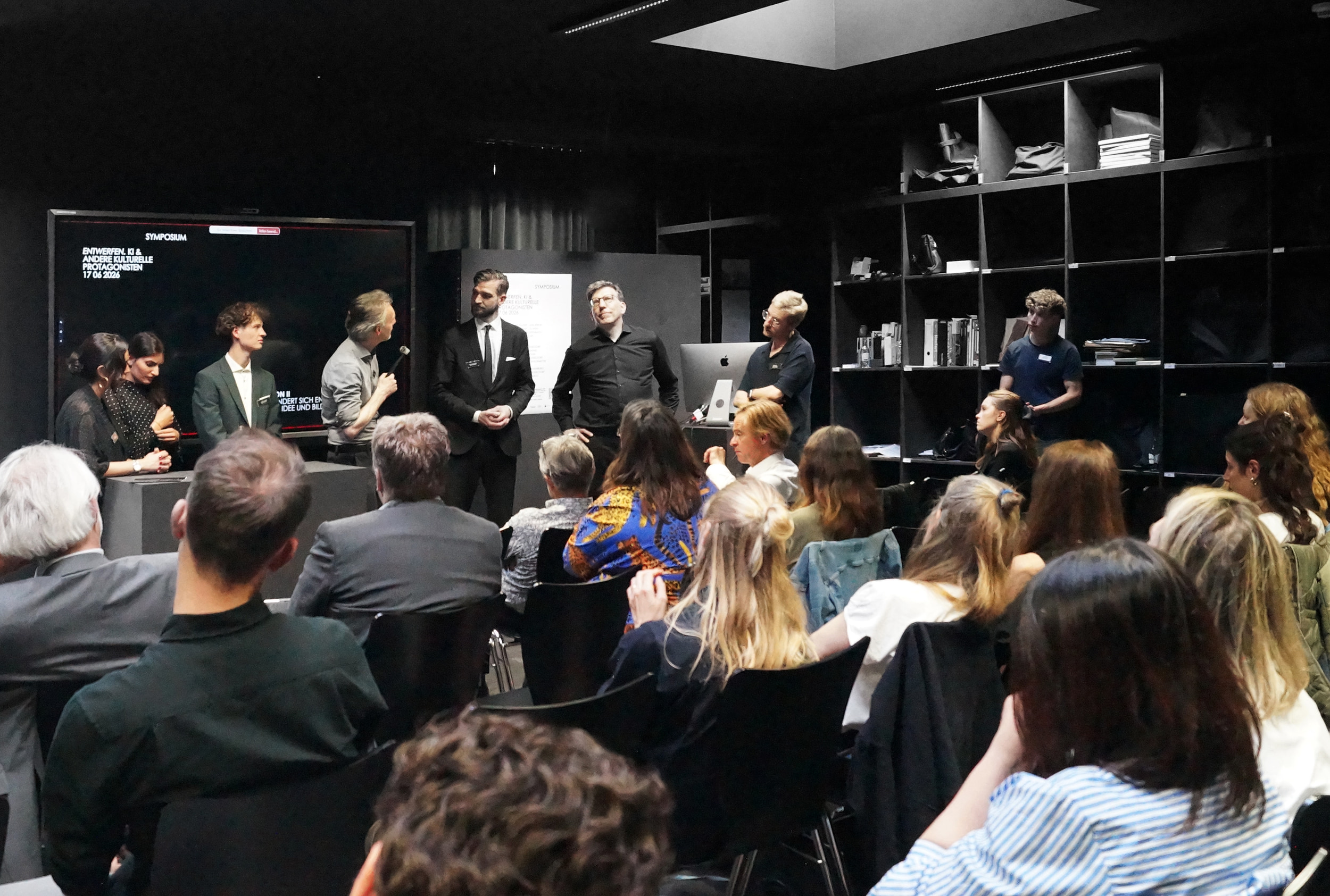
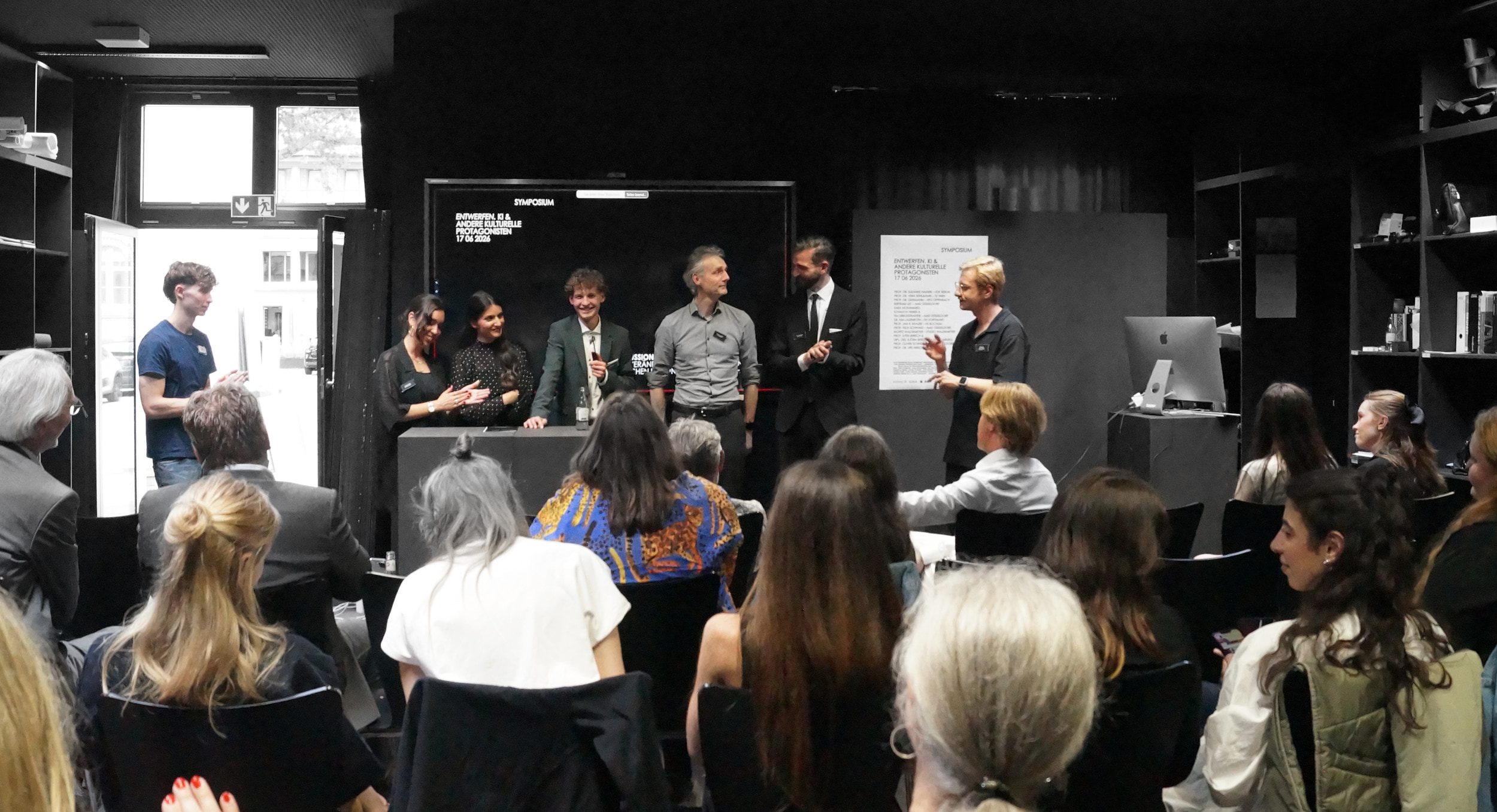
Symposium “Designing. AI and other cultural protagonists.” · AMD Düsseldorf.
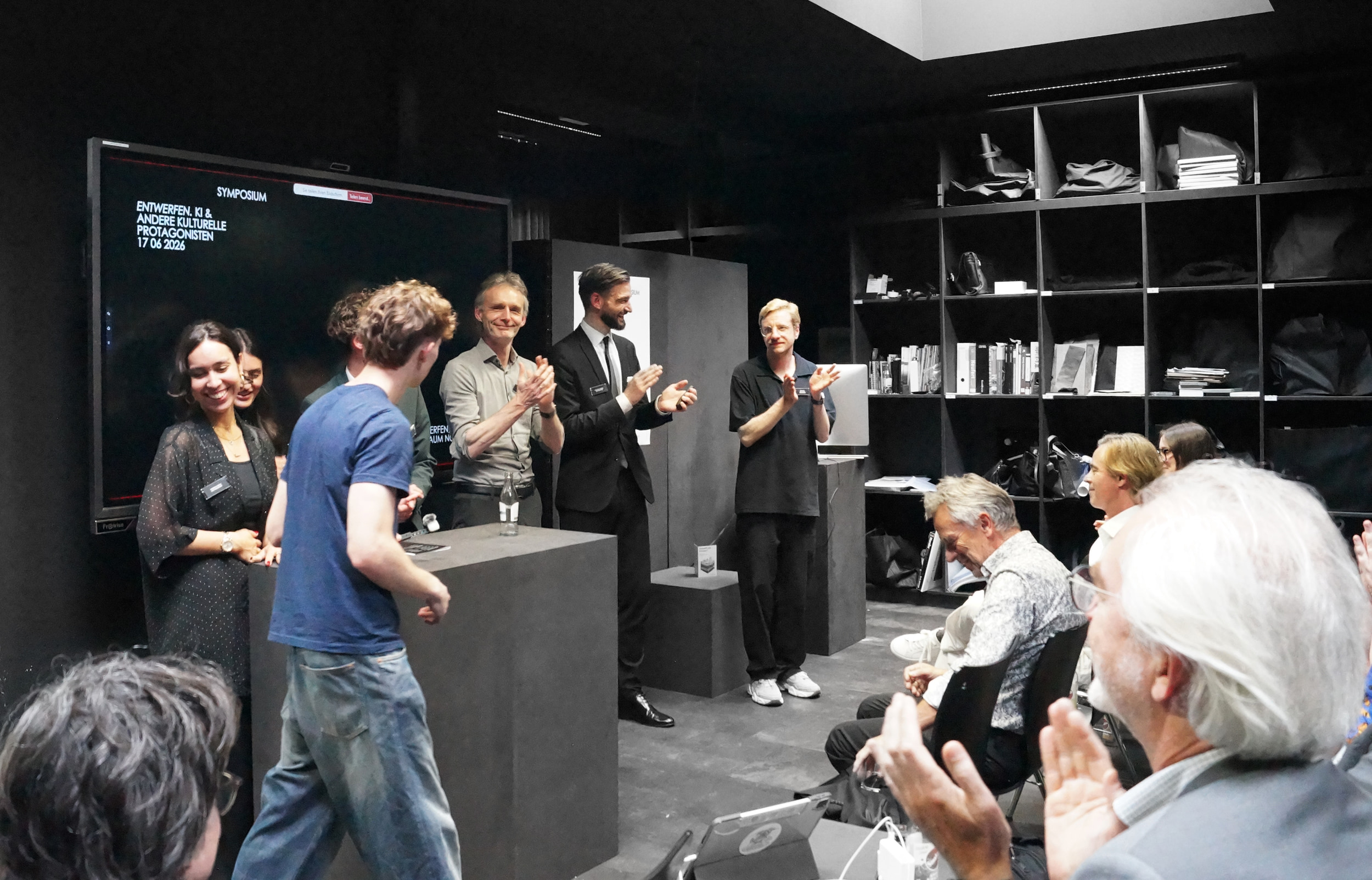
Discussion II – Design and teaching at 15:30 asked what changes when hardly any time remains between an idea and its image. Technical acceleration became the starting point for a contested discussion of design quality, approaches to learning and responsibility for independent judgement.
The traditional progression from rough to refined was called into question. AI can produce an apparently finished image before the underlying thought has been resolved. One proposed method therefore combined analogue and digital steps: crumpled paper and a photograph would first become an abstract black-and-white arrangement whose spatial possibilities could be explored further. Textures would be added only later. Alongside this stood the particular value of the sketch: it remains open to change and preserves the steps from which a decision emerged. Openness and the ability to retrace a decision thus became criteria for working with rapidly generated images.
One argument for AI was its ability to make several ideas visible early and help decide which deserved further development. A counterargument warned against inferring a general acceleration of building from faster image production. Detailed design, tendering and construction supervision still require careful work. The term “Cost of Delay” introduced a further question: what consequences would a delay actually have in a particular project? A later clarification focused on a fixed budget of time or money. Any potential gain should support more thorough scrutiny, better alternatives and clearer grounds for decisions. Quality remained an aim for the use of the tools, rather than an automatically established effect.
Another contribution warned against narrowing the entire field of media to AI. New means change the relationships between existing capabilities and possibilities; established practices do not necessarily lose their value. Nor can designing be reduced to forms and quantities that can be represented. The actions a space should enable, the social relationships it should support and the freedoms it should open up often have to be clarified through dialogue. Time to step back and reconsider was also defended as a quality of designing. Technical speed and the time needed to form a reasoned judgement were therefore considered alongside one another.
Mr Schwake argued that foundational design competences must first be developed through independent work. A technically incorrect drawing can appear plausible; selecting the image does not necessarily mean recognising its error. An explicit objection to this sequence called for analogue and AI-assisted practices to be taught in parallel. Another contribution distinguished the intended competence from the assessment format: if a machine can produce the previously required result, the assessment must establish whether the student understands, evaluates and can justify the process. The counterquestion was whether independent production is itself part of the competence to be learned. The dispute therefore concerned the conditions for independent judgement and remained unresolved.
The students contributed accounts of concrete learning processes. One described how repeated construction tutorials and drawing had deepened an understanding of a timber roof. The exchange also included a call to learn both analogue and digital practices in order to judge what each offers and what may be lost. Finding words associated with a design motif was offered as a limited example of a useful AI application. These experiences did not establish a single teaching method. They made the central question tangible: which work can the tool undertake, and which experience does the designer need to acquire personally?
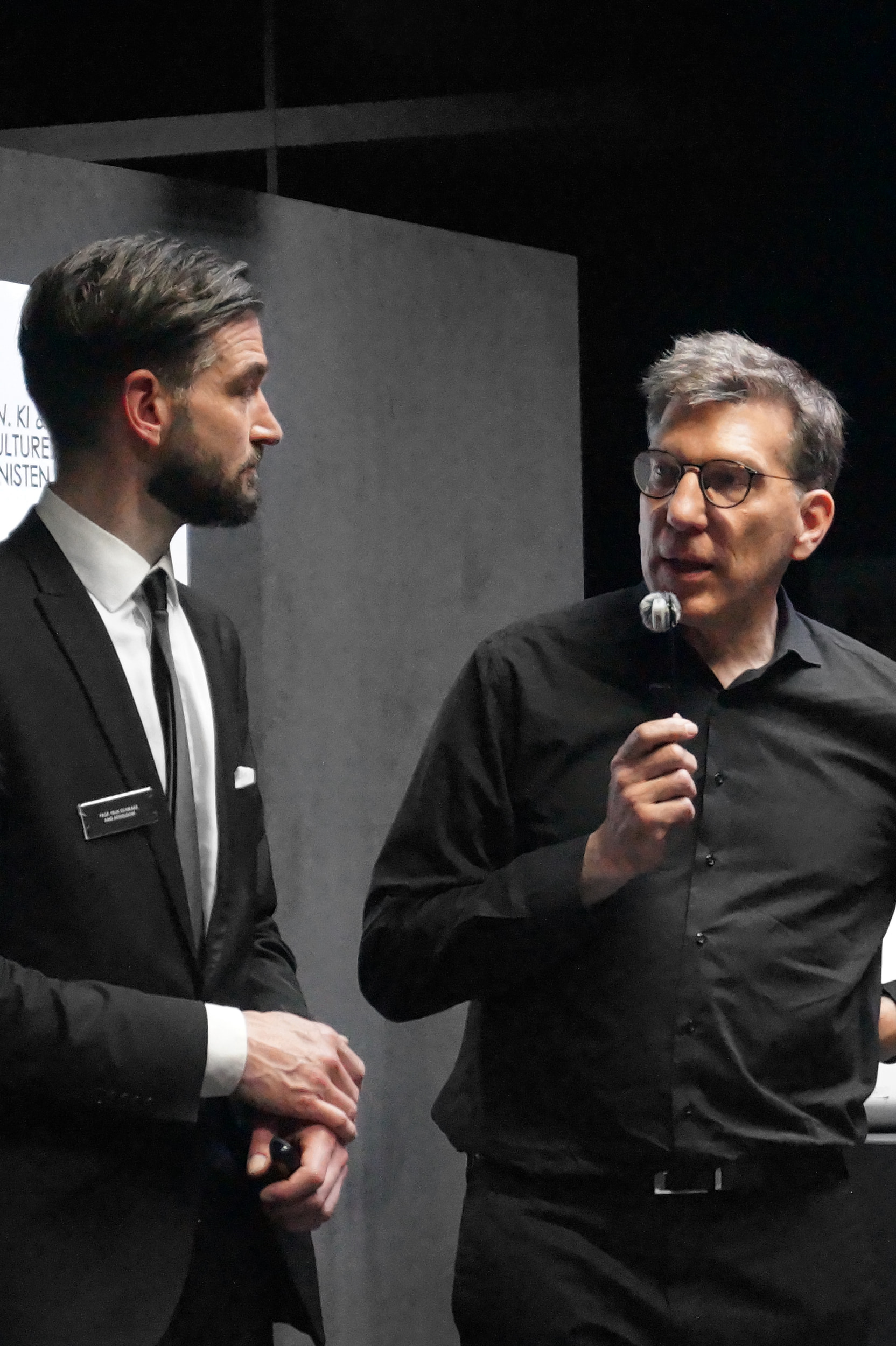
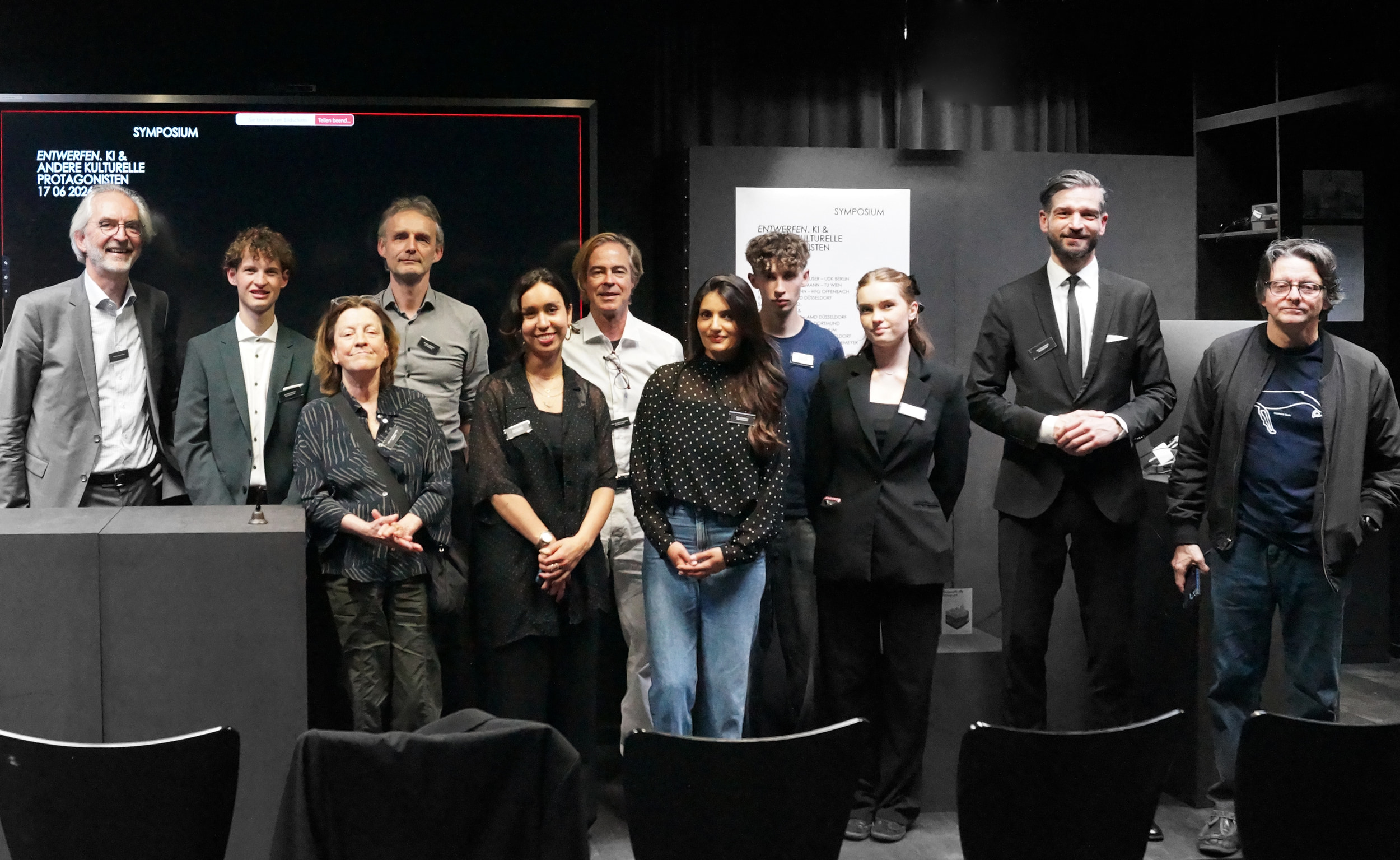
Selected ideas from Discussion II – Design and teaching on 17 June 2026 at 15:30.

Next contribution: Composition, sound, perception – Prof. Oliver Schneller
Photographs: Katharina Petsch
